Used Komatsu PC450LC-8 Excavator: What the Price Band Really Means
The used Komatsu PC450LC-8 excavator is listed on this site in the 40-50 t class with a model band of 60,000-63,000 USD. That figure is a range for the model, not a sticker on a machine. A band tells you where the model has been trading; it does not tell you what the unit in front of you is worth. This article is about the gap between the two: what the number contains, which wear items move a machine inside the band, and how to compare candidates without talking yourself into a bad buy.
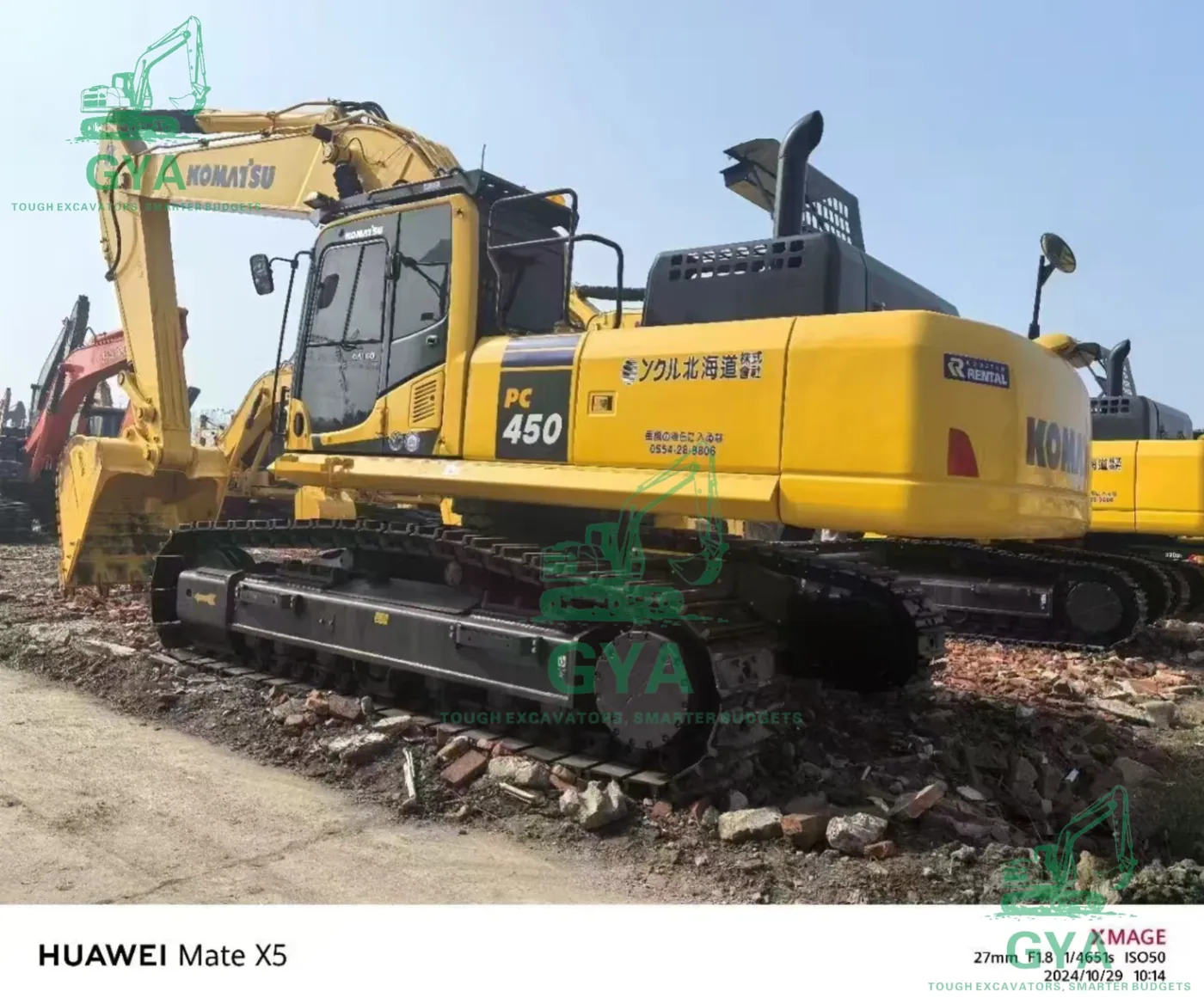
What the band is, and what it is not
The catalogue behind this site assigns each model a price range. For the PC450LC-8 that range is 60,000-63,000 USD. Nothing in the line describes a serial number: no year, no hours, no undercarriage condition, no bucket, no boom or arm configuration. Those belong to individual machines, and they change the moment one sells.
So the band answers one question well: is this model roughly inside my budget? If your ceiling is far below the bottom of the range, the model is out, and you have saved a week of correspondence. If you are inside the range, the band has done its job and should now be set aside. From that point the only useful numbers come from a named unit.
A band is not an index either. It is not updated by the hour and it does not know what is standing in any particular yard this week. Use it as a first filter, then stop using it.
Why a used Komatsu PC450LC-8 excavator is quoted per unit
A machine in this class is several wear systems sharing one chassis. Tracks, pumps, swing gear, pins, structure and engine each age on their own schedule. Two units carrying the same badge can sit further apart than the width of the band once those systems are priced honestly.
That is why a real offer names four things: the serial, the configuration, the hours, and the evidence behind the condition. An email that says "PC450LC-8 available, good condition, ask for price" is not an offer. It is an invitation to guess, and guessing is expensive at this level.
Four cost centres inside the band
If you want to understand why one unit asks more than another, look at these four lines. They also happen to be the four lines you can price before you commit.
Tracks and undercarriage
On a machine of this class the undercarriage carries the working weight and takes the punishment. Shoe height, link height, bushing wear, sprocket teeth, rollers and idlers all wear against measurable limits, and all of them are visible. Ask for numbers or for dated close-ups. A track group near the end of its life is the largest single addition you can make to a purchase, and it is the item sellers most often describe instead of measuring.
Hydraulics
Main pumps, control valves, cylinder rods, hoses and the swing system fail in different ways. A scored rod, a weeping swivel, a pump that is slow once the oil is hot: each is a repair with a local price. None of them can be judged from a photograph of a washed machine. This is the area where a video at working temperature beats any written description.
Structure and previous repairs
Boom and arm plates, the boom foot, the stick bracket, the carbody and the counterweight mounting are the places to look. A welded crack is not automatically a reject, but it is a fact that must be disclosed and assessed. Fresh paint over a weld, with no explanation, is a question to ask before money is discussed.
Records and identity
Service history, hour-meter continuity, and a serial plate that matches the invoice. A machine with a file is worth more than an identical machine with a story, and the difference is usually larger than buyers expect when they first compare listings.
PC450LC-8 price: FOB, CIF, and the number in your yard
The band sits at the FOB level in the way this catalogue is written. A CIF quote adds ocean freight and insurance to your discharge port. Neither figure is your landed cost.
Import duty, taxes, clearing, port handling, inland haulage and the crane that lifts the machine off the truck sit outside both. They vary by country and by port, and no exporter can fold them into one honest number for your business. The workable method is to take the FOB or CIF quote for the actual unit, take the import side from a local broker, and add them.
Then add the first repair. If the tracks are finished, the invoice that matters arrives from your local supplier a month after the machine does. A purchase price that ignores it is half a price.
A PC450LC-8 price is always the price of something, so make the something explicit. Ask for the quote in writing with the serial, the configuration, the Incoterm, the port and a validity date.
A comparison sheet that survives the band
Put every candidate on one page with identical columns: serial, configuration, hours from the panel, track measurements, hydraulic findings, structural findings, documents held, Incoterm, port, and a repair list with local prices. Leave the asking price in the last column and sort by landed cost plus repair reserve.
This is where the band stops being useful and evidence starts. A unit at the top of the range with measured tracks and a dry pump can beat a cheaper one that needs a track set, and the arithmetic is not close. The sticker is the least informative number on the page.
Two rules keep the sheet honest. Every photograph carries a date. Every claim without a document is entered as unknown, never as good.
How to inspect a used Komatsu PC450LC-8 excavator before price talks
Start at the plate. One continuous video from the serial plate to the hour meter, then the machine from cold. A cold start shows what a warm idle hides: smoke colour, a miss, a knock, a slow build of oil pressure.
Then work the machine. Boom, arm, bucket, swing and travel, all at working temperature, with the pump compartment open. Listen under load and watch the rods. A hesitation that appears only when hot is a finding, and it belongs in your notes before any figure is discussed.
Then walk it. Track groups, swing bearing play, boom foot welds, stick bracket, cylinder rods, hose dates, and the pump bay for fresh oil or fresh paint. Ask for the monitor fault list and, if the machine carries satellite monitoring, for a history report rather than a screenshot of one number.
Write down what you saw, not what you were told. A PC450LC-8 inspection that ends without written findings is a site visit, not an inspection. A rejected machine costs a day. A bought surprise costs a season.
Three levers that move a number
Evidence is the first. A dated photograph of a worn sprocket changes a conversation faster than any opinion about the market. Scope is the second: who supplies the bucket, who pays for the loading cradle, who covers the inland leg, who arranges the inspection. Timing is the third: a machine listed for months has a more flexible owner than one that arrived last week.
Do not open with the band. Say "your price is above the band" and you will hear a story about condition. Say "the tracks measure this, the pump is slow when hot, and here is what those cost me locally" and you will hear a number.
What 40-50 t does to the rest of the budget
The class label is not only a size comment. A used Komatsu 40-50t excavator is a transport project: the loading method, the permits on the inland leg and the crane at each end all carry cost, and they are quoted separately from the machine.
Budget the move before you commit to a unit. On this class the cheapest machine in the band can be the most expensive to land, and the difference is settled by a port pair and a route rather than by the seller's goodwill.
Who we are, and how a quote is built
This site is run by an independent exporter. We are not a Komatsu dealer, we do not own yards, and we do not publish a stock list that pretends otherwise. Machines are sourced against a request, inspected before shipment, and quoted FOB or CIF for a named port.
The export file is prepared per shipment: invoice, packing list, bill of lading, certificate of origin, and the inspection report if one was commissioned. Ask for the document list in the proforma so nothing is argued about at the destination.
Send the model, the port, the work the machine will do and your ceiling. You will get the units that fit with their evidence, or a plain statement that nothing fits today.
FAQ: buying a PC450LC-8
Is the 60,000-63,000 USD band a quote?
No. It is the catalogue range for the model. A quote names a serial, a configuration, an Incoterm and a port.
Does the band include shipping?
No. FOB ends at the loading port. CIF adds the ocean leg and insurance. Duty and clearing are yours.
What should I check first on a used PC450LC-8?
The serial plate and the hour reading in one continuous video, then the undercarriage measurements.
Can the machine be inspected before the balance payment?
Yes. Inspection before the balance is the normal sequence, and a third-party inspector can be appointed for it.
Do you sell only machines you own?
We own no yards. Each machine is sourced for the order and inspected before it ships.
How do I verify a used Komatsu PC450LC-8 excavator before paying?
Match the plate to the paperwork, watch a cold start, measure the undercarriage, and take oil samples. Pay the balance only after the evidence is in hand.
How long does export take?
It depends on the unit, the port pair and the vessel schedule. The proforma states the estimated loading window.
The band is a starting line
Use the range to decide whether the model belongs on your shortlist, then stop quoting it. From there the work is evidence: dated photographs, measured wear, a named serial, a written Incoterm. Do that and the band becomes what it was always meant to be, a filter rather than a price.
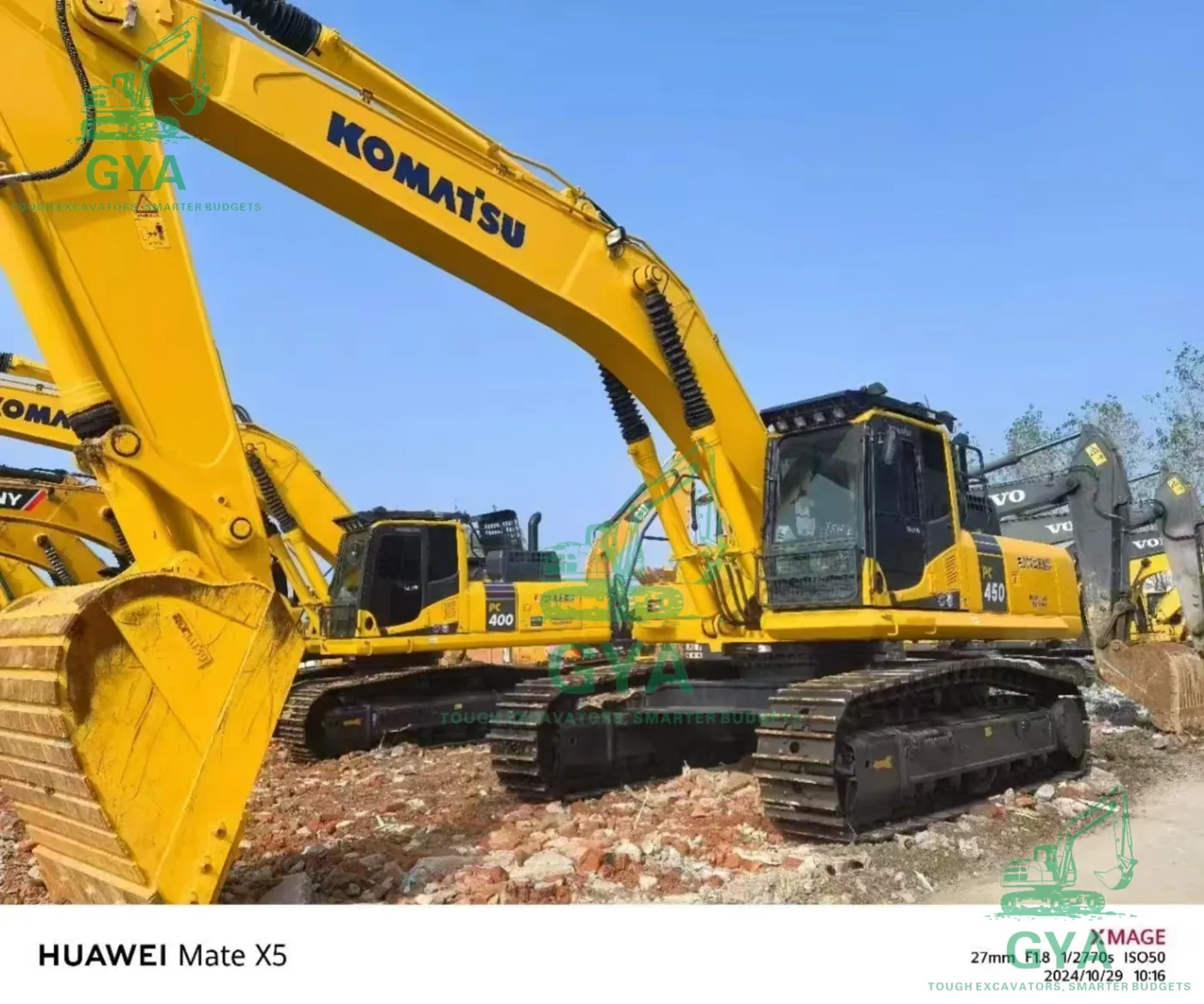
Start with the used Komatsu PC450LC-8 excavator model page, or see the PC450LC-8 units offered on request. If inspection process is your priority, read the inspection-first guide to the PC460LC-8.
Komatsu buyer guides
Price bands, inspection and transport for the models buyers ask about.