Used Komatsu PC20 Excavator: Price Band Reality Check
The used Komatsu PC20 excavator is listed on this site at 15,000–16,500 USD and sits in the mini under 6t class. Those two facts are the whole of the catalogue entry, and they are enough to start a useful conversation — but not enough to buy a machine. The band is a model-level reference. It is not a quote, it does not name an Incoterm, and it says nothing about the condition of the unit you will actually be offered. Most PC20 deals go wrong when a buyer treats the band as a price and stops asking questions.
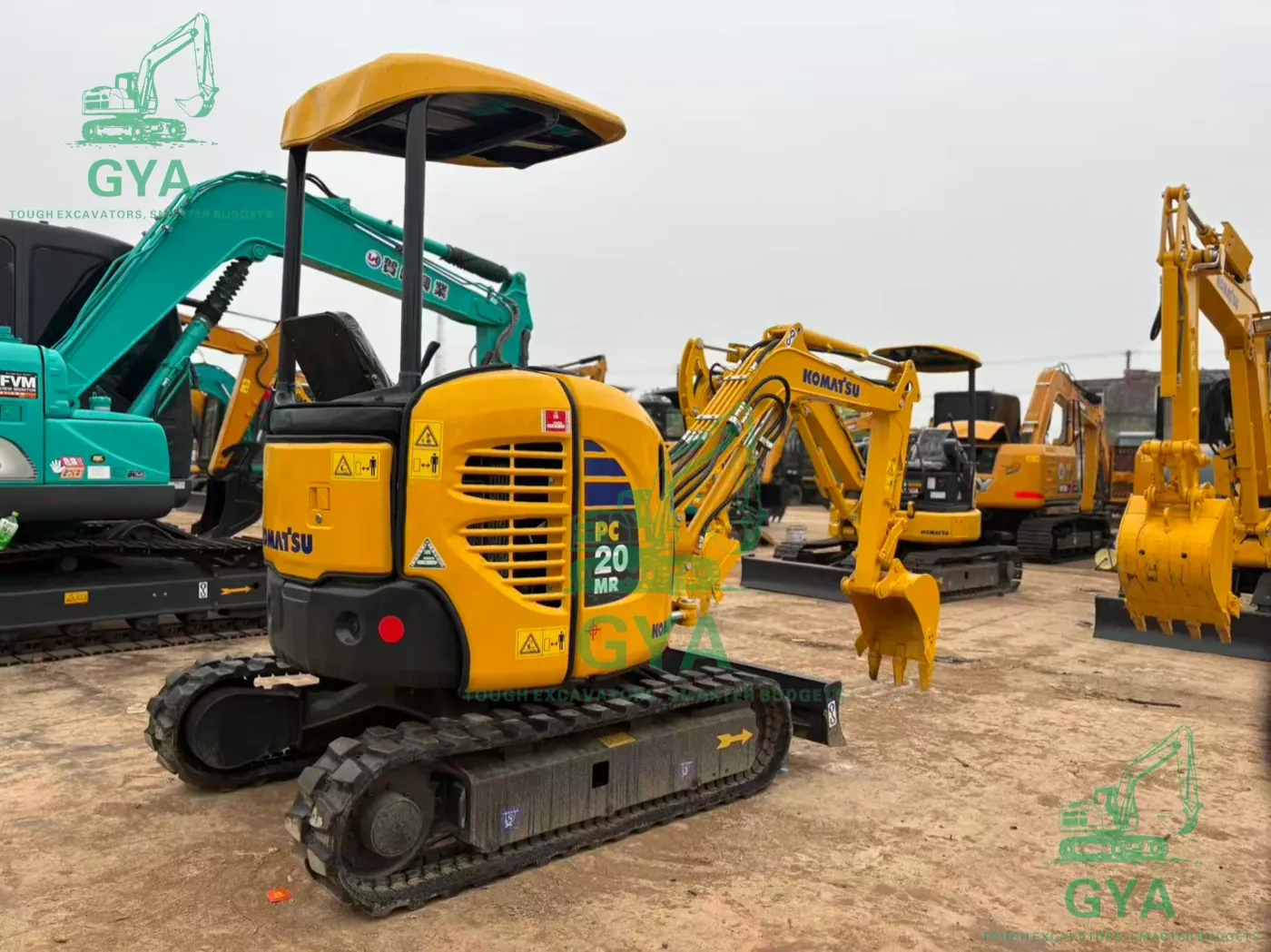
The band, stated plainly
15,000–16,500 USD is a range for the model, not for a unit. The catalogue does not publish a year, an hour reading or a condition grade alongside it, so none of those can be inferred. What the range does tell you is the level at which PC20 offers tend to be discussed. It gives you a sanity check: a quote far below 15,000 is not automatically a bargain, and a quote far above 16,500 is not automatically overpriced. Both need an explanation, and the explanation is always in the unit file.
Read the band as a question rather than an answer. Which machine, in what condition, from which supplier, on what Incoterm, to which port? A number without those five answers is a rumour with a currency symbol.
Why the PC20 band sits above the PC35MR floor
This is the first reality check, and it surprises buyers who assume price should track size. The same catalogue lists the PC35MR at 14,000–16,500 USD and the PC40 at 14,000–17,000 USD. The PC20's floor is therefore 1,000 USD above the PC35MR floor, and its ceiling is identical to the PC35MR ceiling. On paper, the smaller model does not look cheaper.
That is not a pricing error. A model band reflects the population of machines that typically carry that badge — their condition mix, their configuration mix and how suppliers position them — not a strict ladder of tonnage. A tighter supply of clean PC20 units can hold a band up; a wider, more mixed supply of PC35MR units can pull a floor down. The lesson is not "buy the bigger machine". The lesson is that the band table cannot choose for you. If you want the most machine for the money at the entry end of the class, the table gives you two models to investigate, not a verdict.
Use the overlap deliberately: ask for the same evidence pack on a PC20, a PC35MR and a PC40, then price the repair delta. The model whose band looks cheapest may stop looking cheap once the undercarriage and the pins are on the table.
What the used Komatsu PC20 excavator band does not include
The band is a reference figure. It does not name FOB, CIF or any other Incoterm, and it does not include ocean freight, marine insurance, import duty, VAT, clearing agent fees, port charges or inland delivery. It also does not include the repair reserve — the money you should hold back for the first defects you find after arrival. Adding the word CIF to an email does not turn a band into a landed cost; it produces a different number that has to be quoted against an actual unit and an actual destination.
This is where many comparisons fail. A buyer puts the band next to a local dealer's retail price and concludes that the import is cheaper. The local price includes landed cost, preparation and some form of support. The band includes none of that. Compare like with like before you celebrate.
Anatomy of a PC20 quote you can actually check
A usable quote names the machine and the terms. At minimum it should carry the model, the serial number, the configuration as sold, the price, the Incoterm, the named port, the currency, the payment schedule, the validity period and the document list. If any of those is missing, you are not comparing quotes; you are comparing sentences.
Two PC20 offers that look close on paper may not differ at all once the terms are aligned. One may be FOB and the other CIF; one may include a bucket and the other may not; one may include an inspection report and the other may be sold as seen. Put both on the same page, line by line, before you negotiate. Negotiating a number you have not normalised is how buyers pay more for less.
What moves a single PC20 inside the band
Condition, configuration and evidence. The biggest cost drivers on a machine of this class are the ones that are expensive to correct and easy to photograph badly: track and undercarriage wear, play in the bucket and boom pins, hydraulic leaks and lazy response, structural repairs, and the condition of the attachment. Paint is not evidence. A fresh coat can hide a repair or simply make an old machine look cared for; either way it should not move your price.
Configuration matters too. Two units with the same badge can be sold with different buckets, different auxiliary hydraulic arrangements and different cab fittings. Ask what is included in the sale, not what is visible in the photo. The accessory list is part of the price.
Evidence is the third driver. A unit with a coherent file — plate, meter, service records, a start-from-cold video, a working video — supports a higher price because it lowers the buyer's risk. A unit with none of that is not necessarily bad. It is simply unpriced risk, and unpriced risk should be paid for at a discount, not at the middle of the band.
PC20 price versus landed cost
Build a single sheet with two columns: the machine and everything else. The machine column holds the agreed price on the agreed Incoterm. The everything-else column holds freight, insurance, duty, clearing, port handling, inland transport and a repair reserve. The total is the number you compare with a local alternative. The band belongs in the first column at best, and only after a supplier has confirmed that the quote sits on a named Incoterm.
If you cannot fill the second column yet, ask a forwarder and a local broker for estimates before you commit. A quote you cannot land is not a price; it is an opening position.
Why freight hurts a small machine more
Every used Komatsu mini under 6t excavator carries the same freight problem: fixed costs do not shrink with the machine. Documentation, inspection, port handling and the forwarder's time cost roughly the same whether the cargo is a mini or a much larger unit. On a lower-value machine, those fixed lines take a larger share of the total. That is the structural reason a machine at the bottom of the mini bands can feel expensive once it lands, while a larger machine absorbs the same charges more easily.
The practical response is not to avoid small machines. It is to stop judging them on the sticker. If you are importing one mini, ask whether a second unit or a shared loading plan changes the per-unit freight. Sometimes the cheapest route to one machine is to price two and choose the loading method that fits both.
PC20 inspection: four checks that change the number
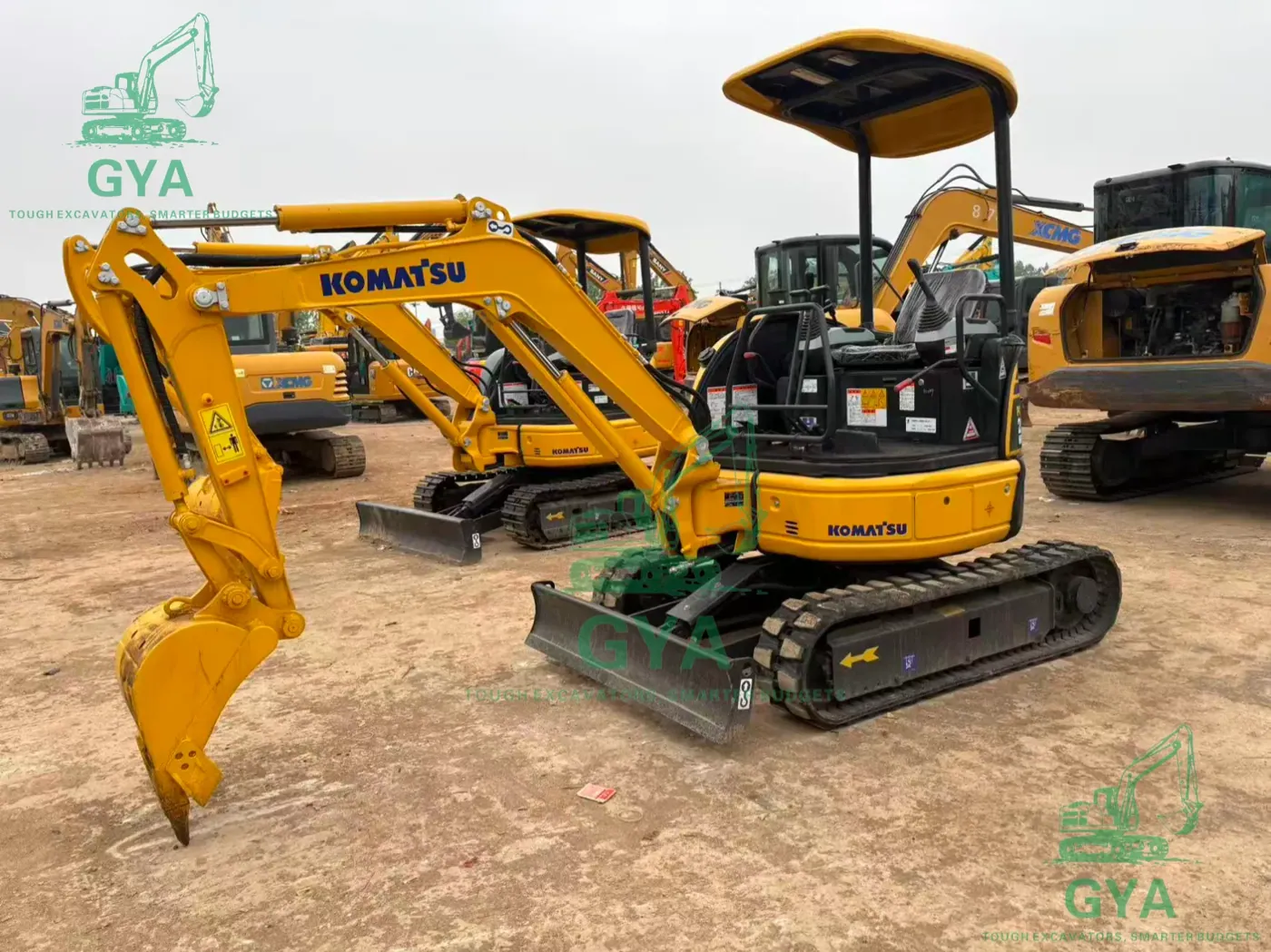
Inspection on a mini is not a formality, but it is also not a two-hundred-point survey. Four checks carry most of the money. First, the tracks and undercarriage: wear pattern, cracked links, worn rollers, and whether the wear is even on both sides. Second, pin and bush play at the bucket, the arm and the boom; play is a repair, and play plus fresh paint is a question. Third, the hydraulic system: trace every leak to its source, watch the cycle for hesitation and drift, and listen for noise that does not belong. Fourth, structure: boom, arm, frame and counterweight, looking for cracks, previous welds and repairs that were not disclosed.
Add identity to the list even though it is not a wear item: plate, serial, meter and paperwork should agree, and one video should walk from the plate to the meter without a cut. A machine that passes the four checks but fails identity is not a candidate.
When a low PC20 quote is the expensive one
A quote below the band floor is a claim that something is different. It might be a genuine end-of-stock decision, a machine with a known defect, a unit missing its attachment, a price that is not for the machine in the photos, or a number that will grow once freight and documents are added. None of those is automatically a rejection, but each needs a named explanation before you pay a deposit.
Ask the supplier directly: what explains the position relative to the band? A supplier who can answer with specifics is telling you something useful. A supplier who answers with urgency is telling you something else.
Questions buyers ask about the used Komatsu PC20 excavator
Is the band the price of the used Komatsu PC20 excavator I will get? No. It is a model-level reference for the PC20. The price of a specific unit depends on its condition, its configuration, the Incoterm and the destination.
Does the band include shipping to my port? No. It does not name an Incoterm and does not include freight, insurance, duty or clearing. Ask for FOB and CIF figures for the actual unit.
What class is the PC20? The catalogue lists it in the mini under 6t class. Treat every other specification as something to confirm on the machine plate and in the unit file.
What should I check first? Tracks and undercarriage, pin play, hydraulic leaks and structure. Those four items hold most of the repair risk on a machine of this size.
Can you inspect before I pay the balance? Yes. Inspection before the balance is the normal sequence for an export purchase, and it is the reason to buy through an exporter that will show you the unit rather than only a listing.
How an independent exporter quotes a PC20
This site is run by an independent used-equipment exporter in China. We are not a Komatsu dealer, we do not own yards, and we do not present a warehouse of stock as if it were ours. We source against a requirement, inspect the unit, and quote FOB or CIF with the export documents attached. That model has one advantage for the buyer: the quote has to survive an inspection, because the machine is not ours to describe loosely.
Send the destination port, the work the machine has to do, and the evidence standard you want. We will come back with the unit file, the terms and the document list, and you can compare that against the band with your eyes open. Start with the used Komatsu PC20 excavator model page, browse the wider Komatsu excavator models index, or send the requirement and ask for the current file.
The band is a starting line, not a finish line
15,000–16,500 USD tells you where the PC20 conversation begins. The purchase is decided by the unit, the terms and the evidence, and the only honest way to compare two PC20 offers is to normalise them onto the same Incoterm and the same repair basis. Do that, and the band stops being a trap and starts being a tool.
Komatsu buyer guides
Price bands, inspection and transport for the models buyers ask about.