Used Komatsu PC35MR Excavator: Class Economics and Price Bands
The used Komatsu PC35MR excavator is listed at 14,000–16,500 USD in the mini under 6t class, and that position is more interesting than the number. It shares the 14,000 USD floor with the PC40 and the 16,500 USD ceiling with the PC20, and it overlaps almost the whole PC40 range of 14,000–17,000 USD. Read as class economics rather than as a sticker, the band tells you where the model competes and what you are actually choosing between.
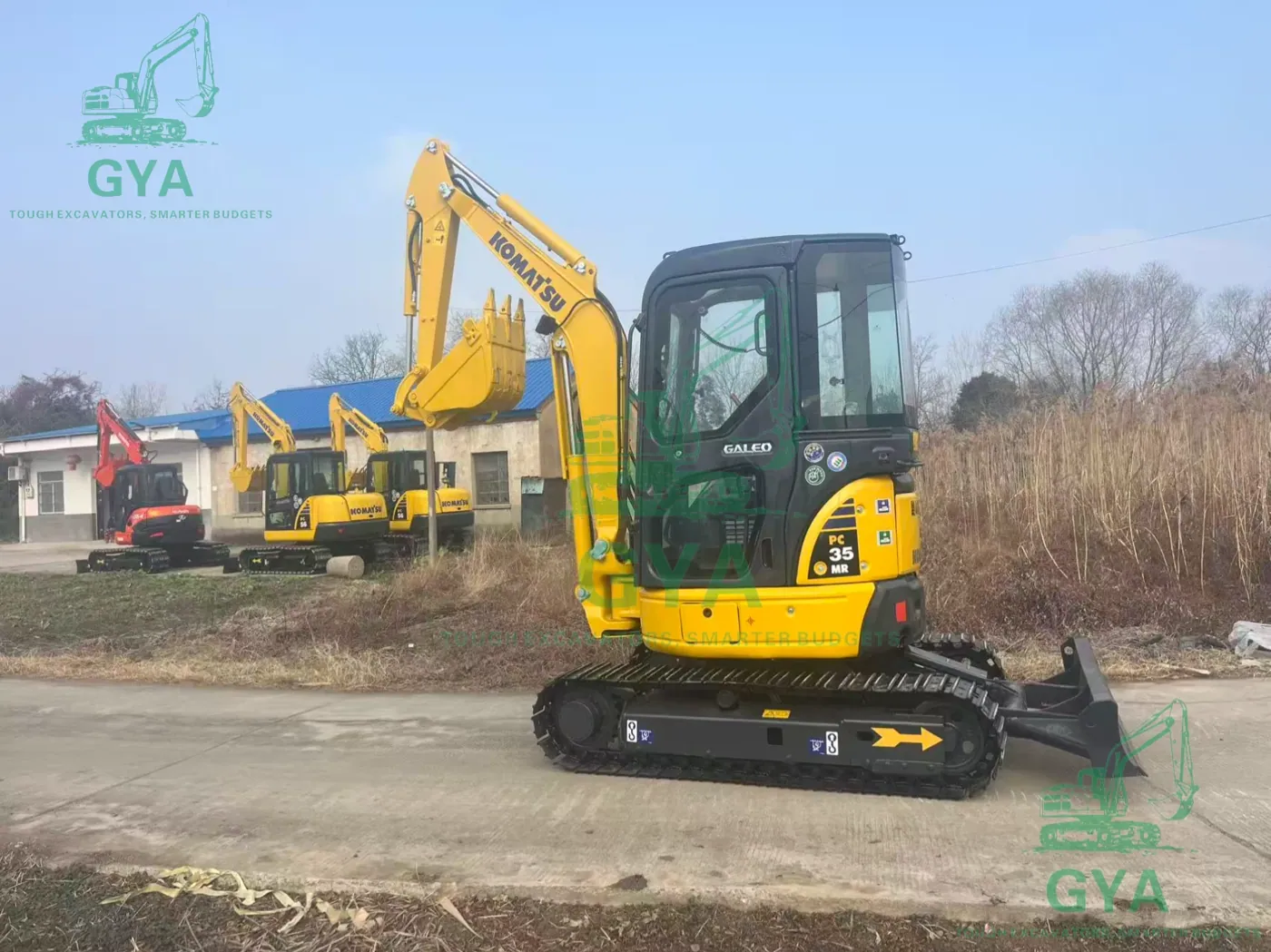
What class economics means for a used machine
Class is a purchasing category, not a specification. The catalogue groups the PC35MR in the mini under 6t class, which is enough to know roughly what kind of site, transport and crew the machine is built around. It is not enough to know the weight, the bucket, the reach or the year. Those come from the plate and the unit file, and on a used machine they matter more than the group label.
Class economics is the discipline of comparing machines inside that category on total cost rather than on asking price. Three numbers do the work: what you pay to get the machine to your yard, what you must spend before it can earn, and what it costs per working day over the period you intend to keep it. A band can inform the first number. It says nothing about the other two.
Four mini bands, side by side
| Model | Class | Catalogue band (USD) |
|---|---|---|
| PC20 | mini under 6t | 15,000–16,500 |
| PC35MR | mini under 6t | 14,000–16,500 |
| PC40 | mini under 6t | 14,000–17,000 |
| PC56-7 | mini under 6t | 12,000–13,500 |
Read the table twice. The first read says the PC56-7 is the cheapest way into the class and the PC40 has the widest range. The second read says something more useful: the four bands overlap heavily, so the model badge is a weak guide to what you will pay. Two units from different models can sit at the same number, and two units of the same model can sit 2,500 USD apart.
A table like this is a map of where to look, not an answer. It cannot tell you which machine is the better buy, because it does not know the condition of any unit behind the numbers.
The used Komatsu PC35MR excavator band as an entry position
At 14,000 USD the PC35MR shares a floor with the PC40, while the PC56-7 sits lower at 12,000–13,500. At 16,500 it shares the PC20's ceiling. In between, the band is wide enough to hold machines in very different condition, which is exactly why the position should not be read as a quality signal. A quote at the floor does not mean the machine is poor; a quote at the ceiling does not mean it is clean. It means the supplier has placed the unit somewhere in a range that the market uses for the model.
What the entry position does tell you is that the class has room for negotiation on scope. The PC35MR price band is wide, and when two offers sit at opposite ends of it the difference is usually visible in the file: tracks, pins, hydraulics, attachment, or the terms. Find the line before you argue about the total.
Why the cheapest band is rarely the cheapest machine
Three cost layers sit between a band and a working machine. The first is acquisition: price plus freight, insurance, duty, clearing and inland delivery. The second is commissioning: the repairs and consumables the machine needs before it can be trusted on site. The third is ownership: fuel, maintenance, parts, operator time and downtime over the years you keep it.
A cheap acquisition with a large commissioning bill can beat an expensive acquisition with none, or lose to it, depending on how long you keep the machine. That is arithmetic, not opinion, and it is the reason a band should never be the only column in your comparison. Ask for the repair list, price it locally, and add it to the acquisition number before you decide.
Band overlap: PC35MR against PC40
The PC40 band runs from 14,000 to 17,000, so the two models overlap from 14,000 to 16,500. In that shared range, the badge is almost useless as a tiebreaker. What separates the machines is the unit: how much wear is left in the undercarriage, how tight the pins are, how clean the hydraulics are, and whether the documents support the story.
Run the same evidence request on both. If one supplier cannot produce a start-from-cold video or a plate-to-meter clip, that absence is part of the comparison. Then price the visible defects. The model that wins on the band can lose on the repair sheet, and the model that loses on the band can win on the total.
Cost per working day
Utilisation changes the answer more than the band does. A machine that works most days spreads its acquisition cost over far more output than one that sits idle, so the same purchase price can be cheap or expensive depending on your schedule. Before you compare two units, write down the days per month you expect to bill and the work the machine will do. Then ask whether either unit has a defect that would keep it off site during your busiest period.
This is also where the class matters. A mini under 6t is often bought to fit a specific access or transport constraint, not to maximise output. If the constraint is real, paying more for a clean unit of the right class is usually better than paying less for a machine that cannot reach the job.
The step up to compact 6-9t
The next class on the site starts with the PC60-7 at 16,500–19,000 USD, then the PC60-8 at 17,500–20,000 and the PC70-8 at 18,000–20,000. The PC130-7 sits further up at 20,000–22,000 in the 10-20t class. The PC60-7 floor of 16,500 USD is level with the PC35MR ceiling, so the next class begins exactly where the mini band ends. That is why the step deserves a real comparison rather than an assumption.
Do not step up for the sake of it. A larger machine needs more transport, more space and more work to justify it, and the bands only describe acquisition. Step up when the work genuinely needs the capacity and the site can take the machine. Stay in the mini class when access, transport or fleet fit is the binding constraint.
Transport economics for the class
Every machine in this class still needs a loading plan. Ask for dimensions with the attachment in its transport position and the actual weight, then have a forwarder quote against that unit and your port. Do not assume a mini travels in a container because it is small, and do not assume it needs a flat rack because it is an excavator. The answer depends on the unit and the route, and it belongs in the quote, not in a guess.
Freight is also where multi-unit buyers can improve the economics. If you are buying for a rental fleet, price two or three units together and ask what the loading method does to the per-unit cost. The band does not change, but the landed cost can.
Resale and the exit
A used machine is also an asset you may need to sell. Resale depends on local demand, condition and paperwork, and no catalogue band is a forecast of it. Before you buy, ask two local buyers what they would pay for the unit in the condition you expect after your work, and how long it would take to sell. That number, not the band, is your exit value.
The class helps here in a general way. A used Komatsu mini under 6t excavator is bought across construction, landscaping, agriculture, municipal work and rental, so the pool of potential buyers is usually wider than for a specialist machine. That is a structural point, not a promise about your market.
PC35MR inspection: five questions for a class buyer
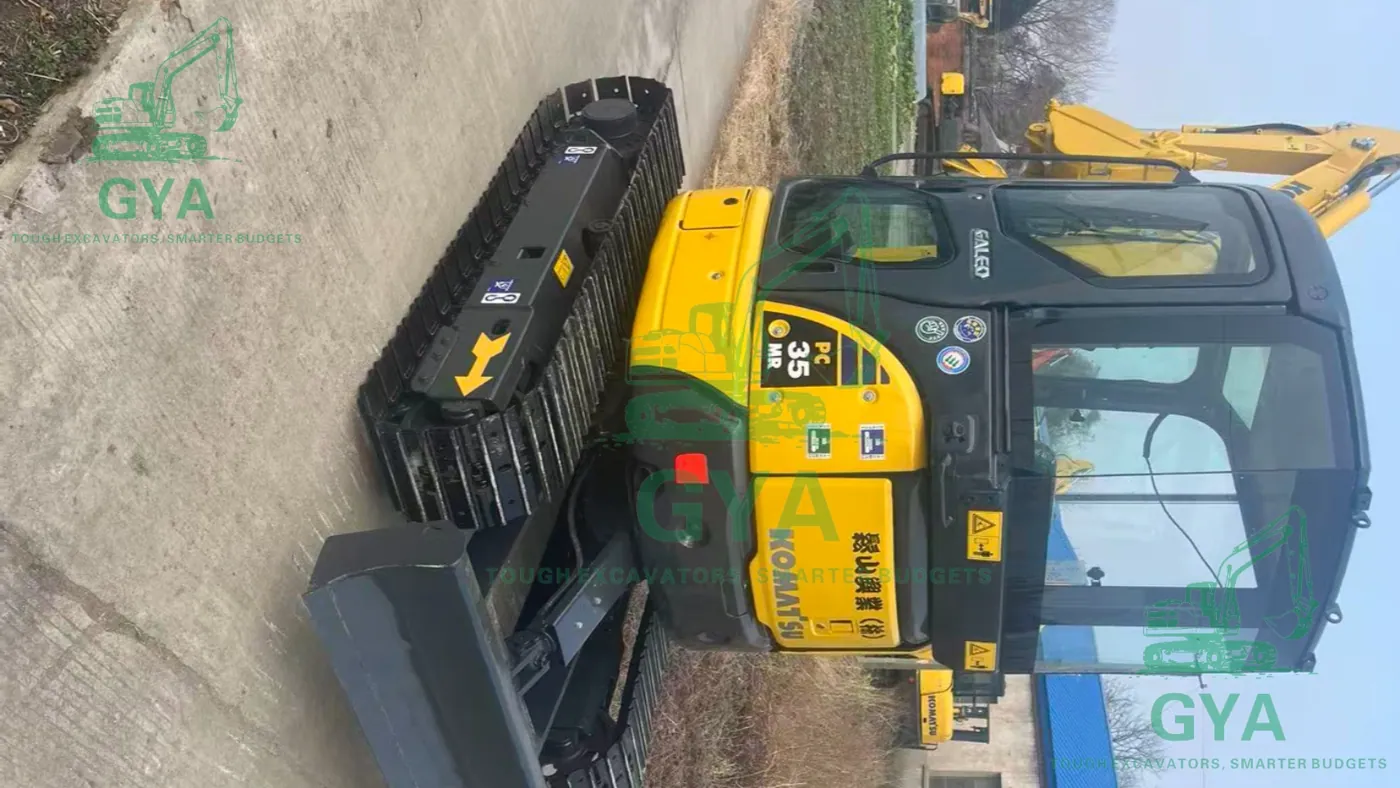
Inspection for this class should answer five questions. Does the track condition match the work you plan? Is the pin play consistent with the meter story? Are the hydraulic leaks active or historical, and can the seller show the source? Is the structure original, and are there repairs that were not disclosed? Does the paperwork identify the same machine that appears in the photos and the video?
Five questions are not a substitute for a physical inspection, but they are enough to decide whether a unit deserves one. A seller who answers all five with evidence is a seller worth continuing with.
A class-economics checklist
- Normalise every offer to the same Incoterm and the same port.
- Price the visible repairs locally before comparing totals.
- Write down your utilisation assumption instead of assuming a busy year.
- Check the transport plan against the actual unit, not against the class.
- Get a local resale opinion before you commit.
- Keep a repair reserve outside the purchase budget.
FAQ: used Komatsu PC35MR excavator
Is the used Komatsu PC35MR excavator band a per-ton price? No. It is a model-level range for machines of this model, not a rate per tonne and not a quote for a specific unit.
Why is the PC35MR band not cheaper than the PC20? Bands reflect the condition and configuration mix of the machines that carry each badge, not a strict size ladder. A smaller model can hold a higher floor when clean units are scarcer.
What does PC35MR inspection focus on? Tracks and undercarriage, pin and bush play, hydraulic leaks and response, structure, and whether the plate, meter and paperwork describe the same machine.
Should I choose the PC35MR or the PC40? Compare the units, not the badges. Their bands overlap from 14,000 to 16,500 USD, so the decision should rest on the evidence pack and the priced repair list.
Can you quote both FOB and CIF? Yes. Send the destination port and the unit details, and the quote will name the Incoterm instead of leaving it implied.
Buying through an independent exporter
We are an independent used-equipment exporter in China. We are not a dealer, we do not own yards, and we do not claim stock we have not seen. We work from a requirement: model, class, destination port and the work the machine must do. Then we source, inspect and quote FOB or CIF with the export documents in the file.
For the PC35MR, that means the band is only the opening line of the conversation. The useful part is the unit file behind it. See the used Komatsu PC35MR excavator model page, compare the Komatsu excavator models index, or send your requirement with the port and the work type.
Class economics in one sentence
Buy the class that fits the work, then buy the unit that survives inspection, and treat the band as the price of entry rather than the price of the machine.
Komatsu buyer guides
Price bands, inspection and transport for the models buyers ask about.