Used Komatsu PC400-8 Excavator: What the Class Economics Actually Say
A used Komatsu PC400-8 excavator is catalogued in the 30–40 t class with a price band of 67,000–69,000 USD. The useful question is not whether that sounds cheap. It is whether the extra capital over a smaller machine in the same class can be recovered by the work the machine will actually do. Class economics is the discipline of answering that with figures you can defend, instead of an instinct about size.
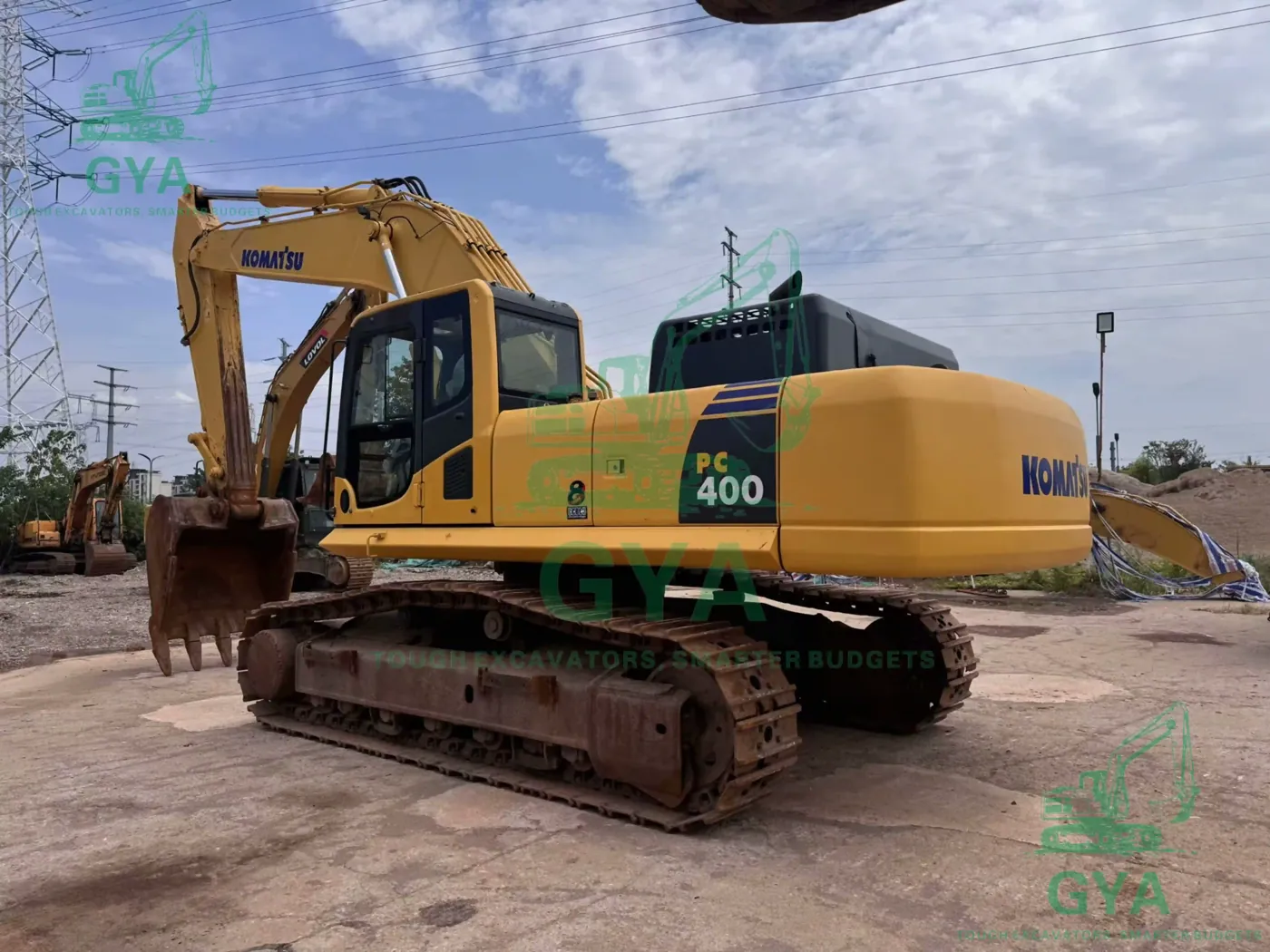
Where the used Komatsu PC400-8 excavator sits in its class
The catalogue places the PC400-8 in the 30–40 t class, alongside the PC350 and PC360 families. That single class label hides a wide spread of capability and price, which is why the model number alone is a poor basis for comparison. Within one class you can find machines that differ by tens of thousands of dollars before condition is even discussed.
Understanding the position matters more than memorising the badge. A buyer who needs a 30–40 t machine has a shortlist, not a single model, and the economics of each entry differ. The PC400-8 sits near the top of the published price range for the class, so the case for it has to be made on output, not on habit.
PC400-8 price: the 67,000–69,000 USD band in context
The band for this model is narrow — 2,000 USD from bottom to top — compared with the 12,000 USD spread published for the PC360-7. A narrow band suggests a more homogeneous model-level expectation, but it still is not a quotation. Configuration, hours, undercarriage condition and destination will move the actual figure, sometimes outside the band in either direction.
Use neighbouring bands as a sanity check, not as a substitute. The PC360-7 is listed at 50,000–62,000 USD. Comparing low ends, 67,000 against 50,000 is a 17,000 USD gap; comparing tops, 69,000 against 62,000 is 7,000 USD. Those are arithmetic on published bands, not quotes, but they show how much the choice of a specific unit can matter relative to the choice of model.
The capital gap is the first number to recover
Every economics argument starts with the capital gap. Take the difference between what you would pay for the PC400-8 and what you would pay for the alternative you seriously considered, including freight, inspection and the repair reserve on each. That total difference is the money the bigger machine has to earn back.
A gap of 7,000 USD is a different proposition from a gap of 17,000 USD, and the difference between those two cases may be nothing more than which individual units were available on the day. This is why comparing model bands is not enough: the decision is made between units, and the bands only tell you where the search starts.
Four cost lines, one of which a listing cannot give you
Ownership cost breaks into capital recovery, wear parts, fuel and the combined line for operator, maintenance labour and logistics. Capital recovery is arithmetic once the price and the holding period are fixed. Wear parts are estimable from inspection findings and local parts quotations. Labour and logistics are local numbers you already know.
Fuel is the line a listing cannot supply. Consumption depends on the work cycle, the operator, the material and the attachment, and no catalogue entry here publishes it. Measure it on site, or ask the seller for fuel records covering a representative period. A fuel assumption borrowed from a different machine and a different job will quietly distort the whole comparison.
Utilization beats specification
A larger machine lowers cost per unit of work only while it is working. If the machine spends its days waiting for trucks, or if the site cannot supply enough face to keep it fed, the extra capacity is a cost with no matching output. Utilization, not bucket size, is the variable that decides whether the capital gap is recovered.
So write the utilization assumption down before comparing models, and test it against the actual schedule: shifts per week, seasonality, weather downtime, permitted hours. If the assumption is soft, the conclusion is soft, and a machine chosen on a soft assumption will be re-sold early at a loss.
Matching the machine to the haul fleet
Class economics is largely a question of fit. A loading tool that fills a truck in a few passes and then waits is not more productive than a smaller tool that keeps the same trucks moving. The number of passes, the haul distance and the condition of the haul road all belong in the calculation, and none of them appear in a price band.
Look at the fleet you already run, or the fleet you plan to contract. If trucks are the constraint, size the excavator to the trucks. If the excavator is the constraint, the trucks are the wrong place to save money. Buying the largest machine the budget allows is not a strategy; buying the machine the haul cycle can absorb is.
The freight share of a landed PC400-8
The published band is not a landed cost. Ocean freight, insurance, lifting, lashing, import duty, VAT, clearing and inland delivery sit outside it, and for a machine of this class the freight component is material rather than incidental. A destination with a difficult port or a long inland leg can change the ranking of two machines that looked close at FOB.
Ask for a CIF quotation against the identified unit and destination, then add the duty, tax and clearing estimates from a local broker. Compare landed totals, and keep the repair reserve in the same column. A model that wins on FOB can lose on landed cost, and the reverse happens often enough to check both.
A PC400-8 inspection is an economic test
Every inspection finding on this model has a price attached, and the prices are larger than on a smaller machine. Undercarriage components, hydraulic pumps and structural repairs on a 30–40 t unit cost more than the equivalent work on a compact machine, so the same defect carries more weight in the decision.
Score the findings and convert them to quotations before you compare. A PC400-8 inspection that produces a list of defects without costs has not finished the job. The output you need is a repair reserve in currency, because that number is what enters the capital gap and decides whether the machine is cheap or expensive.
Why used Komatsu 30-40t excavator values move
Values for a used Komatsu 30–40t excavator move with age, hours, condition and configuration, and also with things that have nothing to do with the machine: freight rates, currency, seasonal demand and the volume of similar units offered into the same market. A band published today is a snapshot, not a forecast.
That is another reason to buy on evidence rather than on a discount. A unit with a documented history holds its value better in a soft market, and it is easier to sell when you no longer need it. Condition is the part of the value you control; the market is the part you do not.
Exit value and liquidity
Resale belongs in the original calculation. A common model in a common class is easier to place than an odd configuration, and a machine with records is easier to place than one without. If the plan involves selling in three or five years, the exit assumption should be written down at the start, not discovered later.
Part of that assumption is market depth: how many buyers in your region actually want a machine of this size, and what they will accept. Part is documentary: invoices, service records, inspection reports and photographs all shorten a future sale. The cost of keeping those records is near zero; the cost of not having them is paid at resale.
A decision rule before the deposit
Build the comparison in one place. Capital difference, freight difference and repair difference go in the numerator. The expected annual contribution advantage of the larger machine — output value minus the extra fuel, wear and labour it consumes — goes in the denominator. Divide, and you have a payback period in years.
Then apply a single test: is that payback period comfortably shorter than the period you intend to own the machine? If it is not, the model is wrong for the plan, or the price is. No band and no inspection report can answer that question for you, but together they give you the numbers to answer it honestly.
FAQ: used Komatsu PC400-8 excavator
Is 67,000–69,000 USD the price of a specific used Komatsu PC400-8 excavator?
No. It is the published model band. The unit price depends on condition, hours, configuration and destination.
What class is the PC400-8 in your catalogue?
It is listed in the 30–40 t class. The listing does not publish operating weight, bucket capacity or dig depth, so request the plate data for the individual machine.
Is the PC400-8 cheaper per tonne than a PC360-7?
Not automatically. The PC400-8 band is higher, and whether the extra capital pays back depends on utilization, haul fit and the condition of the specific units.
Do you provide FOB and CIF prices?
Both, once the unit and destination port are identified. Ask for the cost lines separately so the freight is visible.
Who performs the inspection?
An inspector you appoint. As an independent exporter we can arrange access, inspection and the export documents, but we do not own yards, we are not a dealer, and the report should be independent of the seller.
Class economics is settled with landed cost, repair reserve and utilization — not with the badge. Review the used Komatsu PC400-8 excavator entry, compare it with the PC360-7, or browse the Komatsu range.
Komatsu buyer guides
Price bands, inspection and transport for the models buyers ask about.