Used Komatsu PC350-7 Excavator: The Economics of the 30-40 Tonne Class
The used Komatsu PC350-7 excavator is listed at 38,000-40,000 USD, and that figure is the least useful number in the deal until you know what sits behind it. A catalogue band describes a model, not a machine. Two PC350-7 units inside the same band can differ by the cost of a track group, a hydraulic pump rebuild or a boom repair, and those differences decide whether the purchase works. This article treats the buy as a ledger rather than a sticker: the price you pay, the repairs you reserve, the freight and duty you cannot avoid, and the hours you actually expect from the machine.
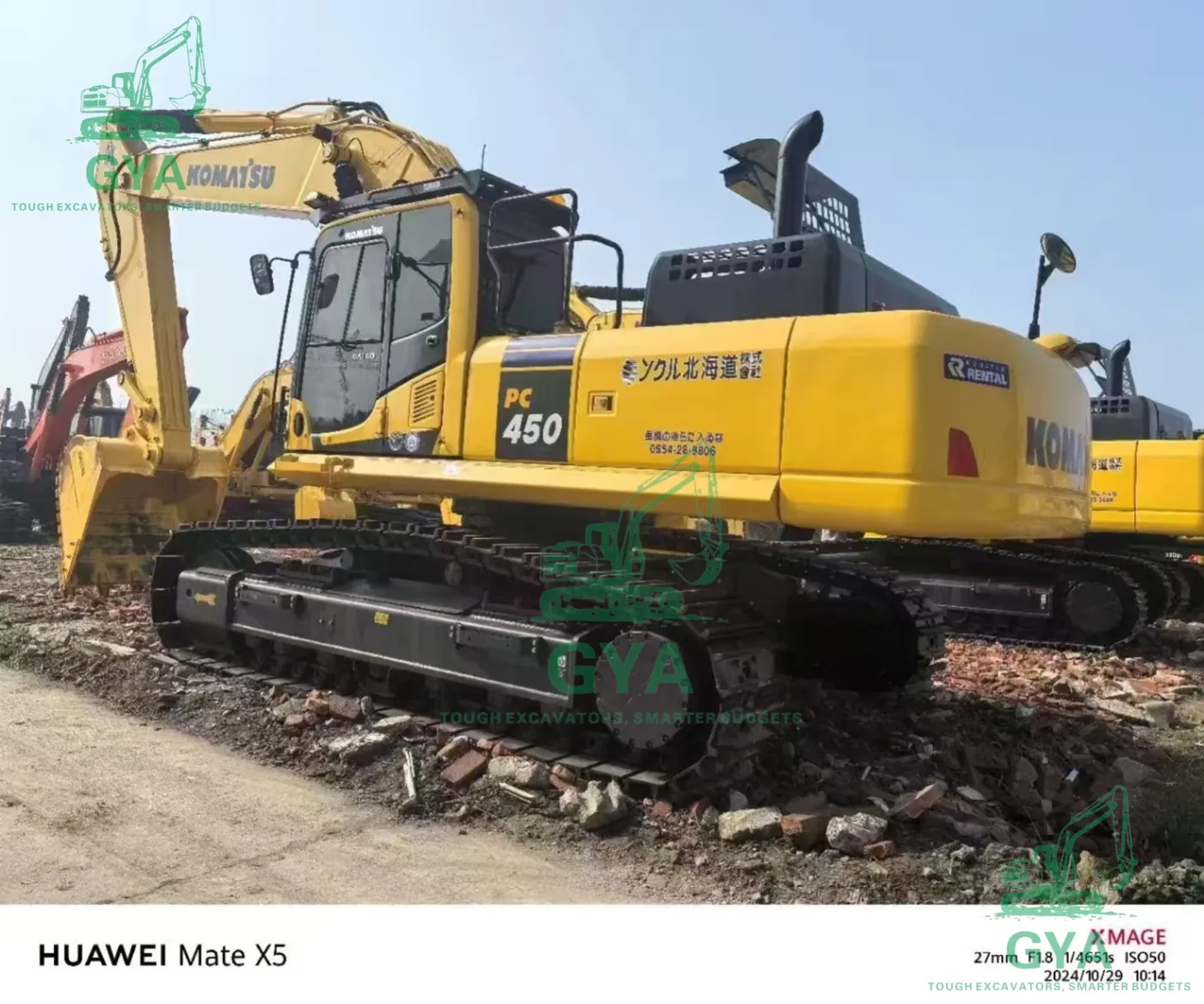
PC350-7 price: what the 38,000-40,000 USD band covers
The band is a model-level reference for a 30-40 tonne class crawler excavator. It is normally read as an FOB starting range in China, before ocean freight, insurance, duty, clearing and inland delivery. It is not a quote, and it does not promise that a particular unit is available at either end of it.
Inside the band, price moves with the undercarriage, the hydraulic components, the structure, the bucket and boom configuration, the paint and the paperwork. A unit at the top of the band with a strong undercarriage and a documented hydraulic history can be better value than a unit at the bottom that needs a track group. The band tells you where the conversation starts, not where it ends.
We are an independent exporter, not a dealer, and we do not own the yards where machines are stored. That matters for pricing: the quote is built from an inspection of the actual unit rather than a yard's asking list, and the same machine can be quoted FOB or CIF depending on how much of the route you want us to control.
The ledger: four lines to add to the sticker
Write the four lines down before you compare two machines. A seller who cannot help you fill them in is telling you something.
Line one: undercarriage
On a 30-40 tonne class machine the undercarriage is the largest predictable wear cost. Chains, shoes, rollers, idlers, sprockets and the track adjuster wear together, and replacing a track group is a capital item, not a service item. Ask for measurements: chain height, bushing diameter, shoe height and sprocket wear, with the gauge visible in the photo. "Good tracks" is an opinion; a number against the new specification in the parts book is evidence.
Line two: hydraulic system
Pumps, valves, cylinders and hoses are the second large line. A machine can look clean and still have a tired pump, a drifting boom or a valve body opened by someone without the right tools. Test combined movement, not just each function alone: boom and arm together, swing and travel, and a loaded cycle long enough to bring the oil to temperature. Ask whether the pump or any major component has been replaced, and ask for the invoice if it has.
Line three: structure and linkage
Boom foot, boom top, arm, bucket linkage and the turret are where cracks appear. Fresh paint over a weld is a question, not automatically a rejection, but it needs an explanation and a photo of the repair. Pins and bushes at the bucket and arm are consumables; measure the play instead of judging by grease.
Line four: logistics and compliance
Freight, insurance, duty, VAT, clearing, port charges and inland delivery are all real. So is the cost of an inspection and any certificate your bank or port requires. Add them before you compare the machine with a local unit. A 38,000 USD machine that lands at a number you have not calculated is not a 38,000 USD decision.
Cost per hour without invented numbers
The honest way to compare two units is a cost per hour built from your own inputs: purchase price plus reserved repairs plus freight and duty plus financing, divided by the hours you realistically expect before a major component. Nobody can give you that number from a catalogue, and any article that prints a precise cost per hour for a used machine is guessing.
What can be said is how the number behaves. A repair reserve spread over a long service life adds little per hour; the same reserve spread over a short project does not. Downtime is the multiplier: a machine that stops for a week costs whatever your idle crew, idle trucks and penalties cost, and that figure is usually larger than the gap between two asking prices.
So the economic question is not which PC350-7 is cheaper. It is which unit is less likely to stop, and what the evidence for that costs.
PC350-7 inspection: measure, do not admire
A PC350-7 inspection should produce numbers and dated evidence, not adjectives. Ask for a cold start video with the exhaust visible, a full hydraulic cycle at operating temperature, a travel test in both directions, and photographs of the plate and meter in the same frame. Then ask for the measurements above.
Listen for swing noise and check the swing brake, because a swing problem is expensive and easy to hide in a short clip. Check the final drives for leaks and noise under load. Look at the boom foot with the arm raised and lowered, since a crack can close in one position and open in another.
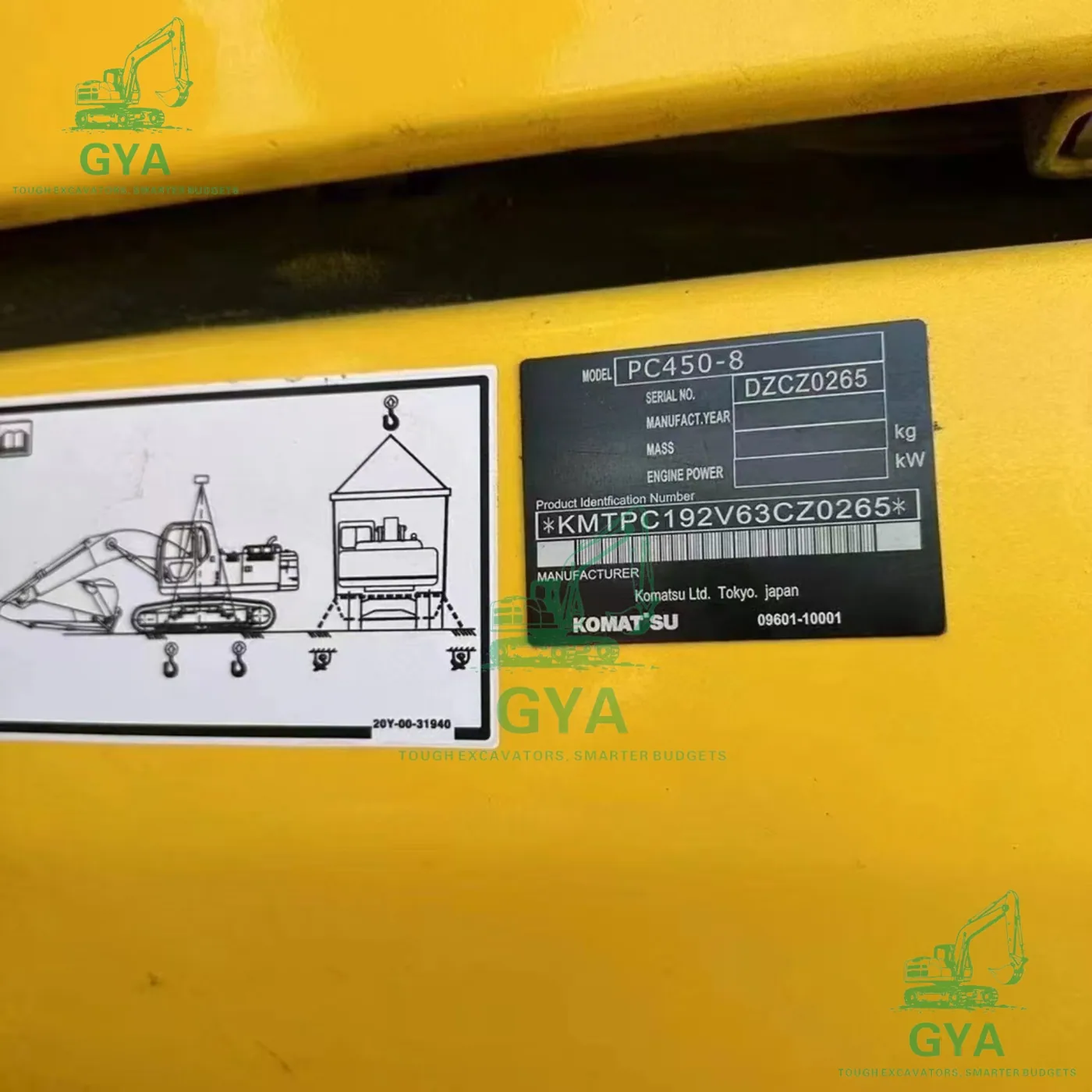
The engine in the spec table carries a common reference of SAA6D114E, but the plate on the machine is the authority. Photograph it. Confirm the model suffix as well: PC350-7 and PC350LC-7 are not the same description, and the undercarriage width changes both the transport plan and stability on site.
What the neighbouring bands say, and what they do not
The same catalogue lists the PC350-8 at 40,000-44,000 USD, the PC300-7 at 44,000-46,000 USD, the PC360-7 at 50,000-62,000 USD and the PC400-8 at 67,000-69,000 USD. Two things follow, and one thing does not.
First, the model number is not a price ranking. The PC300-7 band sits above the PC350-7 band, which surprises buyers who read "300" as smaller and therefore cheaper. The bands reflect generation, market demand and specification, not the number on the decal. Second, the PC350-7 top and the PC350-8 bottom meet at 40,000 USD, so the generation choice is genuinely close at that seam. What does not follow is that a higher band buys a better machine: a clean unit at the lower band can beat a tired unit at the higher one.
When the PC350-7 is the economically right machine
This model earns its place where the work is rough and the repair ecosystem is simple. Earthmoving, site preparation, road work, truck loading and quarry support suit it. A used Komatsu 30-40 tonne class excavator like this one is bought to move material every day, not to sit in a yard looking clean, so the working video matters more than the paint. The older engine generation listed in the spec table, with SAA6D114E as the common reference, is generally easier for workshops that do not want to depend on electronic diagnostics, and it is more forgiving of fuel that is not laboratory-clean. Buyers who plan a short project, resell into a price-sensitive market, or run their own maintenance shop often get more value from a well-checked PC350-7 than from a newer unit they cannot service.
It is also the right answer when the alternative is a smaller machine doing a larger machine's job. Moving up to this class usually improves truck loading productivity more than any paint or cab upgrade on a 20-tonne unit.
When the PC350-7 is the wrong machine
If the machine will go into long-term rental, if fuel is a major controlled cost, if the import file must satisfy a strict buyer, or if the local workshop has the tools and training for a newer electronic platform, the PC350-8 at 40,000-44,000 USD deserves the comparison. That is not a claim that the newer machine is always better; it is a statement about where the older machine's advantages stop.
Likewise, do not buy a PC350-7 to save money and then spend the saving on a track group and a pump rebuild in the first season. The ledger, not the band, decides.
Used Komatsu PC350-7 excavator: buying through an independent exporter
The process should be boring. Send the destination port, the work type and the configuration you need. Receive current photos, a cold start video, a working video and the undercarriage measurements. If the unit is acceptable, ask for a proforma invoice that names the machine, the price, the Incoterm and the port.
Arrange the inspection before the balance payment. After payment, confirm the loading method and the document set: commercial invoice, packing list, bill of lading and certificate of origin, with the model and serial matching the plate. We quote FOB or CIF and we do not own yards or act as a dealer, so the inspection is the control point rather than a showroom visit. The catalogue entry and the current listing should both be read against the actual machine, never the other way around.
Used Komatsu PC350-7 excavator FAQ
Is 38,000-40,000 USD the price of a specific machine?
No. It is the model band. The unit price depends on condition, configuration, destination and Incoterm.
What should a PC350-7 inspection measure?
Chain and shoe wear, bushing and pin play, sprocket wear, hydraulic cycle at temperature, swing brake, final drives and structure at the boom foot. Numbers and dated video beat adjectives.
Is the PC350-7 cheaper to own than a PC350-8?
It can be, but not automatically. The purchase band is lower, while fuel, parts and downtime depend on the unit and the market. Compare the ledger for the two actual machines.
Do you own the machines you sell?
No. We are an independent exporter and not a dealer, and we do not own the yards. Each unit is inspected where it stands before it is quoted.
Can you quote CIF?
Yes, FOB or CIF. Send the discharge port so freight and insurance can be added to the machine price.
Start with the used Komatsu PC350-7 excavator listings, or read the PC350-7 model page for the catalogue facts.
Komatsu buyer guides
Price bands, inspection and transport for the models buyers ask about.