Used Komatsu PC500LC-10M0 Excavator: Transport and Loading, Step by Step
A used Komatsu PC500LC-10M0 excavator is not a parcel. The catalogue lists it in the 40-50 t class with a band of 180,000-200,000 USD, and at that level the move is a project with its own budget, its own documents and its own failure modes. This guide covers the transport side only: the measurements to collect, the three loading methods and how to choose between them, the lift and lashing plan, the road leg, and the inspection that protects the machine before it goes on board.
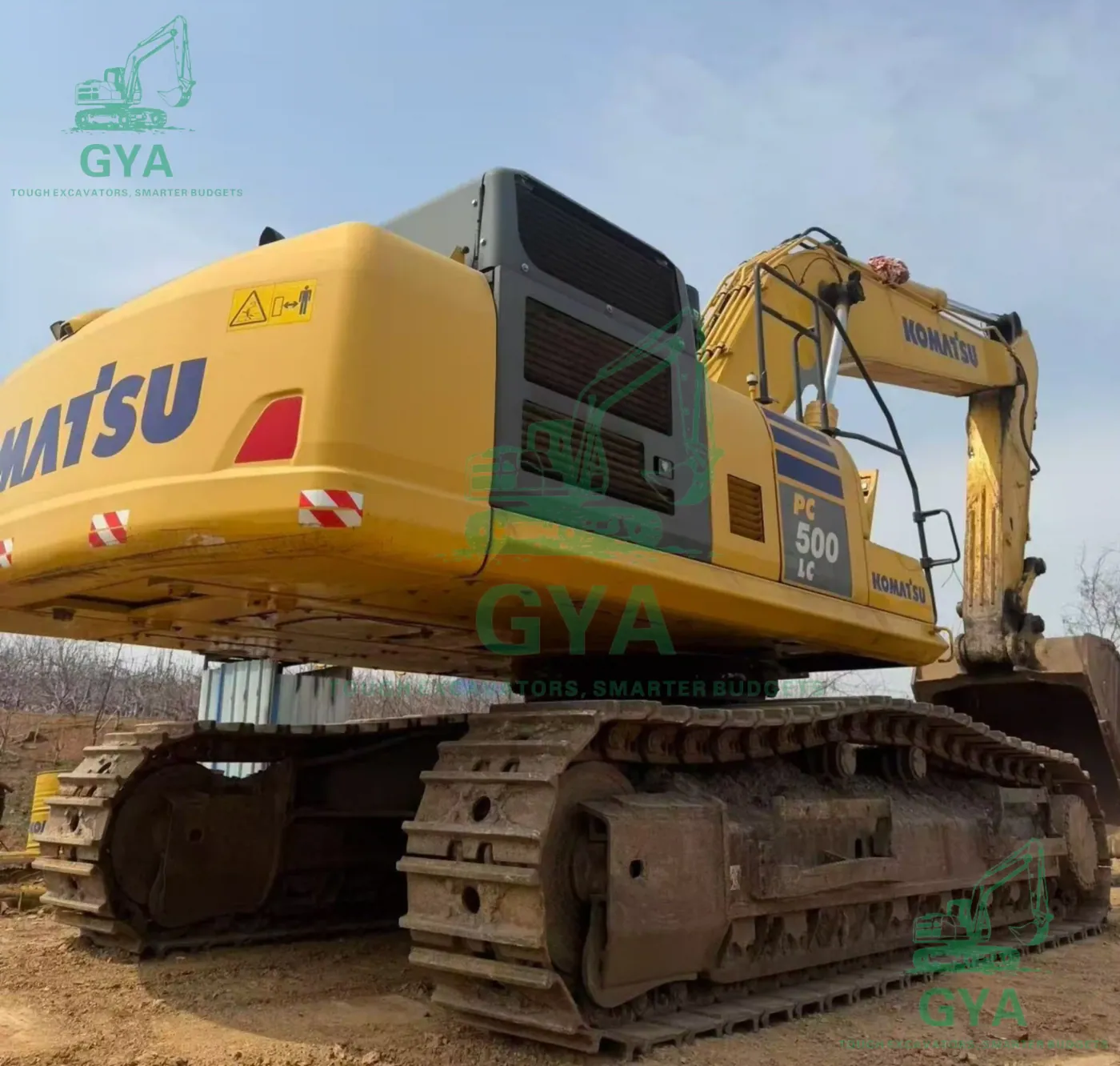
The machine file comes before the freight quote
Freight is priced against facts: dimensions, weight, lifting points and the port pair. Without those, a forwarder quotes a category, and categories are where budgets go wrong. The file starts with the plate, the configuration and a set of transport drawings, not with a phone call asking for a rate.
Build the file in one place: plate photo, configuration, transport dimensions, transport weight, lifting and lashing points, and the loading method you are asking about. Send the same file to every forwarder so the quotes are comparable.
The measurements that decide the method
You need the shipping dimensions with the boom and arm folded as they will travel, the transport weight with the bucket removed if the method requires it, the height over the highest point, the width over the tracks, and the position of the centre of gravity. Ask for these on paper, from the manual or from a measuring session with photographs, never from a model name.
Confirm as well whether the counterweight can be removed and how, whether cab guards add height, and which points are approved for lifting and for lashing. A forwarder will ask for all of it, and a quote built without it will be revised later at your expense.
Loading options for a used Komatsu PC500LC-10M0 excavator
Three methods cover most moves at this size: flat rack, breakbulk, and roll-on roll-off. The right one depends on the dimensions, the port pair, the vessel schedule and the handling gear at each end, not on preference.
A flat rack suits machines that fit the rack envelope and can be lashed to the deck; it is booked as container equipment and moves on container ships. Breakbulk puts the machine on a deck or in a hold under the ship's gear, which is the usual answer when the envelope is exceeded. RoRo rolls the machine on its own tracks or on a trailer and needs a port pair that both handle RoRo traffic.
Choosing between flat rack, breakbulk and RoRo
Start with the port pair. If either end lacks RoRo service, RoRo is out regardless of price. If the machine exceeds the flat rack envelope in any dimension, breakbulk is the fallback. If it fits, the flat rack is usually the simpler booking.
Then check the crane. Breakbulk and flat rack loading both need lifting capacity at the loading port and, at destination, either a crane or a ramp. Ask who provides the gear and whether it is inside the quote or billed separately on the day.
Then check the schedule. A method that saves money but adds weeks of waiting is not saving money when the machine is needed on site. Get the sailing options with the rate, not after it.
The lift plan and the cradle
Ask the forwarder for the lift plan in writing: lifting points, sling type, spreader, and the cradle or skid the machine will sit on. A machine of this class travels on a prepared base, not directly on a steel deck, and the base is built to the transport drawings rather than improvised at the quay.
Photograph the machine on the cradle before lashing. That photograph is the reference if paint, guards or cab glass are damaged on arrival.
Securing for the sea leg
Lashing is engineering, not rope. Ask for the number and rating of the lashing points used, the chain or strap specification, and whether the arrangement was checked against the ship's securing manual. Blocking under the tracks prevents fore-and-aft movement; the lashings control everything else.
Protect what you can before loading. Cover the cab glass, tape the exhaust, and record existing damage in the pre-loading photographs. Salt air and chain contact will do the rest without help.
The road leg, permits and the receiving crane
The sea leg is the part people plan. The road leg is where the surprises live. An oversize machine needs permits, a route survey for bridges and overhead lines, possibly an escort, and a low-bed trailer rated for the transport weight. Ask the receiver to confirm the crane and the space before the vessel sails, not after.
If the machine will be unloaded at a port and stored before the inland move, confirm the storage terms and who is responsible while it sits. That interval is where damage and demurrage appear, and neither is in the freight rate.
Documents that must match the serial
The export file for a machine of this value should carry the commercial invoice, the packing list, the bill of lading, the certificate of origin and the insurance certificate, with the serial number consistent across every one. A mismatch between the bill of lading and the plate is a customs problem, and it is cheaper to correct before sailing than at discharge.
Keep the inspection report, the loading photographs and the lift plan with the file. They are not customs documents, but they answer the questions that arrive later.
What the 180,000-200,000 USD band does and does not include
The catalogue lists this model in the 40-50 t class with a band of 180,000-200,000 USD. Two things follow. The band is a model reference, not a delivered price. And it sits far above the other 40-50 t entries on this site, which is a reason to confirm the exact configuration and the plate before treating the class label as settled.
A PC500LC-10M0 price quoted for a specific machine should state the serial, the configuration, the Incoterm and the port. Read it together with the transport method, because on this class the move is a material share of the total, and a cheap unit behind an expensive route is not cheap.
used Komatsu 40-50t excavator shipping: what surprises buyers
Three things catch first-time importers. The first is that a listing often quotes the operating weight rather than the transport weight, and the two differ once the bucket comes off or the counterweight is removed. The second is that the port pair decides the method more often than the machine does. The third is that the inland leg can cost as much as the sea leg on a short route, because permits and cranes are priced per move rather than per kilometre.
Get all three quoted before you compare two machines. Then compare landed cost, not the FOB line.
How to inspect a used Komatsu PC500LC-10M0 excavator before loading
Inspection at this size has two jobs: condition for work, and condition for travel. Do the mechanical checks first: cold start, function test at temperature, undercarriage measurements, structure, hydraulics, and the monitoring history. A PC500LC-10M0 inspection that stops at the mechanical side leaves the shipping risk unmeasured.
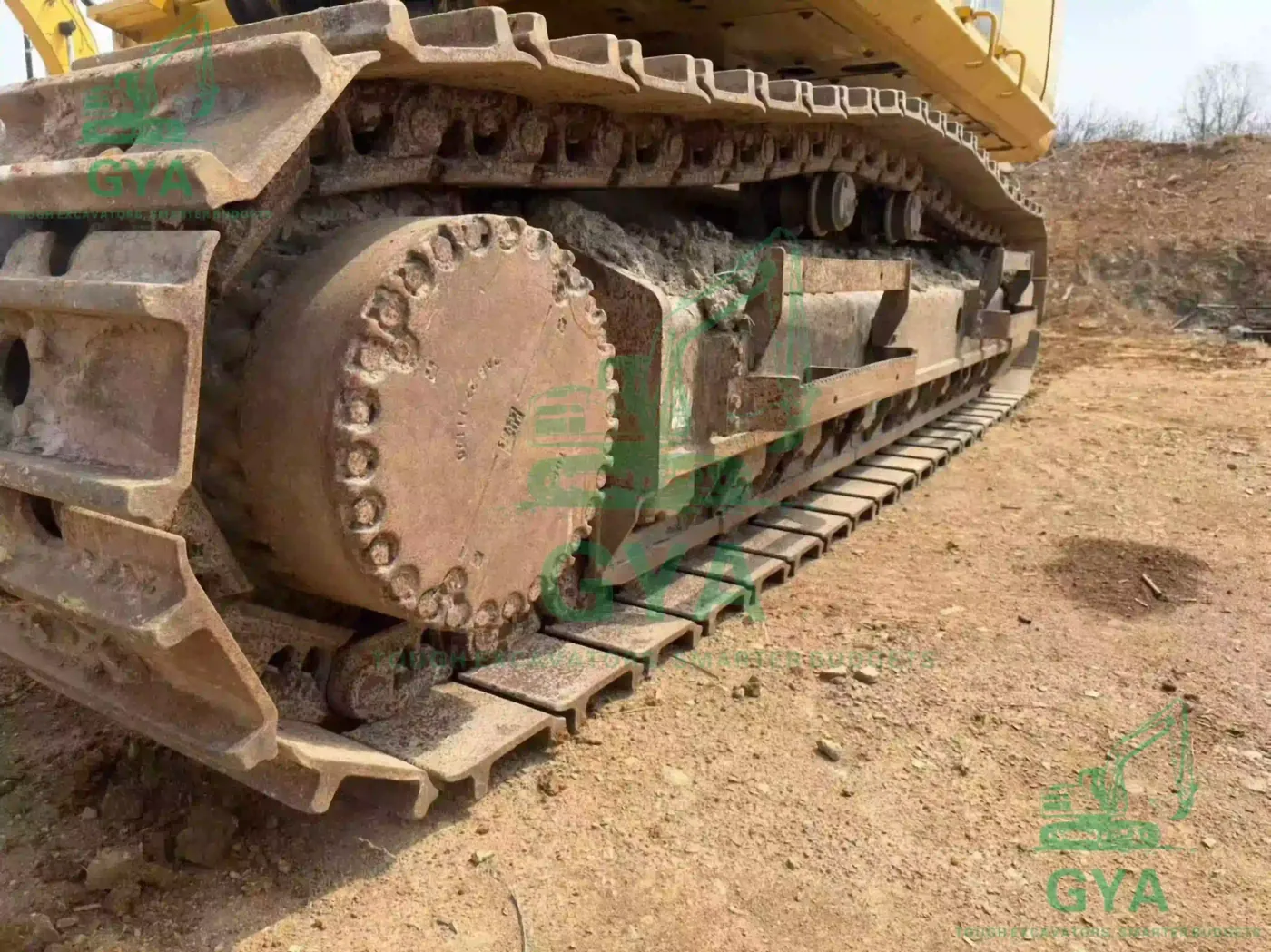
Then check the transport items. Are the lifting points present and undamaged? Is the counterweight mounting sound? Are the guards and cab free of cracks that will worsen under lashing? Are the tracks in a state that can climb a ramp if RoRo is chosen? A machine that fails the travel check can still be a good machine, but the method has to change before it is booked.
Photograph everything before loading with the date visible. That set of images is the baseline for any claim, and without it a claim becomes an argument.
Booking sequence and timeline
The sequence is: measurements and transport drawings, method selection with the forwarder, a written quote for the chosen method, booking, positioning the machine at the loading port, loading and lashing, sailing, discharge, inland move. Each step has its own lead time, and the longest is usually the vessel schedule rather than the preparation.
Ask for the loading window in the proforma and treat it as a window. Then plan the receiving crane and the site access against the same window, because a machine that arrives before the crane is a storage bill.
How we quote, and what we do not own
This site belongs to an independent exporter. We hold no yard and no dealer franchise, so there is no row of machines to inspect on a Sunday. Each unit is sourced for an order, inspected before shipment, and quoted FOB or CIF for the port you name.
Transport can be arranged as part of the offer or left to your forwarder. Either way the same file is used: dimensions, weight, lift plan, photographs and documents. We would rather lose a sale than quote a method the machine does not fit.
FAQ: moving a PC500LC-10M0
What does a used Komatsu PC500LC-10M0 excavator inspection include?
Mechanical checks for condition, plus a travel check: lifting points, counterweight mounting, guard and cab cracks, and track condition for ramp loading.
Can it ship inside a container?
Only if the machine fits the flat rack or container envelope with the boom folded. Confirm the transport dimensions before assuming it does.
Which method is cheapest?
It depends on the port pair and the dimensions. Ask for flat rack, breakbulk and RoRo quotes against the same file, then compare with the schedule.
Who arranges the crane at destination?
Normally the buyer or the receiver. Confirm it in the contract and confirm the capacity before the vessel sails.
Is the 180,000-200,000 USD band the delivered price?
No. It is a model reference for the machine itself. Freight, insurance, duty and clearing sit outside it.
Can loading damage be claimed?
With dated pre-loading photographs, a clean bill of lading and marine insurance, a claim can be supported. Without them it is hard to prove when the damage happened.
Do you own the machines you list?
No. We are an independent exporter with no yards; machines are sourced per order and inspected before loading.
Plan the move, then buy the machine
Transport is not an afterthought on a 40-50 t unit; it is half of the decision. Get the measurements, choose the method against the port pair, write the lift and lashing plan, protect the machine with photographs, and keep the document set matched to the serial. Do that and the machine arrives as the machine you bought.
See the used Komatsu PC500LC-10M0 excavator model page, or ask about PC500LC-10M0 units sourced to order. If the machine you are comparing is smaller, the PC460LC-8 inspection guide covers the checks in more detail.
Komatsu buyer guides
Price bands, inspection and transport for the models buyers ask about.