Used Komatsu PC360-8 Excavator: Transport and Loading Plan
The used Komatsu PC360-8 excavator is catalogued here in the 30–40 t class, and its price field is blank. That blank is not an invitation to borrow a neighbour’s number: the PC360-7 band and the PC400-8 band belong to different machines, and neither is a PC360-8 price. So this page quotes none. It deals with the part of the purchase that is decided before money moves and is usually planned last — how a machine of this class actually leaves the country, and what has to be true on loading day.
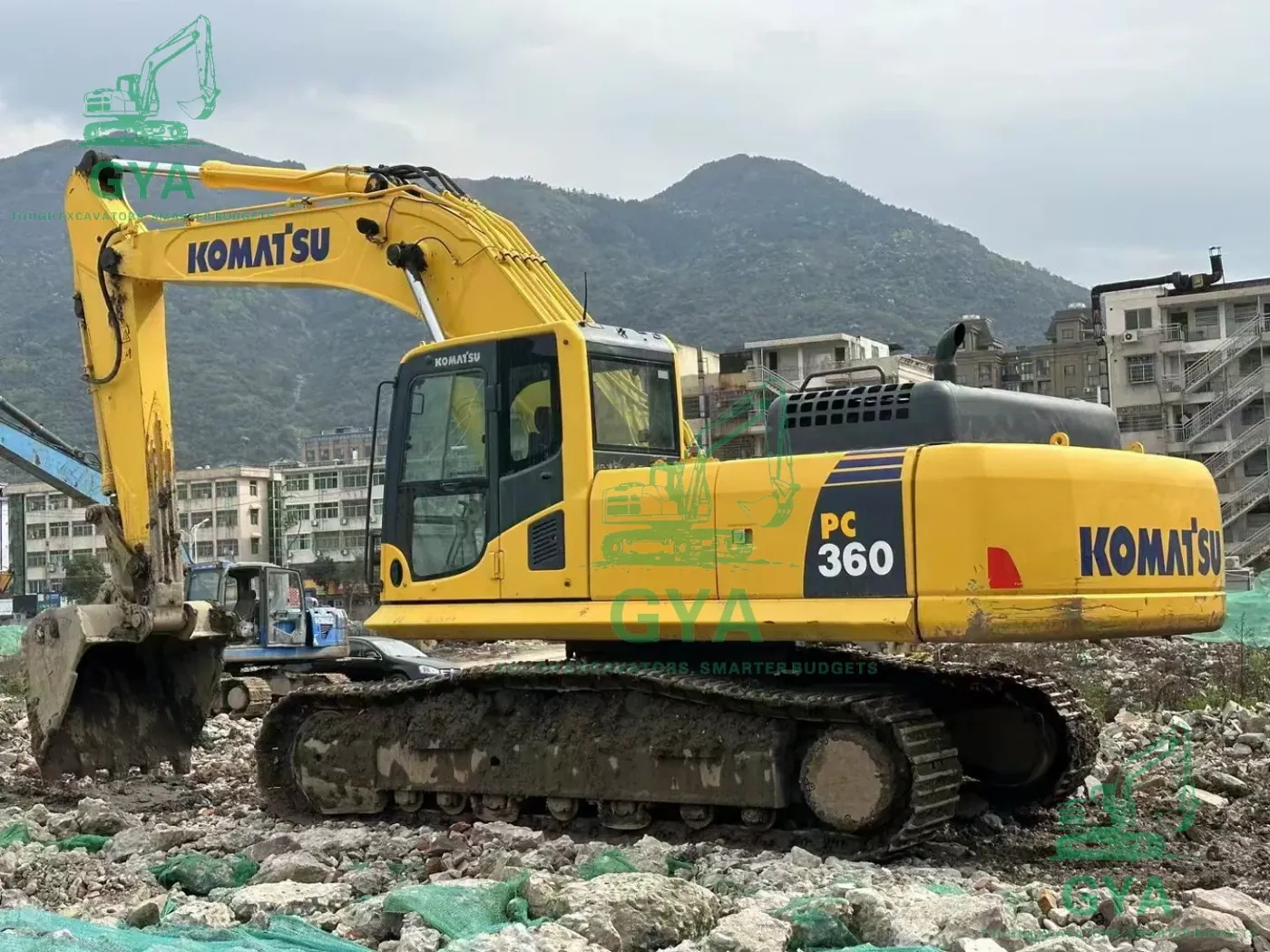
The used Komatsu PC360-8 excavator has no published price band
The model data carries no price range for the PC360-8. That is a fact about the catalogue, not a negotiating position. Anyone who gives you a figure before identifying the unit — year, hours, undercarriage condition, attachment, destination — is guessing, and a guess that later becomes a proforma invoice is a problem for both sides.
Ask for a unit-specific quotation instead, split into machine price, inland transport to the port, export handling, lifting and lashing, ocean freight and insurance. FOB and CIF can both be quoted. As an independent exporter we arrange inspection, documentation and shipment; we do not own yards and we are not a dealer with a forecourt of stock to walk around.
Freight can outrank the machine in the budget
For a used Komatsu 30-40t excavator, the cost of moving it is not a rounding error. Ocean freight, lifting, lashing, inland haulage and port charges are quoted separately from the machine, and the loading method changes all of them at once. A method chosen late can consume the difference between two otherwise comparable units.
This is why transport planning belongs before the price negotiation, not after it. Once the dimensions and the port pair are fixed, the freight number becomes real, and the machine price can be judged against a landed total. Until then, every comparison is partial.
Step one: measure the machine, not the brochure
You need transport length, transport width, transport height and operating weight, plus track shoe width, tail swing and the position of the lifting points. Attachments change all of it: a machine measured with the bucket fitted is a different cargo from one measured without it. Boom position must be stated, because a folded boom and a raised boom produce different heights.
Get the figures from the plate and the operator manual, then confirm them with a tape and photograph the tape in frame. Ask the seller to sign a measurement sheet with the date and the method. The carrier will also need a verified weight for the booking; a number copied from a similar model is not a verified weight.
Step two: choose between flat rack, RoRo and breakbulk
There are three practical routes. A flat rack carries the machine on deck or under deck within fixed dimensional limits. RoRo moves it up a ramp on its own tracks or on a trailer, which requires a port pair that both handle the trade. Breakbulk lifts it with a ship’s or shore crane and is priced on a different basis again.
None of these can be selected from the class alone. A 30–40 t machine is not ordinary container cargo, and the limits that decide the method are measured, not nominal. Give your forwarder the measurement sheet, the port pair and the dates, and ask for a quotation per method. The cheapest method on paper is often the one that cannot be booked for your sailing.
Step three: prepare the unit for the sea voyage
Preparation is a checklist, not a gesture. Fuel level to the carrier’s limit, battery isolated or removed as instructed, loose tools and parts boxed and listed, bucket and attachment decisions recorded, boom rest secured, cab glass protected, openings sealed against salt spray, water drained where required. Old grease and mud should be cleaned off so that lashings sit on metal, not on debris.
Photograph every stage, including the defects you already know about. A pre-loading condition report with dated images is what limits argument at destination. Keys, manuals and the document folder should travel separately from the machine, because a folder left in the cab is a folder that arrives wet or not at all.
Step four: lashing, dunnage and loading day
Lashing is engineering, not rope. The plan should name the lashing points, the type and rating of the securing gear, the number of turns and the dunnage arrangement, and it should be accepted by the carrier or the stevedore who executes it. Wood dunnage must carry a legible ISPM 15 mark. Nothing should be secured to sheet metal or to a guard rail.
On the day, have someone represent your interest: a surveyor, your agent, or a named inspector. They photograph the machine on the trailer, watch the ramp angle and track grip during loading, confirm the boom rest, and photograph the finished lashing. The loading report and those images belong in the same file as the bill of lading.
Step five: PC360-8 inspection at handover
A pre-shipment inspection here is a condition record, not a warranty. Its purpose is to fix the state of the machine on the day it passed into the carrier’s care: what worked, what leaked, what was already cracked, which track or undercarriage part was worn. Write the defects down rather than describing the unit as good.
This matters because arrival surveys happen weeks later, and memories do not survive that gap. If damage appears at destination, the handover record is the evidence that separates a loading incident from a pre-existing fault. The inspection you commission before payment answers a different question — whether to buy — and both belong in the deal.
Step six: the document set
The shipment file normally includes a commercial invoice, a packing list, a bill of lading, a certificate of origin and an insurance certificate, alongside the measurement sheet, the weight declaration, the loading report and the inspection record. Where wood packaging is used, the ISPM 15 mark should be visible in a photograph as well as on the timber.
Consistency is the whole point. Model and serial on the invoice must match the plate; weights on the packing list must match the booking; consignee details must match the import file. A single mismatch can hold a customs entry after the vessel has sailed, and correcting it from the destination side is slow and expensive.
Step seven: FOB and CIF are different jobs
Under FOB, the buyer arranges and pays the ocean leg, and risk passes when the cargo is loaded on board. Under CIF, the seller arranges freight and insurance to the named destination port, but risk still passes at loading. The three-letter term decides who books what, not who carries the risk for the whole voyage.
Ask which party pays for lashing, port storage before sailing, demurrage and destination handling, because those lines sit outside the Incoterm and are where budgets slip. A CIF price that omits lashing is not a cheaper CIF price; it is an incomplete one.
What to ask before you pay a deposit
- A signed measurement sheet with photographs of the tape.
- The proposed loading method, the port pair and the sailing window.
- The lashing plan and who executes it.
- The insurance cover and who is named.
- The full document list, including the origin certificate.
- Written confirmation of when your inspector can access the machine.
If any of these is unavailable before payment, the shipment is not planned yet, whatever the invoice says.
Loading failures that repeat
The same mistakes recur across this class. Dimensions are taken from a similar model rather than from the unit. The ramp angle is too steep for worn tracks. The bucket stays fitted and pushes the cargo over a height limit. The verified weight arrives after the carrier’s cut-off. Lifting points are assumed rather than confirmed. No one represents the buyer on the day.
Each one is cheap to prevent at the planning stage and expensive to fix at the port. A single page of measurements, signed and photographed, removes most of them.
FAQ: used Komatsu PC360-8 excavator
What is the price of a used Komatsu PC360-8 excavator?
No price band is published for this model in our data. Ask for a unit-specific FOB or CIF quotation once the machine and destination port are identified.
Can a PC360-8 ship inside a standard container?
Do not plan on it. A machine in the 30–40 t class has to be measured, and the method confirmed with a forwarder against those measurements.
Who arranges lashing under CIF?
Confirm it in the quotation. Lashing and port handling are often separate lines even when the ocean freight and insurance are arranged by the seller.
How long is the sea voyage?
Transit time depends on the port pair and the service, so ask the forwarder for the specific routing rather than a general figure.
What documents should arrive with the machine?
Commercial invoice, packing list, bill of lading, certificate of origin and insurance certificate, plus the inspection and loading records.
Transport is planned from measurements, not from the model badge. See the used Komatsu PC360-8 excavator page for the catalogue entry, or browse the full Komatsu range and the stock list.
Komatsu buyer guides
Price bands, inspection and transport for the models buyers ask about.