Used Komatsu PC360-7 Excavator: Inspection Checklist Before You Pay
A used Komatsu PC360-7 excavator is a 30–40 t class crawler machine, and this site lists the model at 50,000–62,000 USD. Neither figure describes the unit you are being offered. The class tells you what sort of work the machine is built to hold. The band tells you where model-level pricing sits. What decides the purchase is the condition file — identity, engine, hydraulics, undercarriage, structure and paperwork, taken in that order. This guide gives you an inspection sequence you can run before any payment, and a way to turn the findings into a defensible price position.
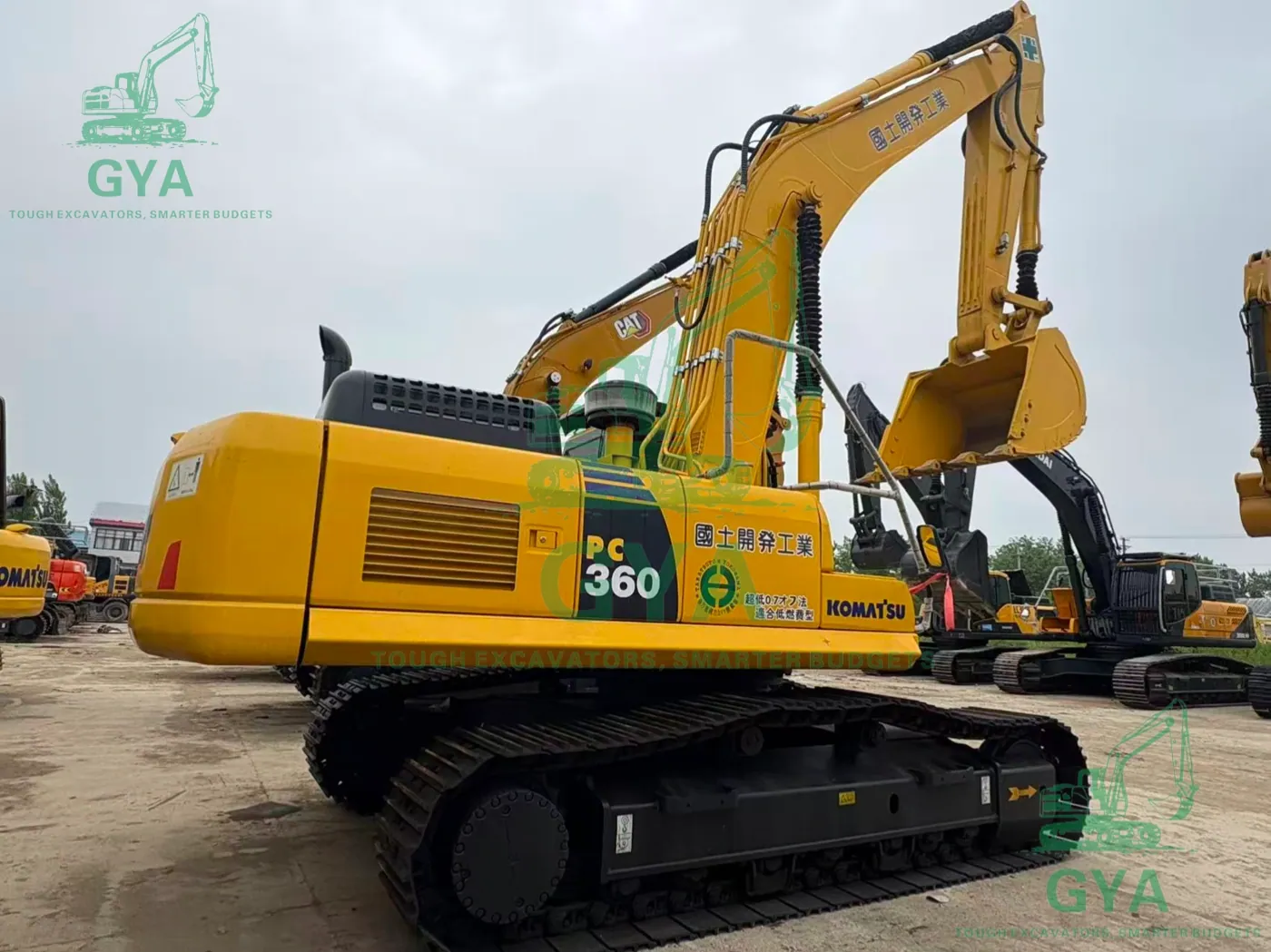
Why the used Komatsu PC360-7 excavator needs a staged inspection
On a machine of this size, the costly surprises are rarely visible in a listing photograph. Track and roller wear builds up over thousands of hours and disappears under fresh paint. Pump wear announces itself as heat, drift and slow cycle times rather than as a puddle on the ground. Cracks open at the boom foot, the arm and the bucket linkage, and a quick respray can hide them for a season. A five-minute walkaround cannot settle any of this, and a seller’s description certainly cannot.
So split the work. Stage one is desk research: identity, documents, and whether the seller will evidence claims at all. Stage two is remote evidence: one continuous video, close-ups, and measurements the seller writes down. Stage three is a physical inspection by an inspector you name, working to a scope you write. Every stage can end the deal, and the cost of ending it rises as you move forward. That order is the whole method.
PC360-7 price: reading the 50,000–62,000 USD band
The published band spans 50,000 to 62,000 USD, a spread of 12,000 USD inside a single model name. The spread is not noise. It reflects configuration, condition, hours and destination, and it exists because the band is a reference for the model rather than an offer on a machine. A unit with a documented undercarriage renewal, a clean hydraulic report and a straight structure can justify the upper end. A unit with worn tracks, a weeping pump and no history can sit at the bottom and still be the more expensive purchase once repairs are quoted.
Use the band to frame a question, not to close one. Ask the seller where the specific machine sits and what evidence supports that position. A number with no reason behind it tells you as much about the seller as about the machine. The used Komatsu PC360-7 excavator page carries the same band; it does not carry a unit price, and no honest listing can until the individual unit is identified.
Stage one: identity before condition
Before anyone discusses condition, establish what the machine is. Request one uninterrupted video that begins at the serial plate, pans to the model plate, and ends at the hour meter with the engine running. Plates get swapped, and a machine can be advertised as one model while the plate says another. The video should be continuous, because cuts are exactly where mismatches hide.
Then match the plate to the paperwork: invoice, customs declaration, any earlier export file. If the seller cannot produce a plate that matches the documents, stop there. Identity is the cheapest thing to verify and the most expensive thing to get wrong, because every later step — parts, resale, customs entry — depends on it being right.
Stage two: cold start and engine evidence
Ask for the start to be filmed before the machine has been warmed. A pre-warmed engine will idle smoothly even when cold starting is difficult, so the footage has to begin with a cold machine and a visible ambient condition. Listen for a knock, a misfire or a long crank. Watch the exhaust colour at first start, and again after a minute of idle.
Follow with what a video cannot show. Request oil analysis results if the seller holds them, the coolant condition, and invoices for any engine work. Blow-by, oil weep at the breather and fresh sealant around the head are all fair questions. None of this proves the engine is healthy, but a seller who refuses to discuss it tells you where the risk sits.
Stage three: hydraulics under load
A hydraulic check needs load, not just movement. Ask for a cycle that works boom, arm, bucket, swing and both travel motors, and ask the operator to hold functions against resistance long enough to reveal drift and bypass. Watch cylinder rods for scoring and pitting, hoses for rubbing and age cracks, and the floor under the pump for fresh oil.
Ask whether the monitor shows active fault codes and request a photograph of the screen. A pressure and flow test by a technician is the only real proof of pump condition; a video is a screening tool, not a test. If the seller will not permit a test, price the machine as though the pump needs attention, because that is the exposure you are carrying.
Undercarriage: the largest wear line
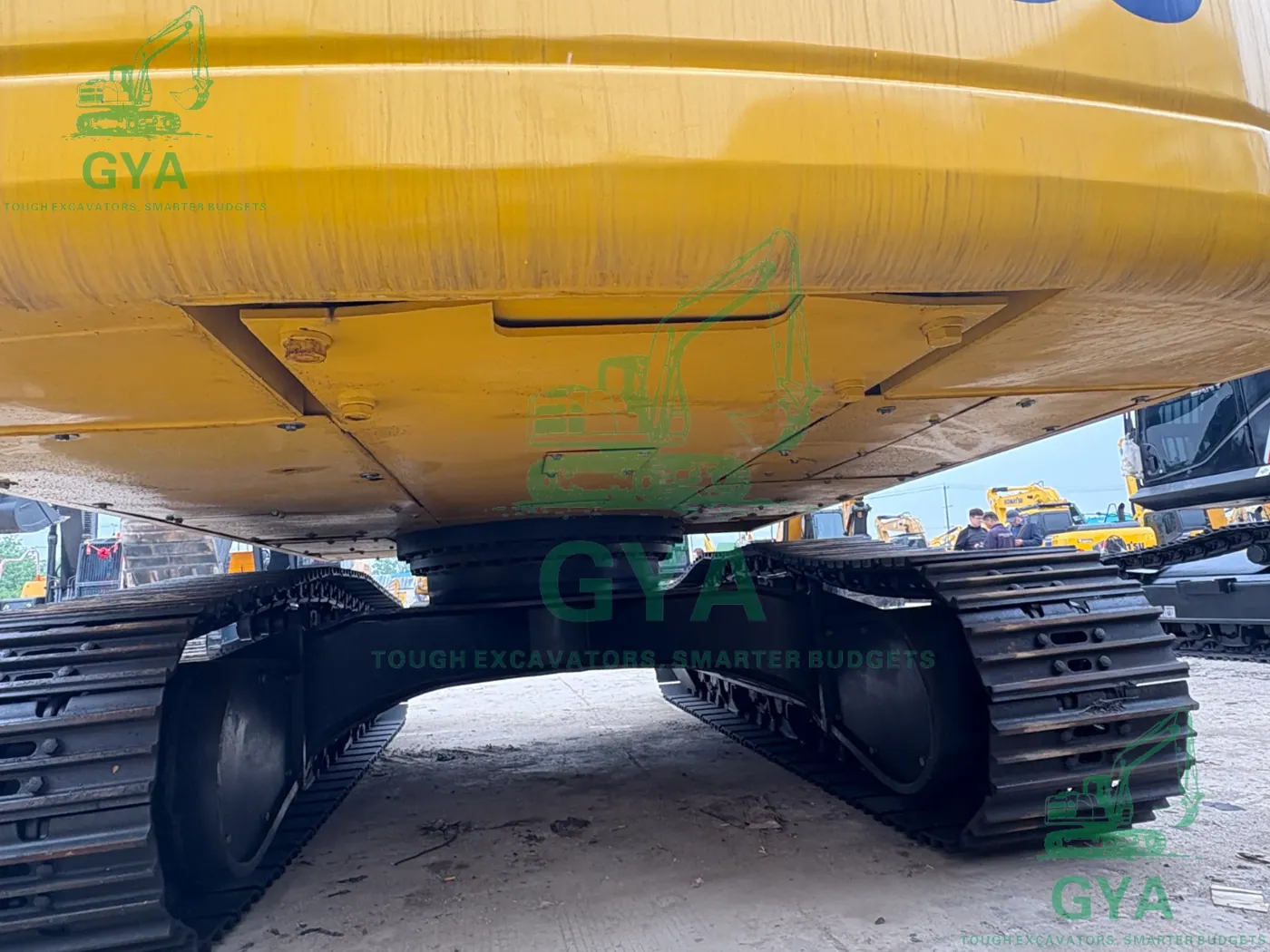
On a machine in this class the undercarriage is the biggest single wear item, and the easiest to disguise. Request close-ups of shoes, links, rollers, idlers and sprockets, plus written measurements of link height and bush wear if the seller has gauges. New paint on shoes proves nothing; wear at the pin bosses and the sprocket teeth shows through paint.
Ask for track tension and for photographs of each chain separately, since one side often wears faster than the other. A worn set is not a reason to reject a machine, but it is a cost that belongs in your comparison. Get a written quotation for replacement in your own market before deciding, because that figure moves the effective price more than a small discount on the sticker.
Structure, welds and the boom
Structure is where a bargain becomes a project. Look at the boom foot, the boom-to-arm joint, the arm nose, the bucket linkage, the turret ring area and the counterweight corners. Cracks usually start at weld toes and bolt holes, and they are often covered by a recent coat of paint that does not match the surrounding finish.
A repair weld is not automatically a rejection, but it needs assessment by someone competent to judge it, and it should be disclosed. Ask for photographs from before and after any structural repair, and for the welder’s procedure if one exists. If the seller cannot say whether a weld is original, treat that area as unverified and put it in the inspection scope.
How to run a PC360-7 inspection from another country
Most buyers of this class are not standing next to the machine. That is normal, and it is manageable. Appoint an inspector by name, give them a written scope that follows the order above, and require a report with photographs, measurements and a clear pass, repair or reject verdict for each system. A report that says “good condition” without measurements is not a report.
A live video call is a useful addition, never a substitute. Have the inspector walk the machine while you watch, and insist that the camera stays on the item under discussion. If the machine is held at a yard the seller does not own, confirm in writing who grants access and when. An independent exporter arranges access and inspection; it does not pretend to own the yard.
Turning findings into a price position
Convert findings into money before you negotiate. List every system, mark it pass, repair or reject, and attach a local repair quotation to each repair item. Add those quotations to the asking price. That sum, not the sticker, is what you compare across machines.
A low-band unit with a track set and a pump ahead of it can cost more than a high-band unit that needs neither. Put the reserve in writing in your own file so the number survives the momentum of a deal. If the seller will not hold a price while an inspection is completed, that is a commercial fact worth weighing as heavily as any mechanical one.
What a used Komatsu 30-40t excavator file should contain
For a used Komatsu 30-40t excavator crossing a border, the file matters as much as the machine. Expect a commercial invoice, a packing list, a bill of lading and a certificate of origin, plus the inspection report and the condition photographs taken at handover. Where wood packaging is used, an ISPM 15 mark should be present and legible.
Check that the invoice describes the machine by model and serial exactly as the plate does. A mismatch can stop a customs entry long after the vessel has sailed. Keep the inspection report with the shipping documents: it is your record of condition at the moment the machine left the seller’s control, and it is the only record that will still exist a year later.
Red flags that end the inspection
- A plate that does not match the invoice, or a refusal to film plate and meter in one take.
- An unrepaired structural crack, or a repair weld the seller will not discuss.
- Hour meter and wear that disagree, with no records and no explanation.
- No access for your inspector, or an insistence on full payment before inspection.
- A price that moves downward every time you ask for evidence.
Each of these is cheaper to walk away from now than to discover at the port. A discount is not compensation for an unknown repair.
FAQ: used Komatsu PC360-7 excavator
Is 50,000–62,000 USD the price of a specific used Komatsu PC360-7 excavator?
No. It is the published model band. The unit price depends on configuration, condition, hours and destination, and should be quoted against an identified machine.
What class is the PC360-7?
This site lists it in the 30–40 t class. The listing does not publish operating weight, bucket size or dig depth, so ask for the plate and the fitted configuration.
Who carries out the inspection?
You appoint the inspector. An independent exporter can arrange access and a scope, but the report should come from someone working for you, not for the seller.
What does an inspection cost?
Fees are set by the inspector and vary with location and scope. Ask for a quotation before booking; there is no standard figure to quote here.
Do you quote FOB or CIF?
Both can be quoted once the destination port and the specific unit are known. Ask for the cost lines separately so the freight is visible.
Can the machine ship in a container?
Do not assume it. Loading method has to be confirmed against measured dimensions and weight, not against the model name.
Start with identity, finish with a written price position, and keep the evidence with the shipping file. Browse the Komatsu model list or the current stock list to see what is actually available today.
Komatsu buyer guides
Price bands, inspection and transport for the models buyers ask about.