Used Komatsu PC160-7 Excavator: The Economics of the 16-Ton Class
The used Komatsu PC160-7 excavator is listed at 22,000–24,500 USD. Its floor is the same 22,000 USD as the PC130-8 floor. Its ceiling is 500 USD above the PC130-8 ceiling and 500 USD below the PC200-8 floor. A 16-ton machine priced against both a 13-ton and a 20-ton neighbour is not a compromise in the middle; it is a narrow slot with a specific job, and the band only makes sense when the job fits it.
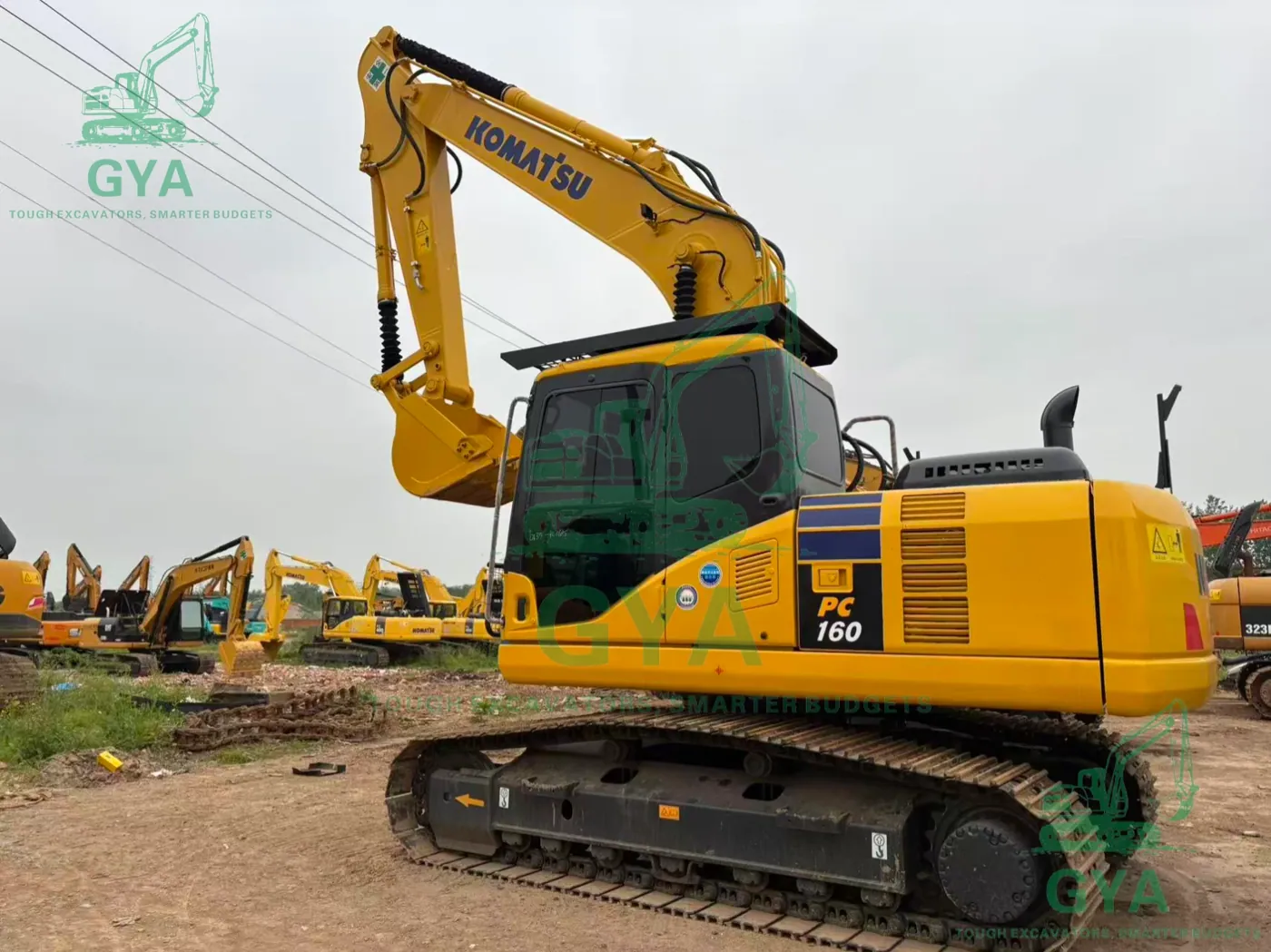
What the used Komatsu PC160-7 excavator costs
The 22,000–24,500 USD figure is a model band, not a unit quotation. It describes the level at which PC160-7 machines are offered before the undercarriage, hydraulic condition, paint, attachments and destination are priced. The band is useful for one purpose: it tells you whether a PC160-7 price is in the right territory. It does not tell you whether that particular machine is worth the money.
The band is also narrow. The distance from floor to ceiling is 2,500 USD, which is roughly 11 percent of the lower figure. Compare that with the condition range you will actually see: a machine with a renewed undercarriage and a dry, responsive hydraulic system is a different asset from one with worn links and a weeping pump. A band that spans 11 percent cannot capture that difference on its own. The unit evidence has to do the rest.
Four published bands, side by side
| Model | Listed class | Published band |
|---|---|---|
| PC130-7 | 10–20 t | 20,000–22,000 USD |
| PC130-8 | 10–20 t | 22,000–24,000 USD |
| PC160-7 | 10–20 t | 22,000–24,500 USD |
| PC200-8 | 20–30 t | 25,000–28,000 USD |
These are catalogue bands from this site, not transaction prices. Read them as relative positions, because that is what they are. The PC160-7 floor equals the PC130-8 floor. Its ceiling is 500 USD above the PC130-8 ceiling. The PC200-8 floor is 500 USD above the PC160-7 ceiling. Those gaps are small enough that a single repair decision can reverse the ranking of two units from different classes.
The 16-ton price slot in plain arithmetic
The PC160-7 is referenced at around 16,500 kg. The PC130-8 is referenced at around 12,380–13,060 kg. The difference is roughly 3.4 to 4.1 tonnes of machine, before bucket and attachment differences. At the entry price, that extra mass costs nothing on the published bands: both start at 22,000 USD. At the top, it costs 500 USD.
That is the strongest argument for the class. If you need more bucket volume, more working weight and more stability than a 13-ton machine, the PC160-7 does not ask you to jump to a 20-ton price to get them. The published bucket reference is around 0.65 m³, against around 0.53 m³ for the PC130-8. The engine reference is the Komatsu SAA4D102E-2, around 82.4 kW at 2200 rpm. Confirm every one of those figures against the plate and the actual configuration, because a different bucket or undercarriage changes the machine.
The same arithmetic explains the risk. At 24,500 USD you are 500 USD from the PC200-8 floor. If the work needs a 20-ton machine, the 16-ton unit is not a saving; it is a machine that will be asked to do a job it was not sized for. The 500 USD gap is not a reason to buy the bigger class blindly, because a floor-priced 20-ton machine may be tired. It is a reason to define the job before comparing prices.
What the 2,500 USD spread pays for
Within the PC160-7 band, the spread is where condition lives. At the bottom, the risk is a machine that needs attention somewhere: undercarriage, pins, paint, hoses, or a hydraulic issue that has not been diagnosed. At the top, the price should carry evidence of maintenance and a unit that can go to work without an immediate repair list. Neither end is guaranteed. The band is a hypothesis; the inspection is the test.
This is why a cheap unit is not automatically the better buy. If the lower-priced machine needs a new set of track groups and a pump reseal, the 2,500 USD saving is gone before the machine loads. If the higher-priced machine has a clean undercarriage and a documented service history, the premium may be the cheapest part of the purchase. Price the repair list before you compare the stickers.
The direct-injection trade-off
The site describes the PC160-7 as an older direct-injection model. That has a practical consequence: it is easier for a workshop without electronic diagnostic equipment to work on, and it is less sensitive to fuel quality than a common-rail machine. In markets where diesel is inconsistent or dealer support is thin, that simplicity is an operational advantage, not a nostalgic one.
The trade-off is on the other side. The model notes do not position the PC160-7 for strict Tier 3 emission markets, and older machines are usually not the first choice where entry rules are tight. Verify the engine plate, the year and your country's import requirements before you pay. A model name does not certify an emissions standard, and a seller's assurance is not a document.
Parts supply is the second check. The SAA4D102E-2 is the referenced engine, but local availability of filters, hoses, seals and hydraulic components varies. Ask your mechanic what they can source before you choose the model. A machine that is cheap to buy but impossible to service is expensive to own.
Where a 16-ton machine stops paying
A used Komatsu 16-ton excavator is at its best on scattered work: farm roads, drainage, trenching, small earthmoving, township projects and mixed site duties where the machine moves between tasks. It has enough size to be productive and enough compactness to be moved without the logistics of a 20-ton unit. For a contractor with varied work, that flexibility is the value.
It stops paying when the job becomes one repeated task at production scale. If the machine spends its day loading trucks in a pit or feeding a crusher, the cycle time and bucket size of a 16-ton unit become the constraint, and the 20-ton class is the correct tool. The 500 USD gap between the PC160-7 ceiling and the PC200-8 floor looks small, but the real cost of the wrong class is paid every day in output, not once at purchase.
It also stops paying when transport is the bottleneck. A 16-ton machine is easier to move than a 20-ton, but it is not a mini. Confirm the loaded dimensions, the trailer capacity and the route permits in your country. Do not assume that a class number guarantees a legal or economical move.
Inspecting a used Komatsu PC160-7 excavator
A PC160-7 inspection begins with the plate and the serial number, then works outward. The plate should identify the machine as a PC160-7 and match the offer, the proforma and the documents. A repainted plate, a missing plate or a number that does not repeat consistently is a stop signal.
Ask for a cold start on video, then a full working sequence: boom, arm, bucket, swing and travel, including combined movements. Watch for weak power, hesitation, drift, unusual noise and smoke. Then ask for close photos of the undercarriage: shoes, links, rollers, idlers, sprockets and the track adjuster. On a 16-ton machine, track groups are a significant cost, and the photos should be close enough to judge wear rather than colour.
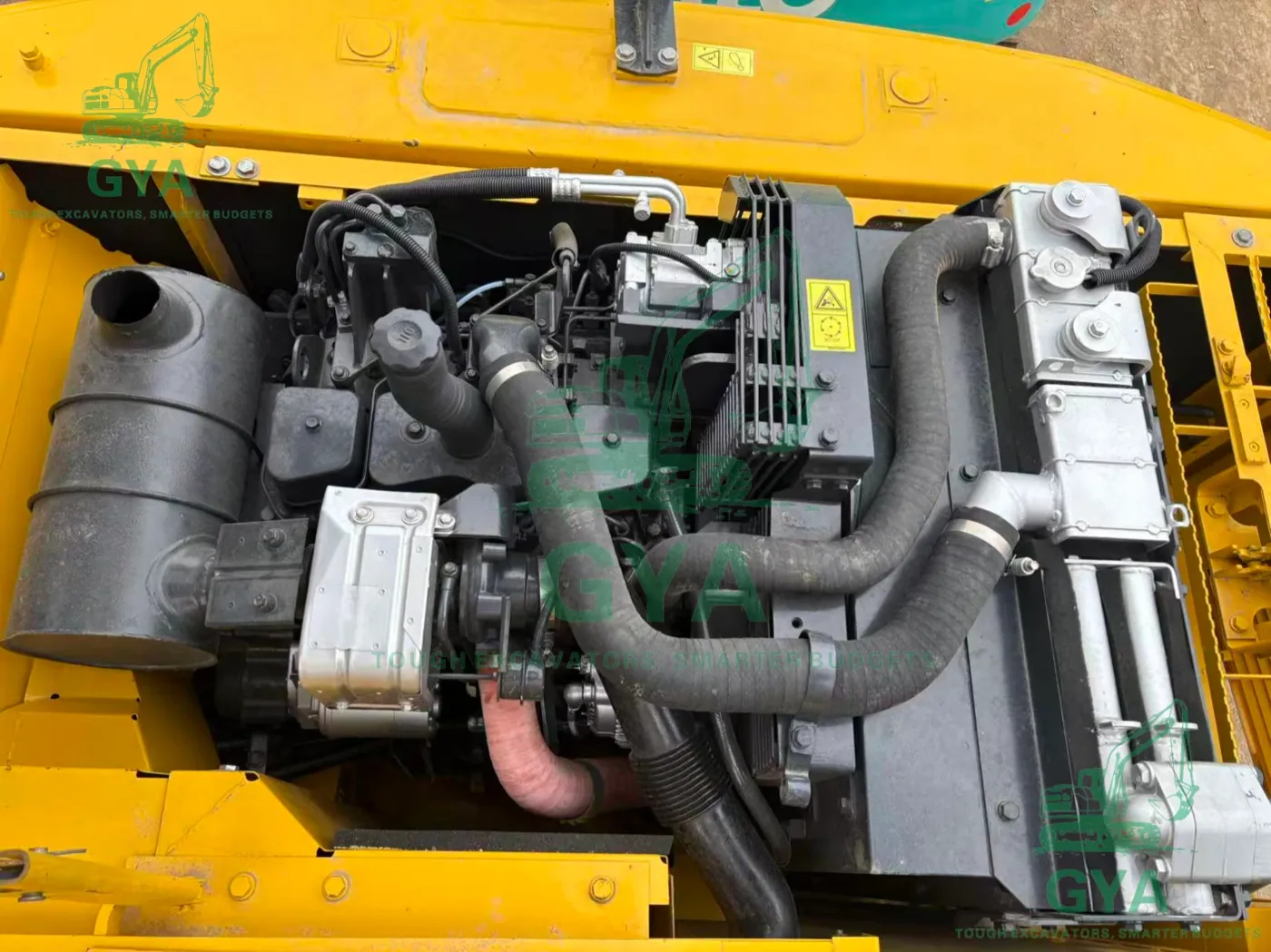
Check the boom foot, the arm root, the bucket linkage and the counterweight for cracks or fresh welds. Look at the hydraulic pump area and the hoses for leaks or recent replacement. Ask for the hour meter and the serial plate in one continuous shot, and compare the reading with the pedals, seat and pins. Finally, ask what the seller can document: service records, repair invoices, ownership papers. A machine with a story but no paper is priced as a machine with no history.
Negotiating from evidence, not from the band
Put three numbers beside each machine: the asking price, its position in the band, and the estimated cost of the repairs the inspection found. The band tells you whether the asking price is plausible. The repair estimate tells you what the machine really costs. The position in the band is the weakest of the three signals, because a seller can ask anything and a buyer can only verify what is shown.
Use the inspection to move the price, not to win an argument. A worn undercarriage, a leaking cylinder or a missing service record is a cost you will carry. If the seller will not adjust for it, the machine is priced above its condition, and walking away is a valid outcome. A 2,500 USD band spread is not large enough to absorb an unknown major repair.
We are an independent exporter, not a Komatsu dealer, and we have no yards of our own. The machine is sourced against your requirement, inspected at source, and quoted FOB or CIF with an export file that includes the commercial invoice, packing list, bill of lading and certificate of origin. Ask for the inspection evidence before the balance payment, then check that the serial on the documents matches the plate on the machine.
FAQ: used Komatsu PC160-7 excavator
Is 22,000–24,500 USD the price of a specific machine?
No. It is the published model band. A firm offer is made per unit after inspection, configuration and destination are known.
Why is the PC160-7 close in price to the PC130-8?
On the published bands, the PC160-7 starts at the same 22,000 USD and tops out 500 USD higher. The 16-ton class is priced close to the 13-ton class at entry, which is why the job requirement should decide the class rather than the sticker alone.
Is the PC160-7 suitable for Tier 3 markets?
The model notes do not position it for strict Tier 3 requirements. Check the engine plate, the year and your import rules rather than relying on the model name.
What should I inspect first on a PC160-7?
Plate and serial, then cold start, then the hydraulic sequence and undercarriage. Those four items decide most of the risk and most of the repair cost.
Can you quote FOB and CIF?
Yes. Send the destination port and the unit you are considering, and we will quote both terms with the documents and inspection evidence.
See the used Komatsu PC160-7 excavator page for current reference details, the PC160-7 FOB price reference, or the PC160-8 model page for the newer version of the same class.
Komatsu buyer guides
Price bands, inspection and transport for the models buyers ask about.