Used Komatsu PC70-8 Excavator: Class Economics
The used Komatsu PC70-8 excavator is listed in the compact 6–9 t class on this site, with a band of 18,000–20,000 USD. Plenty of pages will describe the machine. This one works on the money around it: what the band includes, what the models either side of it cost, and which costs sit outside the band entirely. A class label places the machine. The economics decide whether buying it is sensible for your work.
What the used Komatsu PC70-8 excavator band covers
The window is two thousand dollars wide: 18,000 to 20,000. Narrow windows are a feature of catalogue pricing, not evidence that every unit sells inside them. The range is written at FOB level, meaning the machine is priced at the port of loading before ocean freight, insurance, duty, VAT, clearing and inland delivery are added. Those lines sit on the buyer’s side of the deal and vary by destination, so no single landed figure can be published for every port.
Treat the band as the first filter, not the answer. A unit can sit above the window when its undercarriage, hydraulics and records justify it, and below the window when it carries a known repair. The useful question is not whether 18,000 is cheap. It is what the specific machine needs before it can work, and whether that number is already reflected in the asking price.
Where the PC70-8 price sits against its neighbours
This site’s catalogue lists models close to the PC70-8 at these bands:
- PC60-7 — 16,500–19,000 USD
- PC60-8 — 17,500–20,000 USD
- PC70-8 — 18,000–20,000 USD
- PC78-6 — 12,000–14,000 USD
- PC130-7 — 20,000–22,000 USD
Two things stand out. The PC60-8 and the PC70-8 share the same ceiling of 20,000 despite different model numbers, and the PC130-7 opens exactly where the PC70-8 closes. The compact class is therefore not a smooth ladder of prices. At the top of the compact range you are choosing between a compact machine and a larger one at the same money, and that is a work-type decision rather than a size decision.
The PC78-6 is the outlier: same class label, a band of 12,000–14,000. The catalogue does not explain the gap, and this article will not invent a reason for it. Ask the seller what differs in configuration, generation and condition, then compare the units rather than the labels.
The 4,000 USD gap that decides the class
Between the top of the PC78-6 band and the bottom of the PC70-8 band there are 4,000 dollars. That gap is the whole argument for inspecting before you negotiate. A PC78-6 at 14,000 with a repair quote of 4,000 has reached the PC70-8 floor without the PC70-8’s condition, and it will still be the earlier-generation machine.
The reverse also holds. A PC70-8 at 18,000 that needs 4,000 of work is a 22,000 machine, which puts it at the top of the PC130-7 band on paper. Price the repair before you compare stickers. This is arithmetic rather than opinion: the bands are published, and the repair quote is yours to obtain.
One caution on class boundaries. The PC56-7 is listed at 12,000–13,500 in the mini class under 6 t. It is close in money to the PC78-6 but not in class. If your work genuinely fits a mini, the cheaper band may be correct; if it does not, a mini at any price is the wrong purchase.
Transport and mobilisation: the cost the band excludes
Compact machines are often moved in a container, but often is not always. The catalogue does not publish transport dimensions for the PC70-8, so request the drawing with the boom and arm folded and confirm the loading method with a forwarder before you agree a price. A flat rack, RoRo or breakbulk booking changes the freight line, and the port’s handling charges change with it.
Mobilisation matters more in this class than in a 20-ton purchase, because the machine is expected to move between sites. Each move carries a transport cost and a day of lost production. If you relocate the machine monthly, the annual transport bill can become a meaningful share of the purchase price; if it stays on one site for a year, it will not. Run that number against your own schedule before choosing between a compact and something larger.
Utilisation: the number that decides the class
Compare machines on cost per working hour rather than sticker price: purchase price plus repairs plus moves plus maintenance, divided by the hours you will actually bill. Two of those inputs come from your own operation and one comes from the inspection, which is exactly why a price list cannot answer the question for you.
The compact class wins where access is tight, the load is small and the move is short. It loses where the job is truck loading at volume, because a larger machine moves more per hour. If the machine will spend most of its life on one site with wide access, the case for a compact weakens, and the top of the PC70-8 band starts to compete with the bottom of the PC130-7 band.
PC70-8 inspection: five checks that move the price
Five checks carry most of the money on this model. Everything else is secondary.
- Identity in one take. A single continuous video that begins at the serial plate and ends at the hour meter. Cuts hide swaps, and a file with cuts is not evidence.
- Pin play at the bucket, arm and boom. Test with a bar rather than judging by eye. Play is a bushing and pin budget, and it appears as slack in the bucket before it appears in the price.
- Hydraulic response under load. A full cycle with the bucket in ground, watching for drift, hesitation and heat. A dry cycle in a yard proves very little.
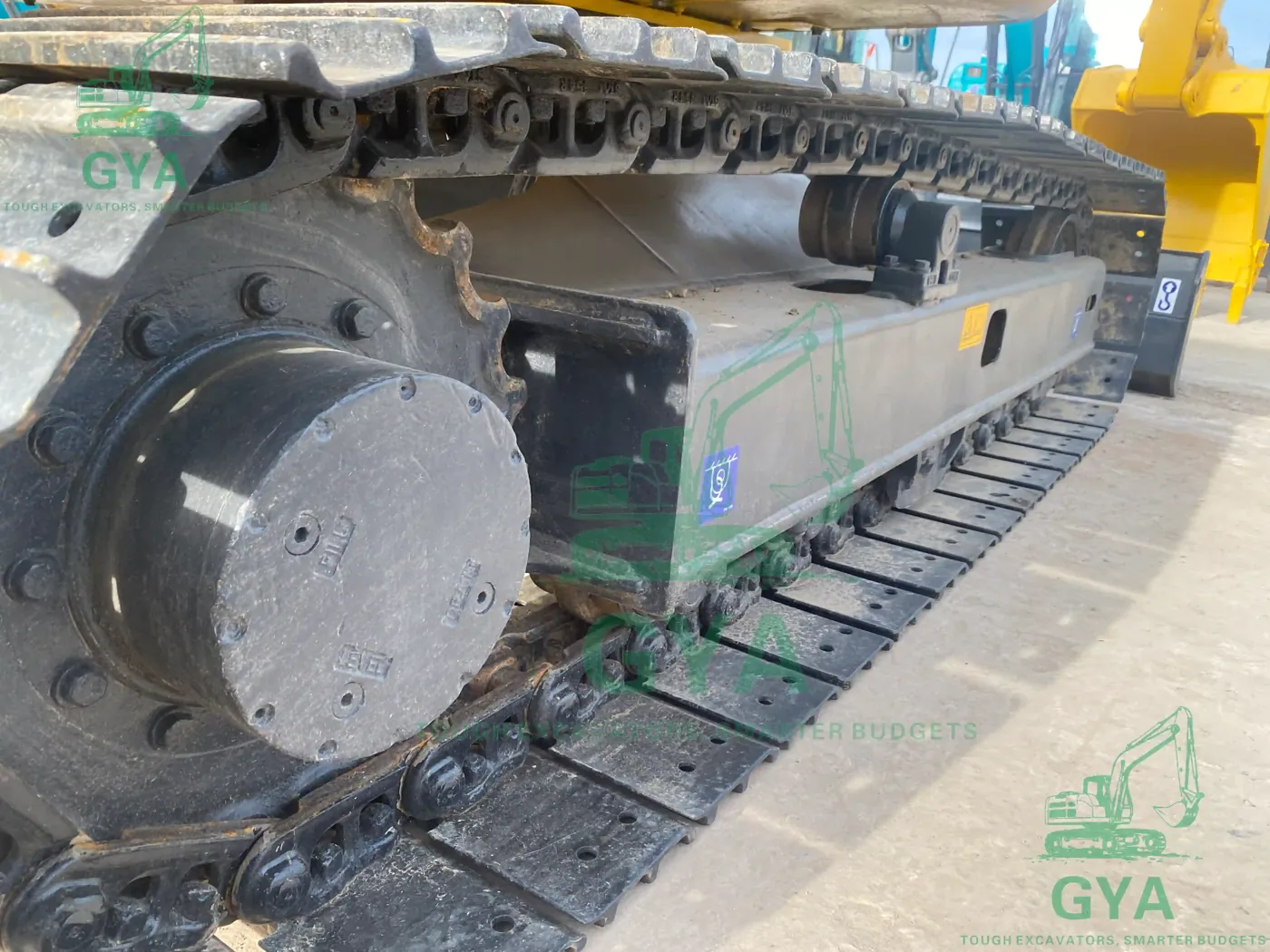
- Undercarriage measured. Shoe height, link wear, roller flats and sprocket teeth. Ask for numbers; photographs flatter worn parts.
- Structure and repair history. Welds on the boom, arm and turret, fresh paint over a seam, and invoices for any repair the seller mentions.
Ask for all five as a set. A seller who supplies four and defers the fifth is telling you something about the file, not only about the machine.
When a used Komatsu compact excavator is the wrong buy
There are clear cases. If the work needs a machine that loads trucks all day, a compact will cost more per cubic metre than a 20-ton unit. If access is wide and the machine will not move, the compact’s main advantage disappears. If the only units available sit well above the band with no evidence to justify it, waiting is cheaper than buying badly.
There is also the fleet case. A compact added to a fleet that already has one may sit idle, and an idle machine still consumes capital, insurance and space. The class economics only work when the utilisation is real.
Buying the used Komatsu PC70-8 excavator: quote, inspect, document
Send three things: the model, where it is going, and the work it will do. You will get a shortlist with photographs and video rather than a yard tour, because this site is an independent exporter and not a dealer holding stock. Machines are identified, inspected and quoted against your destination. That model has one consequence: the evidence file is the product, so ask for it early.
The proforma should name the machine by model and serial, state the price and the Incoterm, and name the port. Arrange the inspection before the balance payment, and have the report sent to you rather than only to the seller. After payment, confirm the loading method and the document set: the commercial invoice, the packing list, the bill of lading and the certificate of origin. Match the serial on the documents to the serial on the machine.
FOB and CIF can both be quoted. FOB leaves the ocean leg and insurance with you; CIF carries them to the named port. Neither includes duty, VAT or clearing at destination, and neither covers the cost of putting the machine to work.
FAQ: used Komatsu PC70-8 excavator
Is 18,000–20,000 USD the price of the machine I am buying?
No. It is the catalogue band for the model. The unit price depends on condition, configuration and destination, and it is quoted against a specific machine.
What class is the PC70-8?
Compact 6–9 t class on this site.
Does the used Komatsu PC70-8 excavator band include freight?
No. The band is a reference at FOB level. Ocean freight, insurance, duty, VAT, clearing and inland delivery are separate lines.
Will it fit in a container?
Often, but confirm with the transport drawing and a forwarder. The catalogue does not publish dimensions, and the loading method changes the freight.
What should I check first on a PC70-8 inspection?
Identity in one continuous video, pin play, hydraulic response under load, measured undercarriage wear and structural repairs. Those five drive the repair budget.
Can I buy without seeing the machine?
Yes, with a third-party inspection before balance payment. The report and the video file are the substitute for a yard visit, which is why they are not optional.
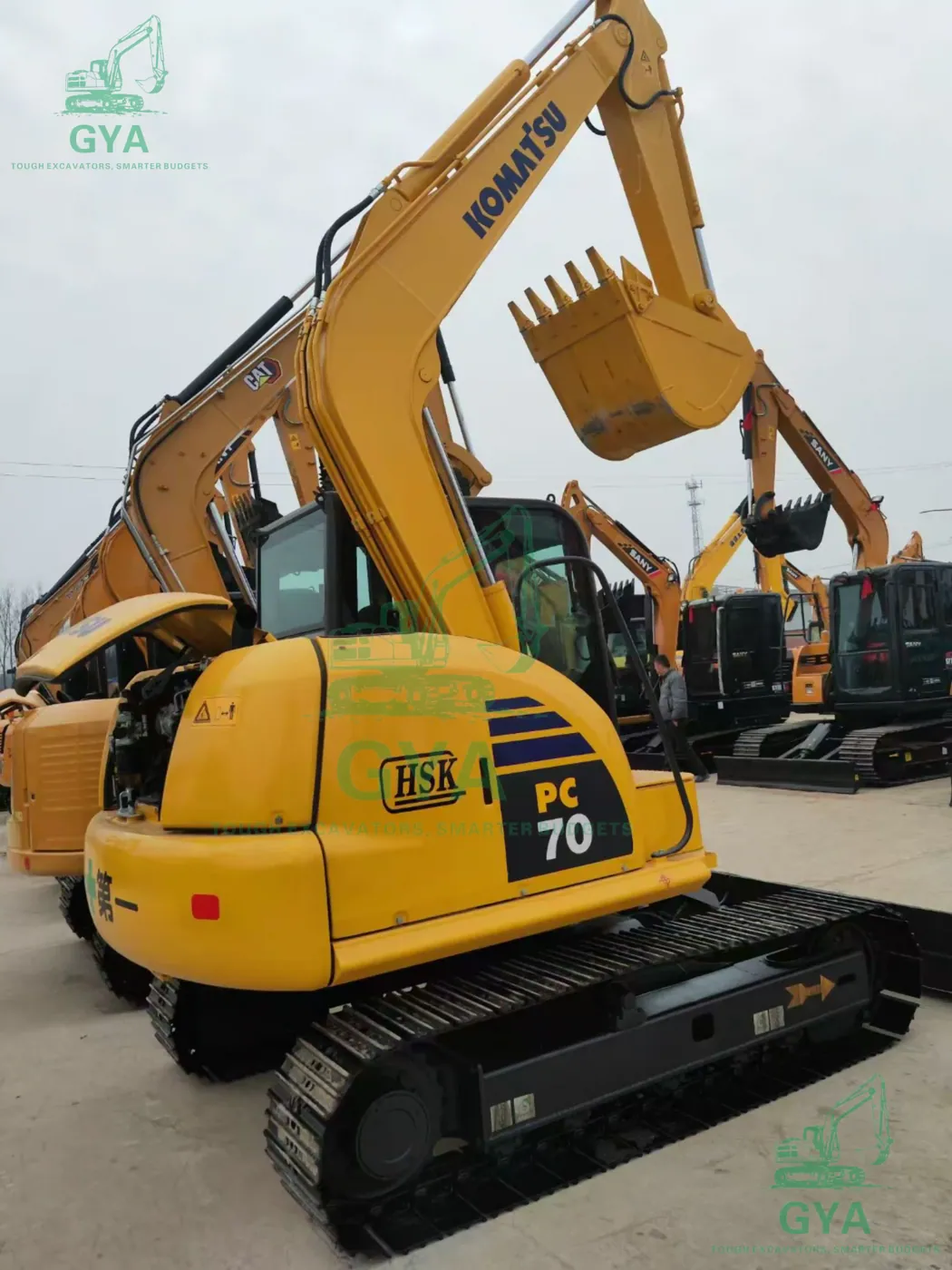
See the used Komatsu PC70-8 excavator model page for the class and band, or the PC70-8 for-sale page for current units.
Komatsu buyer guides
Price bands, inspection and transport for the models buyers ask about.