Used Komatsu PC60-8 Excavator: Price Band Reality
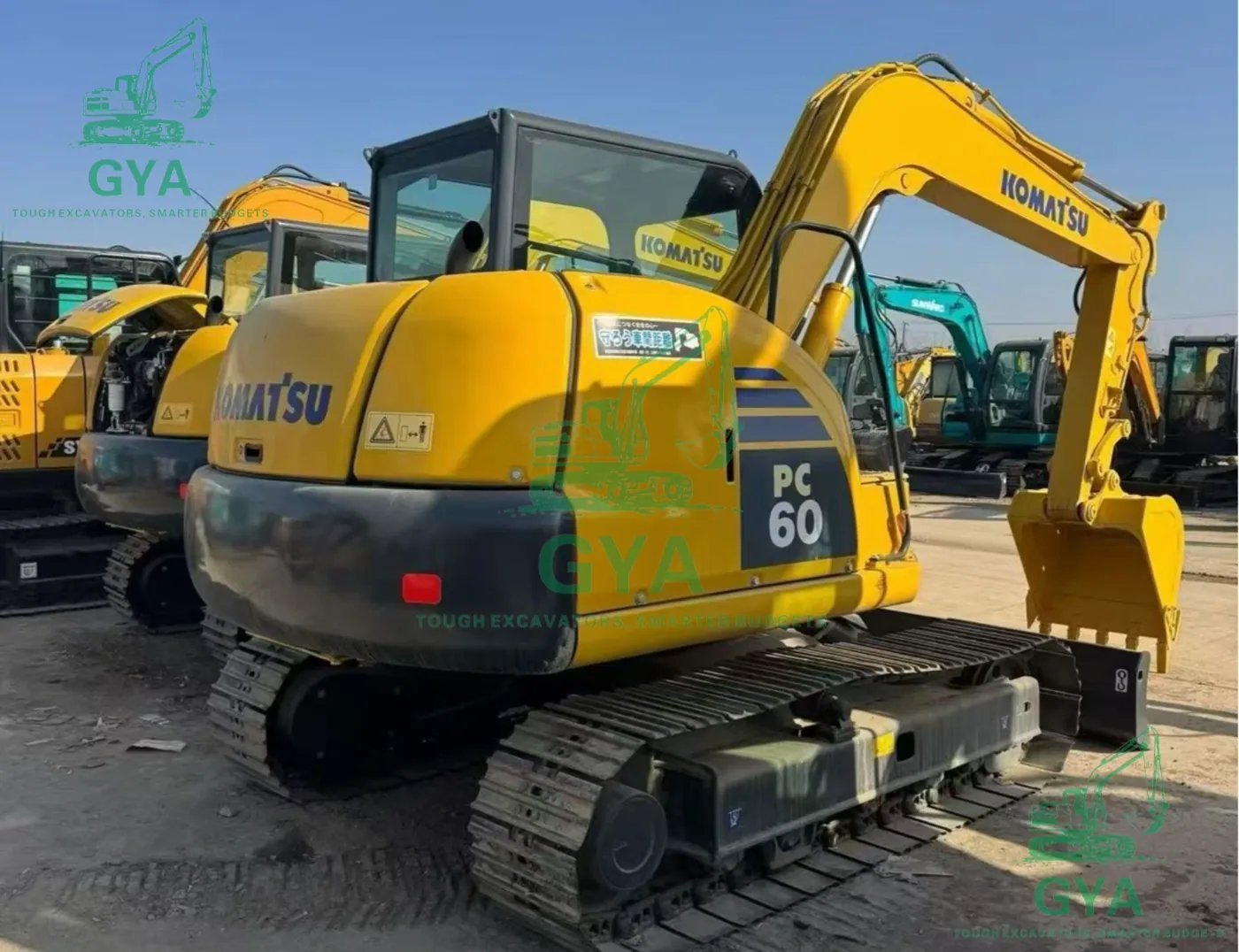
A used Komatsu PC60-8 excavator carries a published model band of 17,500–20,000 USD on this site, with a compact 6–9 t class label beside it. Those two facts are the whole of the model-level price information. Everything else — the number you actually pay — is built from the unit, the route, the documents and the work the machine still needs. This guide separates the band from the invoice, and shows where the gap between them comes from.
The published band, read precisely
17,500 USD is the lower edge of a published range and 20,000 USD is the upper edge. Neither figure is a condition grade. The band does not say that a machine at the bottom is rough or that a machine at the top is clean; it says only that the model has been listed between those numbers at model level, FOB. The data file publishes no year, no hour reading, no operating weight and no transport size for the PC60-8. A seller who quotes 19,000 USD is therefore quoting a specific unit, not the band, and should be able to explain what puts that unit where it is.
The class label is equally narrow. "Compact 6–9 t" places the family; it does not give the weight of the machine in front of you. Bucket, blade, coupler, track type and fuel load all move the real figure. A transport quote built on the class label is a guess wearing a number.
What a model-level band is not
It is not a valuation. A valuation looks at one machine, its hours, its wear and its market, and produces a number for that machine. The band cannot do that, because it was never about one machine.
It is not a negotiating floor either. Buyers sometimes treat the bottom of the range as the "real" price and the rest as margin. That logic works only if every unit is identical, and used excavators are not. Anyone shopping for a used Komatsu compact excavator on the sticker alone is reading the least reliable line in the file. Nor is the top of the range a quality certificate. A machine can sit at 20,000 USD because it is genuinely clean, or because it carries an attachment you do not need, or because the seller is testing the market.
Finally, the band is not a stock statement. This site is an independent export business, not a dealer with a yard. A published range does not promise that a unit is available today, and availability is confirmed per enquiry against the actual machine.
PC60-8 price: four lines outside the band
The first line is main carriage and insurance. The machine has to reach your port, and the cost depends on the route, the loading method and the cover you choose. The second is duty, VAT, clearing and port charges at destination. These are set by your country and your broker, not by the seller, and they can be large relative to a compact machine.
The third line is the repair reserve: the money you set aside for what the inspection found or could not rule out. The fourth is downtime and commissioning — the days between arrival and earning, plus filters, fluids, a service and any local compliance work. A quotation that mentions only the unit price has described a quarter of the purchase.
Ask for a CIF figure and a separate list of destination charges. CIF moves the main carriage and insurance into the seller's scope but still ends at the port. It is not a delivered-to-yard price, and it does not include clearance.
PC60-8 and PC60-7: a 1,000 USD edge, an overlapping middle
The PC60-7 is listed at 16,500–19,000 USD and the PC60-8 at 17,500–20,000 USD. At each edge the model-level difference is 1,000 USD, and between 17,500 and 19,000 the two bands overlap completely. Inside that overlap, the generation number is not a price argument. Condition is.
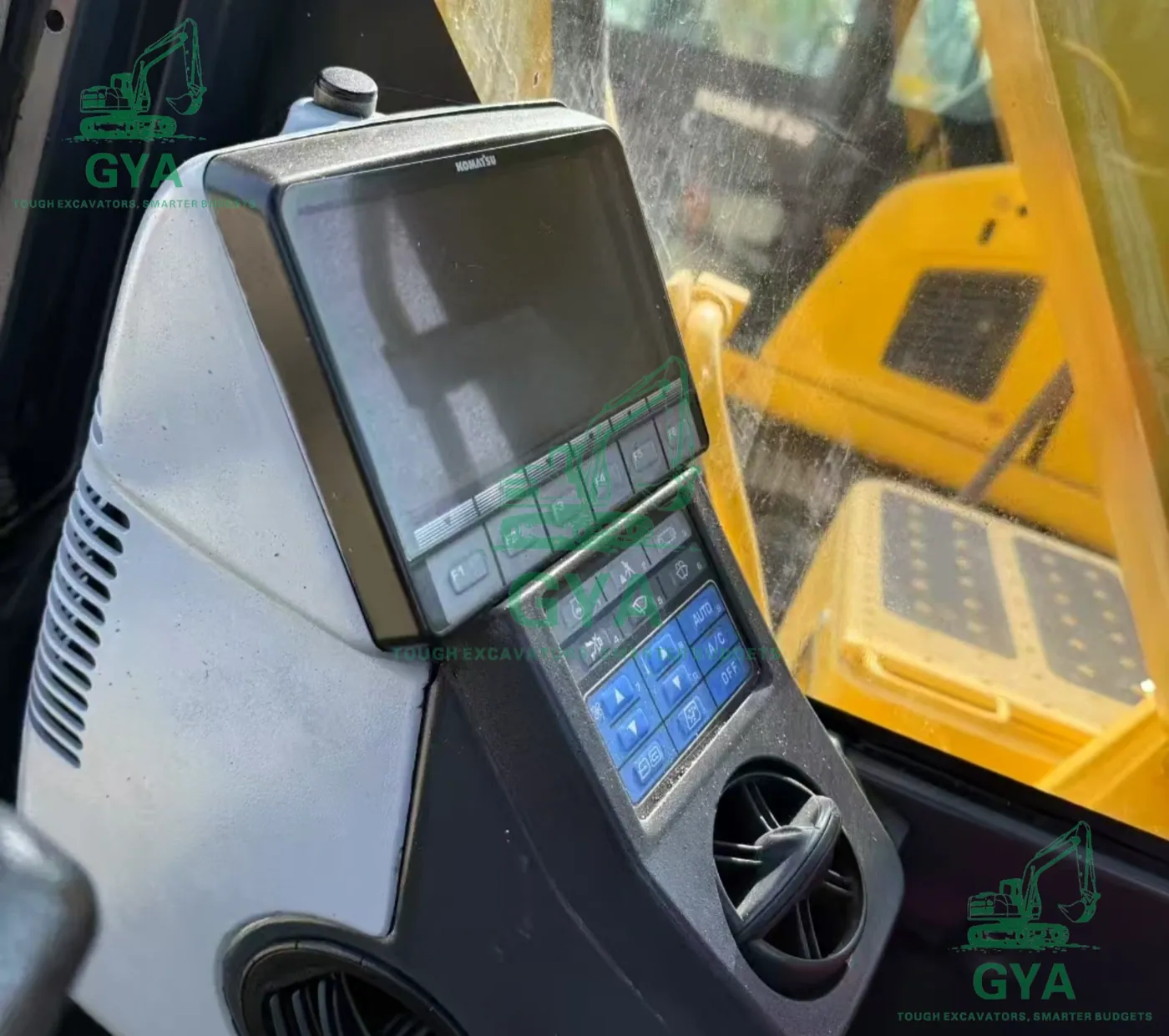
The site's model copy describes the PC60-8 as the later of the two, and later can mean a cleaner cab, a different monitor and an easier resale story. It does not mean the hydraulics are automatically faster or the undercarriage is automatically better. A tired PC60-8 at the top of its band can be worse value than a sharp PC60-7 in the middle of its own. Pay for evidence of the upgrade, not for the badge that suggests it.
Used Komatsu PC60-8 excavator: inspection findings that carry a number
Every inspection finding should end in a cost category, even when the exact figure is not yet known. Undercarriage wear — sprocket teeth, idler, rollers, link height, shoe height, track tension — belongs to parts and labour. Hydraulic drift or slow functions belong to diagnosis first and repair second, because the cause may be a seal, a valve or a pump. Cold-start smoke, blow-by or a knock belongs to the engine, the most expensive category on the list.
Pins and bushings belong to labour and machining. Cracks or fresh paint on the boom, arm, turret or frame belong to structural assessment, which must happen before any price is agreed. Cab and monitor faults belong to parts and to resale presentation. Missing attachments belong to the invoice: if the bucket or coupler in the photos is not in the sale, the price should say so.
Building a repair reserve without inventing figures
Do not guess a repair cost from a video. Use the video to identify the work, then ask a local mechanic or parts supplier for a quotation against the photos and the plate details. Get more than one. Separate parts from labour, add the freight on parts, and add the days the machine will stand still. That total is your reserve for the known items.
Then add a margin for the unknown. A used machine always hides something, and the reserve exists to absorb it without touching working capital. The important comparison is not "which sticker is lower" but "which unit, plus its reserve, costs less to put into reliable service". If the reserve on the cheaper unit exceeds the price gap, the cheaper unit is the expensive one.
PC60-8 inspection: five systems, five questions
Engine. Does it start from cold without ether, settle into a steady idle and run without unusual smoke after warm-up? Ask for the engine plate and the cold-start clip.
Hydraulics. Do boom, arm, bucket, swing and travel move at normal speed when warm, without drift, shudder or abnormal noise? A pressure test is better than a video, but the video tells you whether the seller will demonstrate the machine at all.
Undercarriage. Are the sprockets, idlers, rollers, links and shoes worn evenly, and does the track tension hold? Uneven wear often points to a travel or alignment problem rather than to normal hours.
Structure. Are there cracks, unrepaired welds or fresh paint on high-stress areas? Photograph the same area from two angles and compare.
Cab and monitor. Do the display, the controls and the safety functions work, and are there stored error codes? A monitor that has been disconnected is a question, not a feature.
The offer sheet: comparing two quotations line by line
Put both offers in the same table: unit price, Incoterm, origin port, destination port, freight and insurance, documents included, inspection included, attachments included, payment terms, quotation validity and loading window. Add a row for the repair reserve from your inspection. Now read down the columns instead of across the headline.
Two quotes that look close can separate once the rows are filled. One may include a bucket the other excludes, or quote FOB while the other quotes CIF, or leave the inspection to you. The headline price is the least informative cell in the table. The Incoterm and the inclusion list decide what the number means.
When a higher price is the cheaper machine
Suppose one unit sits at the top of the band with a sound undercarriage, dry hydraulics and a working monitor, and another sits lower with worn tracks and a weeping cylinder. The first costs more today. The second costs more over the first working season, and it also costs days of downtime that no sticker shows.
That arithmetic is why the band cannot answer the buying question on its own. It gives you a frame for the conversation. The inspection gives you the content. The repair reserve converts the content into money, and only then can two machines be ranked honestly.
Red flags in a price conversation
Be careful when hours are quoted without a continuous meter video, when the price is "valid today only" before any evidence has been shared, when there is no clear photo of the plate, or when an independent inspection is refused. Be careful when the quote changes after the deposit, or when payment is requested to an account that does not match the company on the invoice.
None of these prove fraud on their own. Together they describe a seller who is managing the conversation instead of the machine. In a trade built on remote evidence, the willingness to be inspected and documented is part of the product.
Deposit, balance and the sequence that protects both sides
A workable sequence looks like this: enquiry with the destination port and the job; evidence pack with plate, meter, cold start, working video and undercarriage photos; independent inspection if you want one; proforma invoice naming the machine, serial number, price, Incoterm and port; deposit; loading evidence; balance against the agreed documents; shipment.
Because this is an independent export business rather than a dealership, the machine is sourced for your order and inspected where the supplier holds it. The documents carry the transaction: commercial invoice, packing list, bill of lading, certificate of origin and the inspection report. Check the serial number on every one of them before the balance leaves your account.
FAQ: used Komatsu PC60-8 excavator
Is the 17,500–20,000 USD band negotiable?
The band is a model-level reference, not an offer. A specific unit is quoted on its configuration, condition and destination, and that quotation is what can be discussed.
Why might a quote sit above the band?
Attachments, configuration, condition, route and included services can all move a unit above the model reference. Ask for the line items rather than accepting the total.
Can you confirm the year and hours before I enquire?
No. The model file publishes neither, and both belong to the individual machine. Ask for the plate and the meter in one uncut video.
Is inspection included in the price?
Inspection can be arranged, and its scope and cost are agreed per enquiry. It is not assumed to be part of the unit price.
Do you quote FOB or CIF?
Both can be quoted. Send the destination port and the unit details, and the quotation will state the Incoterm and what it includes.
Start with the used Komatsu PC60-8 excavator model page for the published band, then compare the Komatsu PC60-7 if the budget is tighter. For a smaller machine on restricted access, see the PC56-7 mini excavator.
Komatsu buyer guides
Price bands, inspection and transport for the models buyers ask about.