Used Komatsu PC56-7 Excavator: Generation and Version Choice
A used Komatsu PC56-7 excavator is a mini class machine, under 6 t, listed on this site with a model price band of 12,000–13,500 USD. Two buyers can read that sentence and reach different conclusions. One hears a cheap small machine; the other hears a machine whose exact version has not been identified yet. The second reading is the one that protects money, because on this model the version comes before the price, and the price only makes sense once the version is settled.
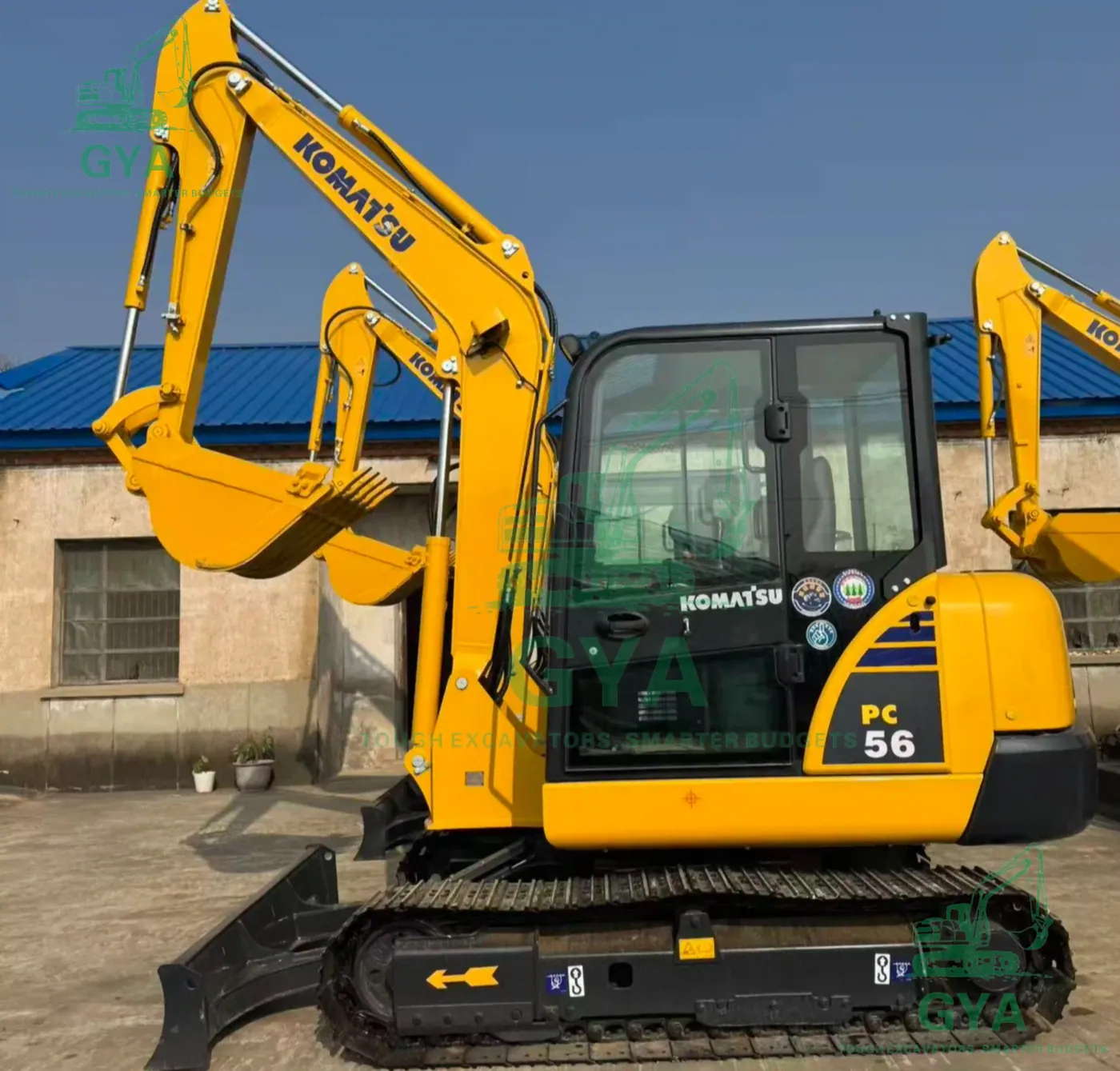
What the model data actually says
Three facts are published for the PC56-7: the name, the class and the band. It is listed as a mini under 6 t. The band is 12,000–13,500 USD. Nothing in the model file describes a particular machine — no build year, no hour reading, no bucket size, no digging depth, no transport measurement. Those fields are absent because they belong to a unit, not to a name. Every number a seller adds is therefore a claim about one machine, and the plate is what proves it.
The gap matters more on a mini than on a large excavator. A small machine is often ordered for one narrow job, and owners configure them differently for that job. The badge on the boom tells you the family. It does not tell you what is bolted to the frame, what the hydraulic circuit can run, or how the machine was maintained.
Reading the PC56-7 name correctly
The hyphen and the number are part of the model designation. They are not a date and not an age. A "-7" machine does not carry its build year in the name, and it is not seven years old by definition; the suffix belongs to Komatsu's naming, while the production year has to be read from the machine plate and the documents. Sellers sometimes blur the two ideas because a year sounds reassuring. Ask for the plate in a clear photo, then treat the year on the paperwork as the year, not the badge.
The same discipline applies to "PC56" against "PC60". In the data file these are separate families, and the PC60 sits in the next class up. A listing that mixes the two names has an identity problem already, and identity problems become expensive after the machine has landed and the importer compares the plate with the invoice.
Used Komatsu PC56-7 excavator: three version decisions that move the value
Once the name is confirmed, the value question narrows to configuration. Three choices carry most of the money.
Cab or canopy. A sealed cab with intact glass, a working heater and a live monitor is a different asset from an open canopy machine. In a hot, dusty or rainy market the cab is not a comfort item; it decides whether an operator can finish a shift. Ask for interior photos taken in daylight with the monitor powered on, and ask whether the wipers, lights and fan work.
Blade or no blade. If a blade is fitted, its condition and its hydraulic function belong in the video, not in a sentence. A blade that drifts, a bent mouldboard or a weeping cylinder is a repair line. If no blade is fitted, do not let one appear in the price.
Attachment plumbing and coupler. Auxiliary lines for a breaker or thumb, and a quick coupler, change what the machine can earn and what can fail. Ask which circuits exist, whether they hold pressure, whether the pedal or joystick control is present, and what the coupler is rated to carry. A coupler with the wrong pin size is a liability, not an accessory.
Track type, bucket width and the market variant the unit was built for sit underneath those three. The data file publishes no variant codes, so the plate, the engine label and the monitor language are the evidence. Two machines with the same badge can sit far apart in price because of these details, not because of luck.
PC56-7 or PC60-7: the class boundary is the first decision
For trenching, drainage, landscaping, farm maintenance and municipal repair, the mini class is often the correct size. The PC56-7 is listed under 6 t; the PC60-7 is listed in the 6–9 t compact class with a band of 16,500–19,000 USD. That step up is not small money, and it should not be taken by accident.
Choose the smaller machine when access is tight, the trailer is light and the loads are modest. Choose the compact class when the machine has to carry a wider bucket, run longer shifts, or handle heavier material without straining. The used Komatsu mini excavator market is full of machines that were bought for one job and then pushed into another, so ask what the unit was doing before it was cleaned for sale. Do not pick the PC56-7 purely because the band is lower. A mini worked beyond its size wears faster, burns more per tonne moved and earns less per hour. Let the job choose the class, then let the class set the budget.
PC56-7 price: using the 12,000–13,500 USD band honestly
The band is a model-level reference at FOB level. It is not a quotation, and it does not include ocean freight, insurance, import duty, VAT, clearing or inland delivery. On a machine at this value, those lines are not rounding errors; freight alone can be a meaningful share of the total. Ask for the band and the freight as separate numbers, add the local charges, and compare the landed figure with a local machine. A low FOB price attached to an expensive route is not a low price.
Inside the band, condition decides the position. A unit with tight pins, a dry hydraulic system, a sound undercarriage and a working monitor can justify the top of the range. A unit that needs tracks, a cylinder rebuild and a new seat does not become good value because the seller quotes near the bottom. Price the repairs first, then keep that estimate beside the quotation. The comparison that matters is landed cost plus repair reserve, not the sticker alone.
PC56-7 inspection: a photo set you can actually audit
Remote buying lives or dies on evidence. Ask for one continuous video that begins at the serial plate, pans to the hour meter, then walks around the machine without a cut. A folder of attractive stills proves that someone owns a camera. The unbroken clip proves that the plate and the meter belong to the machine you are being offered.
Then request specific frames: each track assembly in close-up, the sprocket teeth, the idler, the rollers, the link height, the bucket teeth and side cutters, the boom and arm pins, the turret and counterweight, the cab floor, the monitor with power on, and the ground beneath the machine after it has stood for an hour. Oil on the ground is information. Oil wiped away is a question that has not been answered.
Inspection of a used Komatsu PC56-7 excavator: four walk-away findings
Most wear is negotiable. Four findings are not.
A structural crack that has been painted over. Cracks in the boom, arm, turret or frame are a stop sign until a qualified inspector has assessed them. Fresh paint on a high-stress area is a reason to look harder, never a reason to relax.
A hydraulic fault with no explanation. Slow functions, drift, shudder or a major leak can be a seal, a pump or a valve. The cost range is wide, and a seller who cannot describe the fault cannot price it honestly.
A meter that contradicts the wear. Pedals, seat, joysticks, pins and tracks tell their own story. If the hour reading and that story disagree, and no service record explains the gap, the meter is not evidence of anything.
Refused inspection or mismatched documents. If the plate, the invoice and the listing do not agree, stop. Independent inspection is routine in this trade. A refusal is not a negotiating position; it is an answer.
Loading and delivery of a mini under 6 t
Small size helps, but it does not remove the need to measure. The data file publishes no transport dimensions for the PC56-7, so the forwarder needs measured length, width and height with the boom and blade in their travel position, plus the real weight of the unit as configured. Only then can anyone say whether a container is realistic or whether a flat rack or breakbulk booking is the honest answer. Book freight against measurements, never against the class label.
Paperwork for an independent export purchase
This site is operated by an independent exporter, not a dealer with a yard full of stock. The machine is sourced against your requirement, inspected where the supplier holds it, and shipped after you accept the evidence. That model puts weight on documents: a proforma invoice naming the model, serial number, price, Incoterm and destination port; a commercial invoice and packing list that agree with it; a bill of lading that matches the booking; a certificate of origin; and the inspection report with its photos and video.
Pay against milestones you can see. A deposit against a proforma invoice is normal. The balance belongs after the inspection evidence is accepted and before loading, or against the documents, exactly as written in the agreement. Keep the Incoterm explicit. FOB and CIF can both be quoted, and the difference is who arranges and pays the main carriage and the insurance.
FAQ: used Komatsu PC56-7 excavator
Is 12,000–13,500 USD the price of the machine I will receive?
No. It is the published model band. The price of a specific unit depends on its configuration, condition, location and destination, and it is confirmed on a proforma invoice.
What class is the PC56-7?
The data file lists it as a mini under 6 t. That is a class label, not a measured weight for any individual machine.
Can you tell me the year and hours before I enquire?
The model file publishes neither. Both belong to the unit, so ask for the plate and the meter in one continuous video, then check them against the documents.
Do you quote FOB or CIF?
Both can be quoted. Send the destination port, the quantity and the work the machine must do, and the quotation will state the Incoterm.
Can the machine be inspected independently?
Yes. An independent inspection can be arranged at the supplier's location, and the report travels with the photos and video before you release the balance.
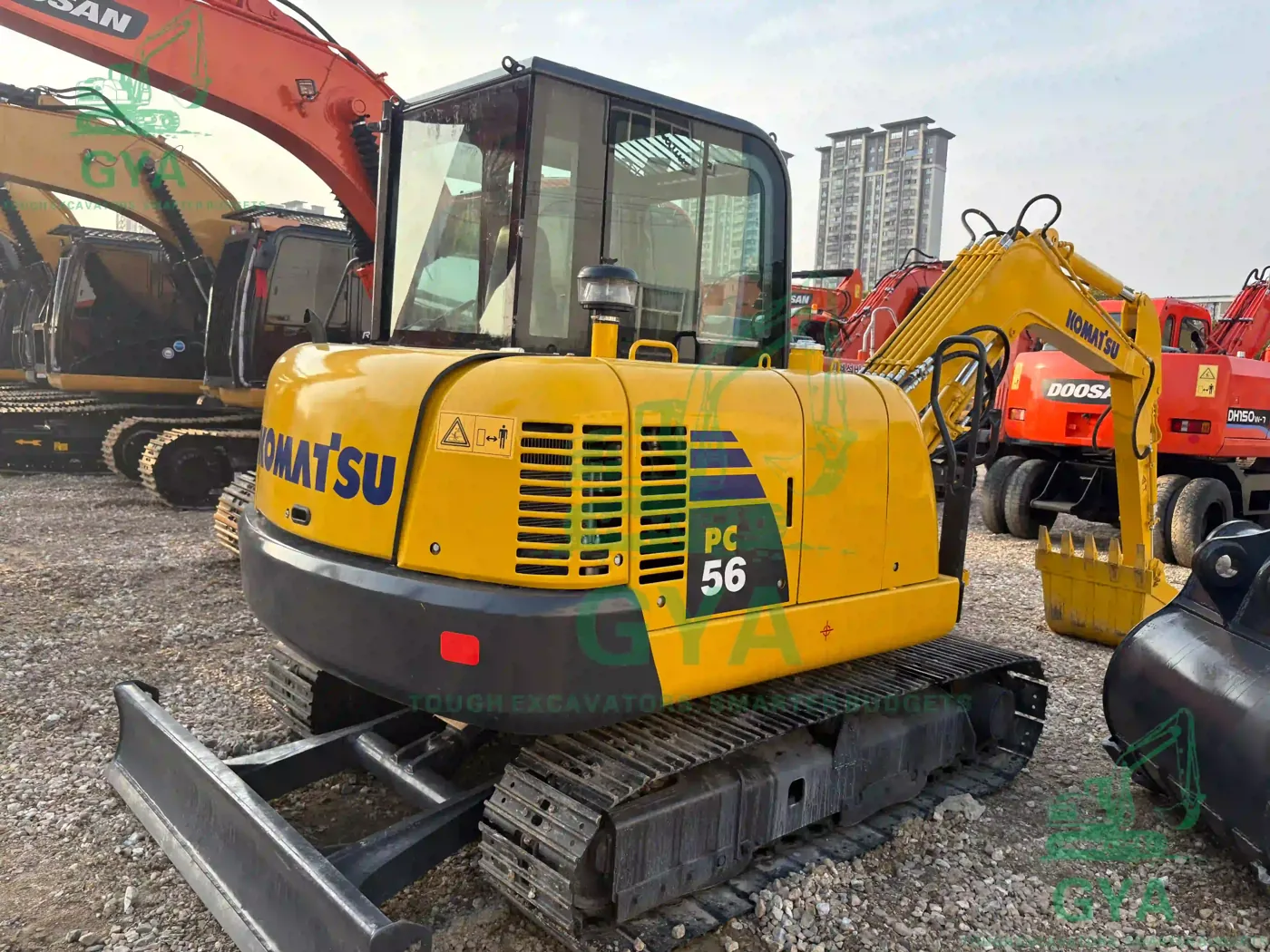
Review the used Komatsu PC56-7 excavator model page for the published band, or compare it with the Komatsu PC60-7 if the job needs the 6–9 t class. Availability is confirmed per enquiry on the PC56-7 for-sale page.
Komatsu buyer guides
Price bands, inspection and transport for the models buyers ask about.