Used Komatsu PC240-8 Excavator: Inspection Before Price
A used Komatsu PC240-8 excavator should be judged on evidence before it is judged on price. The catalogue band is 24,000–27,000 USD for this 20–30 t class machine, and a seller can ask inside or outside that range. What separates a working machine from an expensive project is the inspection file. This guide follows the order that matters: identity, cold start, hydraulic load, undercarriage, structure, then price.
Start with identity, not appearance
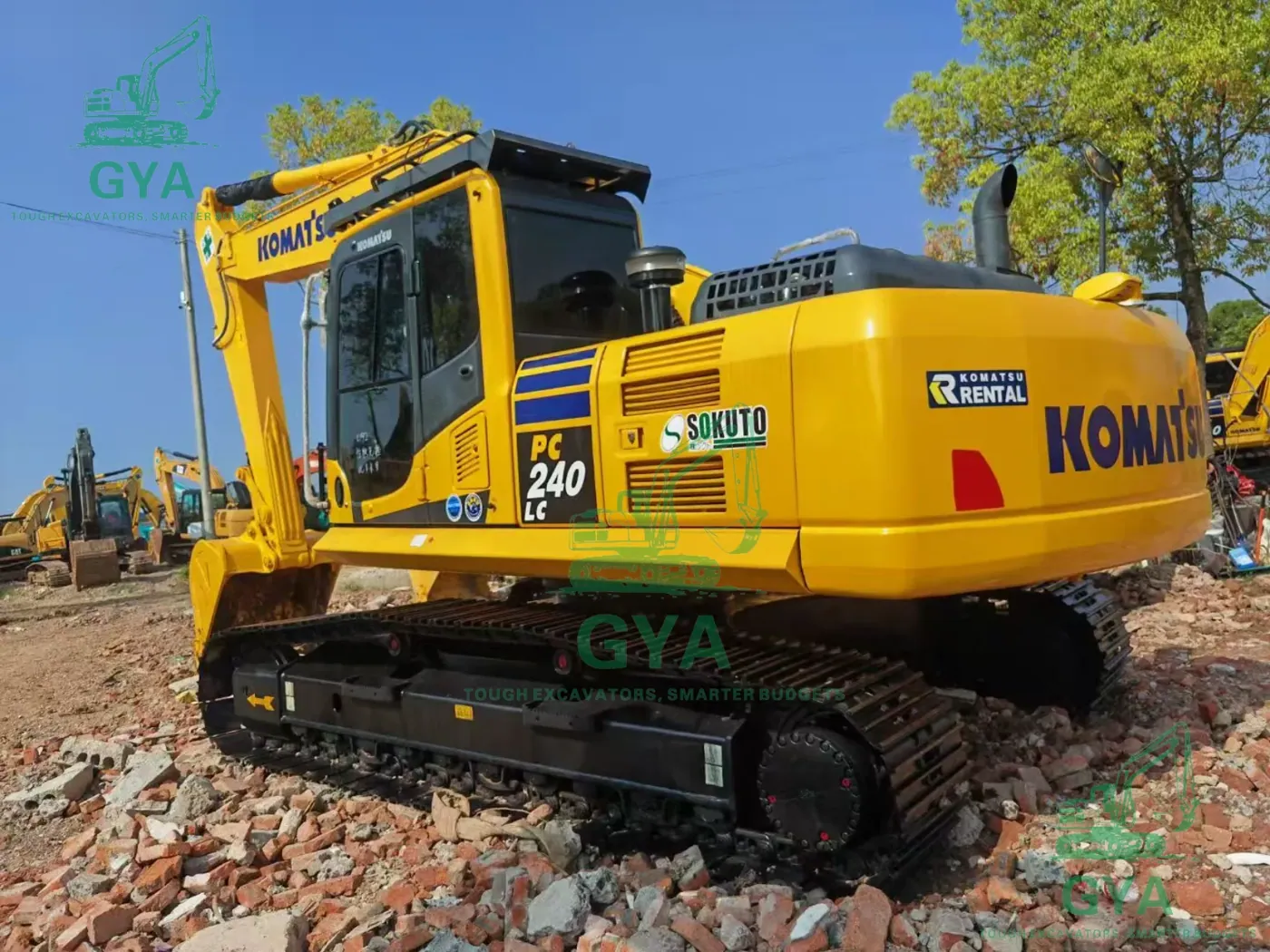
Fresh paint is the least reliable evidence on a used excavator. Begin with the serial plate. Ask for a single video that starts at the plate, shows the model and serial, then moves to the hour meter and around the machine without a cut. Compare that plate with the listing, the invoice and any inspection report.
Confirm whether the unit is a PC240-8 or a PC240LC-8. The catalogue's specification note asks buyers to check that name against the real machine plate, and transport dimensions should be confirmed for either version. Do not let a badge photo decide it; read the plate.
What the used Komatsu PC240-8 excavator is
The PC240-8 is a 20–30 t crawler excavator. Catalogue reference figures give an operating weight of about 25,130 kg, a SAA6D107E-1 engine at roughly 125 kW and 2,000 rpm, and a bucket around 1.2 m³. Those figures depend on the actual bucket, counterweight and undercarriage, so confirm them against the machine rather than the brochure.
It is a general-purpose production machine for earthworks, road work, trenching, site preparation and loading. For a used Komatsu 20–30 t class excavator, the reference weight is only a starting point; bucket, counterweight and track shoes decide the real figure. The extra weight over a smaller unit can help with stability, but it also changes transport planning. Decide which matters more before you fall in love with a paint job.
The evidence pack for a PC240-8 inspection
Ask for the pack before you book travel: a cold-start video, a full hydraulic cycle, undercarriage measurements or close-ups, structure photos, pin and bush photos, the plate-to-meter video and any service records. Add photos of the engine bay, the pump area and the final drives.
A seller who cannot supply these is not necessarily hiding something, but the risk shifts to you. Price that risk or walk away. Remote evidence is not a substitute for a physical inspection, but it tells you whether a visit is worth the cost.
Cold start: the first honest test
The engine should be cold when the video begins. Watch the smoke colour, listen for a misfire or knock, and check that the machine settles into a steady idle. A clip that starts with a warm engine hides the hardest moment of the day.
Ask for the engine plate in the same clip. The catalogue reference is SAA6D107E-1, but the plate is the authority. Look for oil and coolant leaks, and ask whether the engine has been repaired. If it has, request the invoice rather than a verbal summary.
Hydraulics under load
A dry cycle in the yard is not enough. Ask for boom, arm, bucket, swing and travel, then a combined movement that loads the system. Watch for hesitation, drift, unusual noise and slow response. Check the pump area and hose ends for fresh oil after the cycle.
A video cannot replace a pressure test. It can show whether the machine operates and whether the seller is willing to demonstrate it. If the seller refuses a loaded cycle, treat that as evidence in itself.
Undercarriage: measure, do not admire
Track condition is a major cost on a 25-ton machine, so ask for numbers. Sprocket wear, link height, roller diameter, idler condition and shoe height can be measured. Close-up photos help, but measurements compare two units honestly.
Check both sides. A machine that worked in circles can wear one side faster. Look for cracked links, leaking rollers and a track adjuster that is near its limit. If the undercarriage has been renewed, ask for the parts invoice and confirm the brand and specification.
Structure and repair history
Inspect the boom foot, boom, arm, bucket linkage, turret and counterweight for cracks, welds and fresh paint. A crack is a stop sign until it is assessed by a qualified welder or engineer. Paint over a repair is not a repair.
Ask directly whether the machine has been involved in a major repair. A documented repair is not automatically a rejection; an undocumented one is a price risk. Match the answer with the photos and the service records.
What a used Komatsu PC240-8 excavator inspection must prove
Score each item as good, repairable or reject. Good means the evidence is clear and the wear is within reason. Repairable means you have a local quote and the price reflects it. Reject means the risk cannot be priced or the seller will not provide evidence.
Do not average the scores into a comforting number. One rejected structure item can outweigh ten good cosmetic items. The purpose of the matrix is to make the trade-offs visible, not to produce a single grade.
Hour meter and wear
The meter is one data point, not a biography. Compare it with the pedals, seat, joysticks, pins and undercarriage. If the machine looks much more worn than the reading suggests, ask for the service history and the meter history. The catalogue does not publish hours for a unit, so no article can tell you what is normal for this machine.
What you can do is check consistency. A low-hour machine with a worn undercarriage needs an explanation. A high-hour machine with a documented rebuild may be the better buy.
Attachments and breaker setup
If the machine comes with a breaker or a breaker circuit, inspect the plumbing, the return line and the mounting. A used breaker adds value only if it works. Ask for a video of the attachment under load and confirm the tool diameter and condition.
Quick couplers, grabs and dedicated buckets change the configuration and the transport plan. List every attachment in the proforma invoice, not just in a chat message.
Inspection logistics and the report
Decide who attends before the date. A local engineer, a surveyor or your own technician can all work, but the scope must be the same for every unit you compare. Ask for a written report with photos, measurements and the serial number on each page. A verbal summary is hard to compare and easy to dispute.
If the machine is far from you, combine the remote evidence pack with a physical visit before the balance payment. The visit is not a formality; it is where the report becomes evidence you can rely on.
What the 24,000–27,000 USD band tells you after inspection
Only after inspection does the band become a real benchmark. A unit at the top of the range should show evidence that justifies it: a sound undercarriage, a dry hydraulic system, a straight structure and clear records. A unit at the bottom may still be fair value if the needed work is known and locally priced.
This is why a PC240-8 price cannot be settled from a listing photo. The band narrows expectations; the inspection moves the number.
PC240-8 price versus PC220-8: a two-tonne question
The catalogue bands overlap: 24,000–27,000 USD for the PC240-8 and 23,000–26,000 USD for the PC220-8. The reference weights are 25,130 kg and 23,100 kg, a difference of about 2,030 kg. If the extra weight and bucket capacity help your work, the overlap means you can compare them on condition rather than on price alone.
If it does not help, the smaller machine may transport more easily. Either way, inspect the actual units. A model badge is not a substitute for a measurement.
Documents for an independent export
Ask for a proforma invoice that names the machine, model, serial, price, Incoterm and destination. After payment, the export file should include the commercial invoice, packing list, bill of lading and certificate of origin. Check that the serial on the documents matches the plate you inspected.
We are an independent exporter, not a dealer, and we do not own the yards where units are held. FOB and CIF can both be quoted. Inspection can be arranged before the balance payment. The value of that arrangement depends on written scope and real documents, so insist on both.
Loading and destination
The reference weight of about 25,130 kg does not answer the container question. Transport height depends on the boom and arm, and the final weight depends on the bucket and counterweight. Ask for measured dimensions with the boom folded and let a forwarder choose flat rack, RoRo or breakbulk.
Confirm the port can discharge the machine and move it inland. The cheapest ocean rate is irrelevant if the receiving port cannot handle the unit.
FAQ: PC240-8 inspection questions
Is the 24,000–27,000 USD band the price of a used Komatsu PC240-8 excavator?
No. It is a model-level reference. The price of a specific unit depends on condition, configuration and destination.
What should I inspect first on a PC240-8?
Identity and the cold start. If the plate does not match or the machine will not start cold, the rest of the inspection is secondary.
How many hours should a used PC240-8 have?
The catalogue does not list hours, and there is no universal answer. Check that the meter is consistent with wear and service records.
Can inspection happen before payment?
Yes, it can be arranged before the balance payment. Agree the scope and attendance in writing first.
Do you sell as a dealer?
No. This is an independent export business. We do not own the yards and we are not a Komatsu dealer.
See the used Komatsu PC240-8 excavator model page or the PC240-8 for-sale page to send the unit details and destination port.
Inspect the evidence, then discuss the number.
Komatsu buyer guides
Price bands, inspection and transport for the models buyers ask about.