Used Komatsu PC220-8 Import Ghana: Landed Cost at Tema
A used Komatsu PC220-8 import Ghana budget starts with a catalogue band of 23,000–26,000 USD, but the band is the smallest part of the decision. At Tema, the machine meets a 5% import duty, a 15% VAT line and a block of port levies that no single rate can describe. The order in which those lines are applied decides the cash you send, and the freight arrangement decides whether the machine can be discharged without a second, unplanned lift. This guide builds the number in rows, marks every assumption, and stops where only a broker or a surveyor can supply the fact.
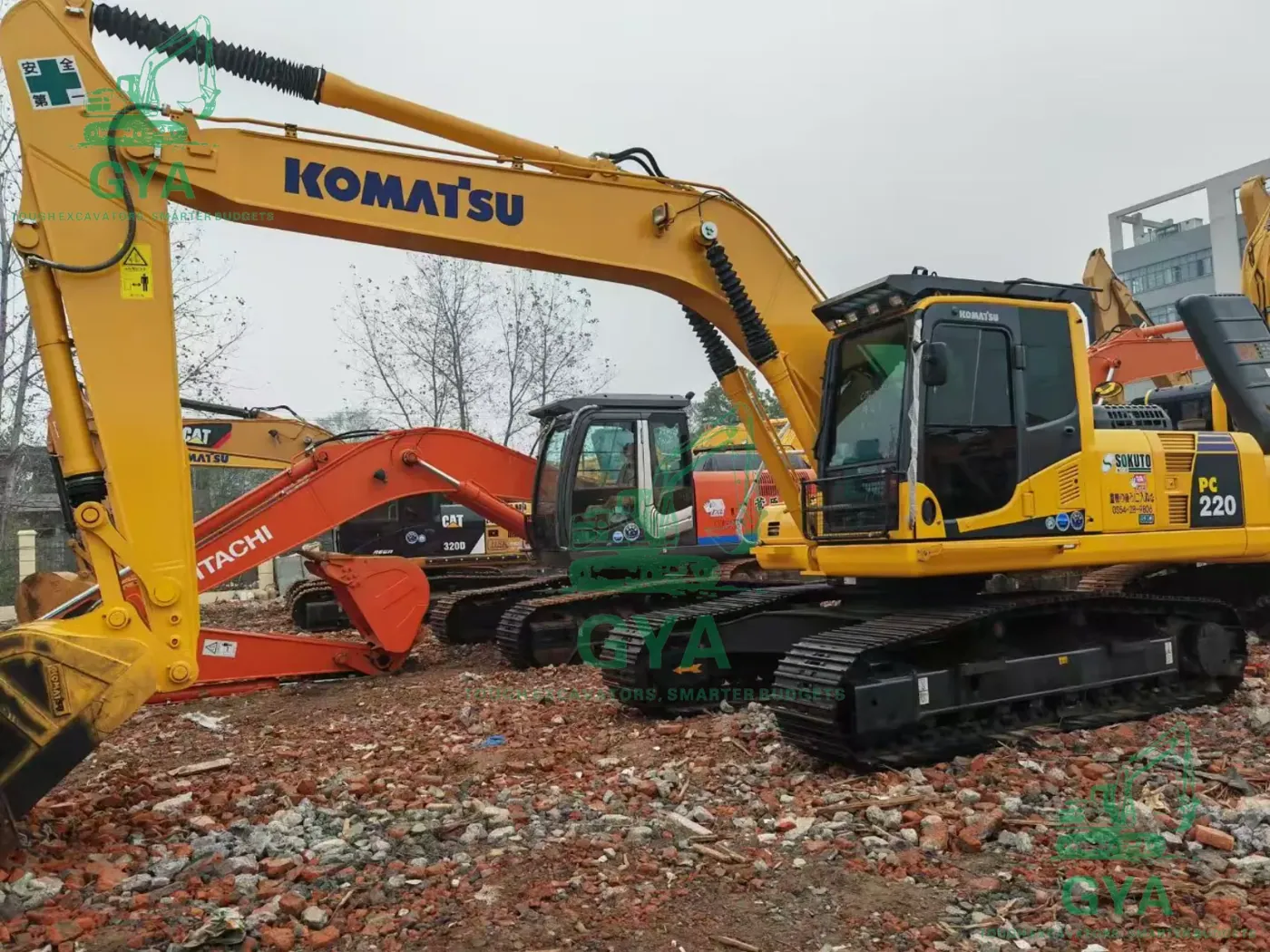
What the used Komatsu PC220-8 import Ghana really adds
Three statutory lines sit between the export price and a working machine in Ghana: duty at 5%, VAT at 15%, and port levies. The first two are given here as rates. The third is a group of charges whose composition and amount must come from an itemised Tema quote. Treat the levy block as an unknown with a range, not as a rounding item.
There is a fourth line that is not a tax at all: clearing. A licensed agent charges for entries, inspections, document handling and release. It is a service, and it varies with the agent and the file. Freight and clearing are labelled as assumptions throughout this article because neither can be derived from the band or the two tax rates.
The 23,000–26,000 USD band is not a Tema price
The band is a model reference for a 20–30 tonne class crawler excavator. Read it as an FOB starting range in the export market, before ocean freight, insurance, duty, VAT, levies, clearing and inland delivery. It does not promise that a unit is available at either end, and it does not include repairs.
Two offers inside the same band can land at different totals because one needs a track group and the other does not. The band tells you where the conversation begins. The invoice tells you where it ends.
Duty at 5%: the base and the order
Duty is the easier line. The given rate is 5%, and the base is normally the customs value built from the CIF price. That is an assumption this worksheet makes explicit: confirm with your agent whether the assessment uses the transaction value as presented or an adjusted value. Classification also has to be agreed before the rate means anything.
On a 24,500 USD customs value, 5% is 1,225 USD. On the low end of the band with the same freight assumption, the duty is smaller; on the high end, larger. The duty itself is not the line that decides the deal. Its effect on the VAT base is.
VAT at 15%: the compounding line
VAT is charged at 15%, and the base is the part buyers underestimate. This worksheet assumes VAT is applied to the CIF value plus duty plus the levy lines. If the levy lines are included, the VAT is charged on them too. Confirm the base with the clearing agent before you approve the entry; the difference is real money.
Example: a 24,500 USD customs value, 1,225 USD duty and 1,900 USD of assumed levies and clearing produce a 27,625 USD base. VAT at 15% is 4,143.75 USD. The duty was 1,225 USD; the VAT is more than three times that. Buyers who budget only for duty are usually the ones surprised at release.
Port levies at Tema: ask for the schedule, not a number
Port levies are the least transparent row in the stack. They can include terminal handling, documentation, inspection and other charges, and the mix depends on the cargo and the agent. Ask for the schedule in writing, with each line named, before you compare two freight offers. A single port charges figure is not a quote; it is a placeholder.
For the worked example below, the levy and clearing block is assumed at 1,900 USD. That is an illustration, not a Tema rate. Replace it with the agent's itemised quote and the total will move.
A worked used Komatsu PC220-8 import Ghana total
The table is deliberately mechanical. Only the band, the 5% duty and the 15% VAT come from the brief. Freight and insurance are assumed at 4,200 USD, and levies plus clearing at 1,900 USD; inland delivery is excluded. Both assumptions must be replaced with quotes.
| Row | Low case (USD) | High case (USD) |
|---|---|---|
| FOB band | 23,000 | 26,000 |
| Assumed ocean freight and insurance | 4,200 | 4,200 |
| CIF, assumed | 27,200 | 30,200 |
| Duty at 5% | 1,360 | 1,510 |
| Assumed levies and clearing | 1,900 | 1,900 |
| VAT base, assumed | 30,460 | 33,610 |
| VAT at 15% | 4,569 | 5,041.50 |
| Landed at Tema, excluding inland | 35,029 | 38,651.50 |
The gap between the band and the Tema total is 12,029 USD in the low case and 12,651.50 USD in the high case. Most of that gap is not duty. It is freight, levies and VAT. That is how a 23,000 USD sticker and a 35,000 USD landing can describe the same machine.
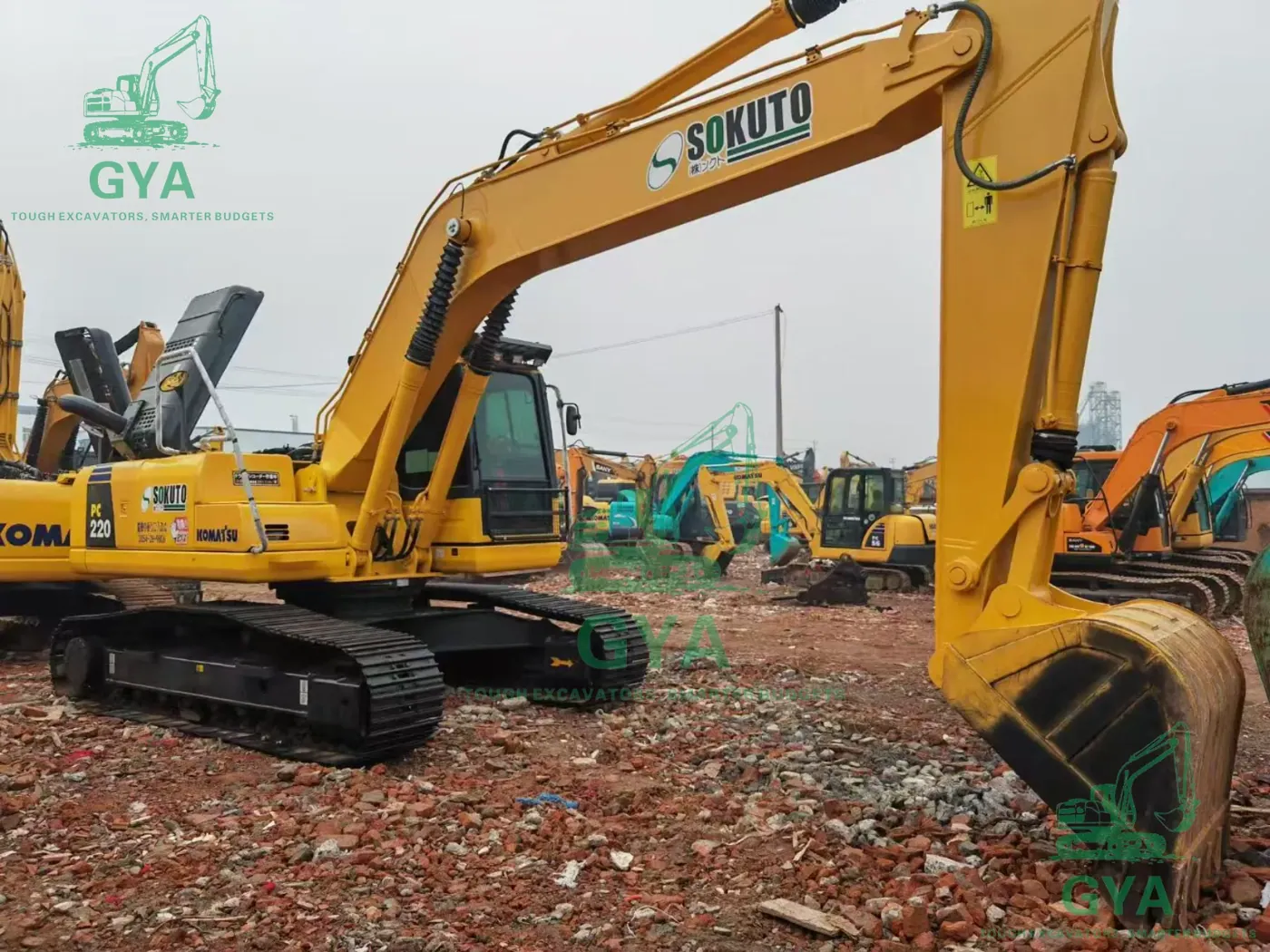
The 40ft reference caveat
Quotes for a 40ft container are a useful reference for small equipment, not a rule for this class. A 20–30 tonne excavator has to be measured, not assumed into a box: track width, height with the boom folded, counterweight and the loading method all decide whether a container works at all. Removing parts to fit is a cost and a risk, not a free trick.
Ask the forwarder to quote against the measured unit and the Tema discharge. If the answer is a flat rack, RoRo or breakbulk, the freight line changes and so does the port handling. Do not approve a 40ft rate on a machine that has not been measured.
What moves the total most
Rank the rows by how much they can move. Freight configuration is first because the wrong method can change the handling at both ends. The levy schedule is second because it is itemised and negotiable at the margin. The VAT base is third, and it follows the first two. Condition is fourth: a repair reserve is not a tax, but it is cash.
Inland delivery is the row most often left out. Tema is a port, not a destination. Add the truck, the permits and the route survey before you compare the import with a local machine. The landed cost Tema figure should include that leg or state clearly that it does not.
Comparing two PC220-8 offers without mixing currencies
Put both offers on the same Incoterm before you compare them. An FOB quote and a CIF quote are not rivals; they are different starting lines. Convert the currency at the rate you can actually buy, not at a headline rate, and add the bank charge for the transfer. Then apply the same freight assumption to both machines so that the difference you see is condition and specification, not logistics.
Score the evidence, not the description. A unit with measured undercarriage, a cold start video and a clear plate is easier to compare than one with new paint and no measurements. If one seller will not supply the same evidence set as the other, the missing file is the finding. For the used Komatsu PC220-8 Ghana buyer, the same discipline applies: compare evidence before price.
Inspecting before the deposit
Inspection is the only control on the condition side of the ledger. Ask for a cold start with the exhaust visible, a hydraulic cycle at operating temperature, travel in both directions, and photographs of the plate and meter in the same frame. Ask for undercarriage measurements, not adjectives. Check the boom foot, the arm and the bucket linkage for cracks and previous repairs.
The machine's identity matters as much as its condition. Confirm the model suffix, the serial and the configuration on the plate against the proforma. A PC220-8 offer that cannot produce a plate photo is not ready for a deposit.
Documents and the release sequence
Ask for a proforma invoice that names the machine, the serial, the price, the Incoterm and Tema as the destination. Confirm the inspection scope before the balance. After shipment, check the commercial invoice, packing list, bill of lading and certificate of origin against the unit you inspected. The clearing agent needs the classification and the values before the vessel arrives, not after.
We are an independent exporter, not a dealer, and we do not own the yards where machines are held. That is why inspection and the document set are the control points. FOB and CIF can both be quoted; the landed number is built with your broker at Tema.
FAQ: used Komatsu PC220-8 import Ghana
Is 23,000–26,000 USD the landed cost at Tema?
No. It is a model band before freight, duty, VAT, levies, clearing and inland delivery. The worked example lands well above it once those rows are added.
Is the import duty excavator Ghana rate definitely 5%?
The brief gives 5%. Classification and the customs value still have to be confirmed by the clearing agent, because the rate only applies to an accepted entry.
Can a used Komatsu PC220-8 Ghana shipment use a 40ft container?
Do not assume it. A 40ft rate is a reference for smaller units; measure the machine and ask for a loading plan. Flat rack, RoRo or breakbulk may be the correct quote.
Do you own the machines or the yard?
No. We are an independent exporter and do not own the yards. Each unit is inspected where it stands before it is quoted.
Where should a first-time buyer start?
With the measured machine and a written Tema quote for levies and clearing. Then compare the landed total, not the sticker.
Read the PC220-8 model reference, or start with the used Komatsu PC220-8 import Ghana enquiry page. For the heavy-freight case in the region, the Dar es Salaam landed-cost guide shows how a 30-tonne machine changes the same worksheet.
Price is a band; the Tema total is a build.
Komatsu buyer guides
Price bands, inspection and transport for the models buyers ask about.