Used Komatsu PC220-8 Excavator: Which Version to Buy
A used Komatsu PC220-8 excavator is a version choice as much as a condition choice. The catalogue puts this 20–30 t class machine at 23,000–26,000 USD, while the earlier PC220-7 is listed at 20,000–22,500 USD. The two bands do not overlap, yet neither settles which machine belongs in your fleet. This guide separates the version question from the condition question, then shows what to verify on the plate, in the hydraulic system and in the export file.
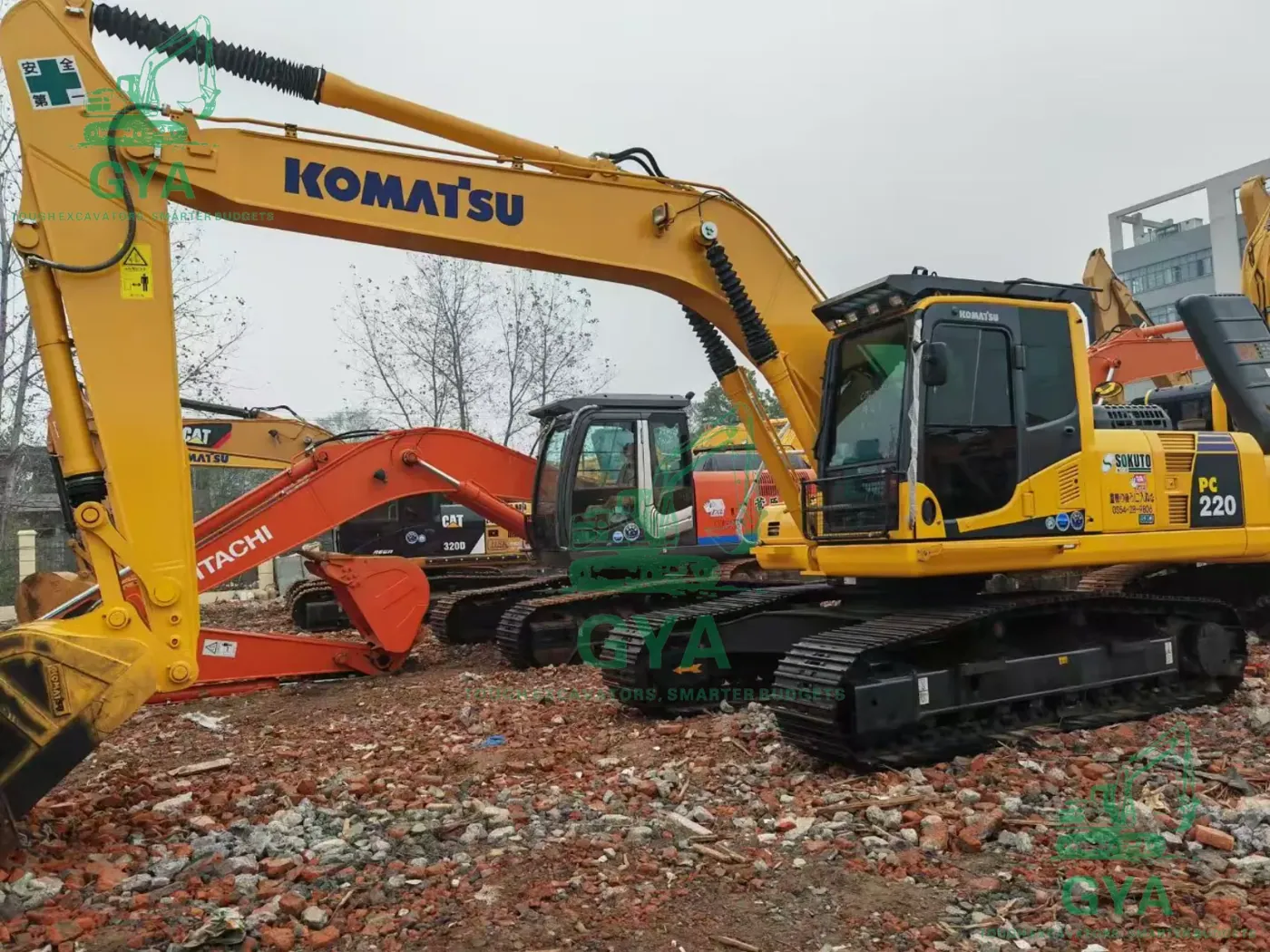
What the used Komatsu PC220-8 excavator is
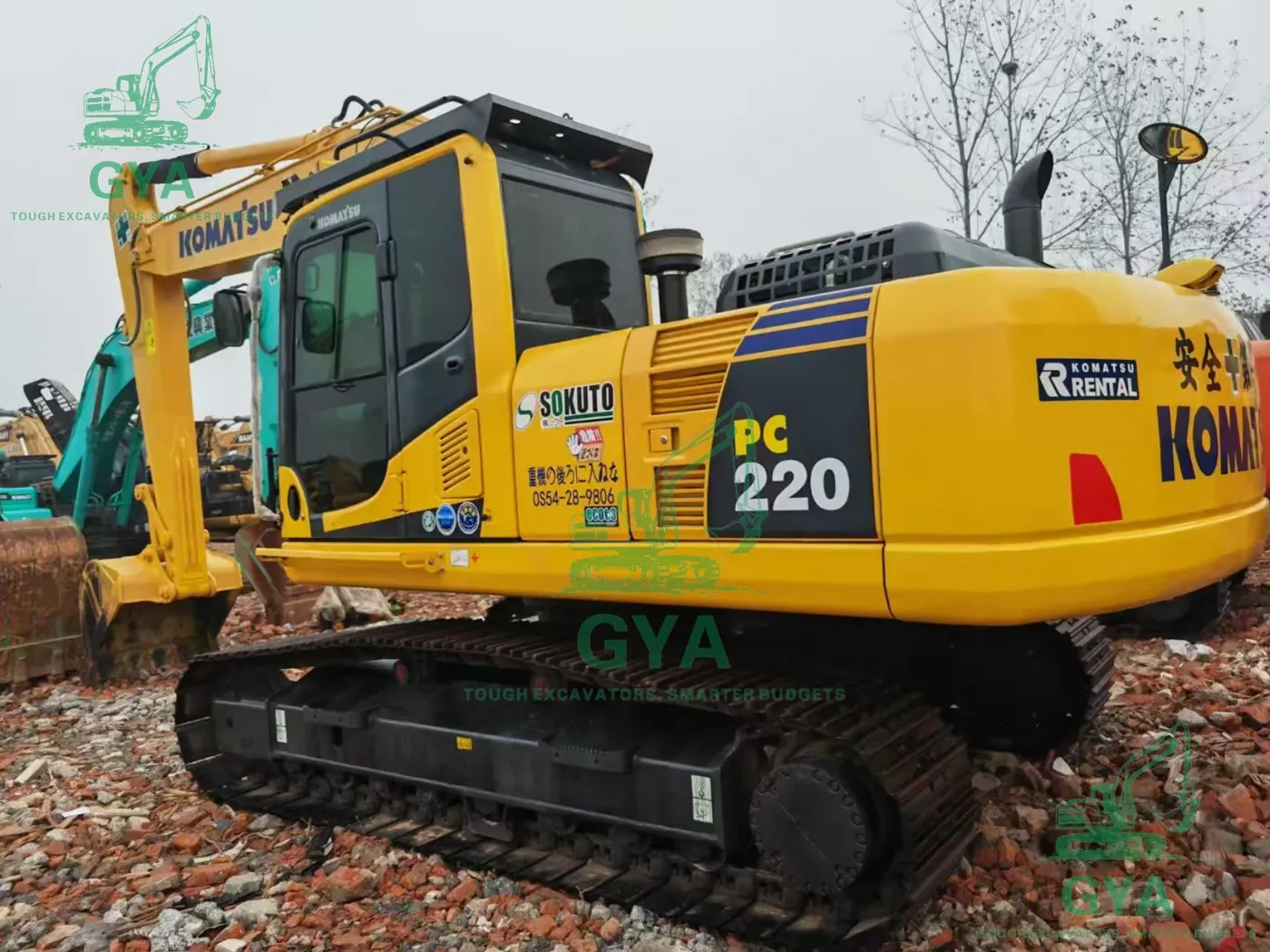
The PC220-8 is a 20–30 t crawler excavator. Catalogue reference figures put operating weight at about 23,100 kg, engine output at roughly 125 kW at 2,000 rpm, and the common bucket at about 1.0 m³. Treat those as reference values, not a specification for the unit you are offered. Bucket size, counterweight, track shoes and attachments all change the real weight, and only the engine plate identifies the engine variant.
The machine fits earthworks, trenching, road construction, site preparation and truck loading. For a used Komatsu 20–30 t class excavator, that breadth is the point: it can move between tasks without a second machine. It is the size many contractors pick when one unit must handle mixed work without the transport burden of a 30-ton-plus machine.
The 23,000–26,000 USD band in version context
The band is a model-level reference in the catalogue. It is not a quotation, not a stock price and not a promise that every PC220-8 is worth the same. Two units with the same badge can sit at opposite ends because undercarriage, hydraulic condition, structure and paperwork differ.
Use the band as a sanity check. An offer far outside it needs an explanation. A number below the band can signal a repair bill; a number above it needs evidence of work already completed. Neither direction is automatically good or bad.
PC220-7 or PC220-8: what the extra money buys
The catalogue gives enough data to compare the versions without guessing. The PC220-7 reference is about 22,840 kg with a SAA6D102E-2 direct-injection engine at roughly 125 kW and 2,100 rpm, plus a 1.0 m³ bucket. The PC220-8 reference is about 23,100 kg and 125 kW at 2,000 rpm. The weight gap is small. The engine platform and control layout are the areas to confirm on the plates.
That makes the decision less about size and more about which version your workshop can support. A direct-injection PC220-7 may suit a market without electronic diagnostics. A PC220-8 has its own engine and control configuration to confirm, and it is only the better choice if local parts and technicians cover it. The catalogue does not publish a full comparison table, so do not let a seller fill the gap with claims.
Is a newer version automatically better?
No. Version numbers describe design generations, not the health of a specific machine. A well-maintained PC220-7 with a sound undercarriage can be a better working asset than a PC220-8 that has been rebuilt cheaply. The useful question is not which generation is newer, but which unit has evidence you can check.
Older does not mean disposable. The PC220-7 still carries a published band, which gives you a comparison point. Check parts availability in your country before you decide, not after the machine lands.
Where the other catalogue variants fit
The catalogue also lists PC220LC-7 and PC225LC-11M1, but it publishes no price band for either. This article will not invent one. If a seller offers one of those variants, ask for the plate, the configuration and a written quote, then use the PC220-8 band as a reference rather than a rule.
Do not assume that a longer suffix means a larger or newer machine. The plate and the build configuration decide what the unit actually is.
Read the plate before you read the price
Version confusion usually starts at the badge. Ask for one continuous video that begins at the serial plate, shows the model and serial clearly, then pans to the hour meter and around the machine. Match the plate to the listing and to the proforma invoice. If the seller cannot show the plate, stop. A photo of a decal is not identity.
Confirm whether the unit is a standard PC220-8 or a variant with a different undercarriage, boom or attachment package. The catalogue warns that final weight depends on configuration. That warning matters at the port as much as at the job site.
PC220-8 inspection: five checks before a deposit
Version choice narrows the field; inspection decides the unit. Ask for five items before any deposit: a cold start, a full hydraulic cycle, undercarriage close-ups, structure photos and a plate-to-meter video. Each is cheap for an honest seller to supply and expensive for a weak machine to fake.
On the cold start, watch smoke, idle stability and any knock. On the hydraulic cycle, request boom, arm, bucket, swing and travel in one clip, including a combined movement. On the undercarriage, ask for the sprocket, idler, rollers, links and shoes. On the structure, look at the boom foot, arm, bucket linkage and counterweight for cracks, fresh welds or paint hiding repairs.
Then compare wear with the hour meter. The catalogue publishes no hours for a unit, and a seller's summary should not be trusted without the meter visible in the same video as the plate. If the pedals, seat and pins look far more worn than the reading, ask for service records and an explanation.
Version-specific checks on a used Komatsu PC220-8 excavator
Three checks deserve extra attention when you compare generations. First, the engine plate: confirm the engine variant instead of accepting the model badge. Second, the hydraulic control layout: make sure the joystick pattern and any attachment circuit match the work you plan. Third, the parts path: ask your local supplier which filters, seals and sensors are available for that exact version.
These are not abstract concerns. A machine that runs well but cannot be serviced locally becomes a liability. The cheapest purchase can be the one that keeps working.
Price after inspection, not before
Once the evidence is in, the band becomes useful again. A PC220-8 price is only meaningful when it is tied to a specific unit, so place this machine against 23,000–26,000 USD, then add what it needs. If the undercarriage is near the end of its life, get a local quote for replacement before you negotiate. If the hydraulic system has a leak that cannot be explained, treat it as an unknown and price the risk accordingly.
Do not accept a seller's repair estimate as fact. Ask for the invoice if the work was done, or a quote from a workshop you trust if it is still needed. The aim is not to win an argument over the sticker; it is to know the landed cost of a working machine.
Why the PC200-8 band sits higher
The catalogue lists the PC200-8 at 25,000–28,000 USD, above the PC220-8 band even though the model number is smaller. That is a useful warning: catalogue bands are not a size ladder. The file does not explain the difference, and this guide will not invent a reason. Different models have different listings and configurations, and the band is only a model reference.
Compare the actual units, not the numbers on the badge. A PC200-8 with a strong undercarriage can beat a cheaper PC220-8 that needs tracks, and the reverse is equally possible.
FOB, CIF and the number at your yard
The catalogue band is a model reference, not a delivered price. FOB covers the machine to the port; CIF adds freight and insurance to your destination. Neither includes import duty, VAT, clearing, port charges or inland transport. Ask for both FOB and CIF quotes against the actual unit and port, then add local costs with a broker.
As an independent exporter, we quote against the unit and destination rather than pretending one model price fits every country. We do not own the yards where machines are held, and we are not a Komatsu dealer. That independence is useful only when the paperwork is transparent, so ask for the invoice, packing list, bill of lading and certificate of origin before the balance payment. Inspection can be arranged before that payment, with the scope confirmed in writing.
Loading a 20–30 t machine
Do not assume a PC220-8 fits a container. The reference weight is about 23,100 kg, and transport height depends on the boom and arm configuration. Ask for measured dimensions with the boom folded, then let a forwarder confirm flat rack, RoRo or breakbulk. The loading method changes both freight and port handling.
Confirm destination port limits before booking. A quote that ignores discharge capacity is not a real quote.
FAQ: version and buying questions
Is the 23,000–26,000 USD band the price of a specific used Komatsu PC220-8 excavator?
No. It is a model-level reference. The actual price depends on the unit, its condition, the configuration and the destination.
Should I buy a PC220-7 instead?
Only if that specific PC220-7 is in better condition or easier to service locally. Its catalogue band is 20,000–22,500 USD, but the unit still has to pass inspection.
What is the first document to request?
A plate-to-meter video that shows the model and serial clearly. Match it to the listing and the proforma invoice before discussing price.
Do you provide inspection?
Inspection can be arranged before the balance payment. Ask for the scope in writing and confirm who attends.
Can you quote CIF?
Yes. Send the destination port and the exact unit details so freight and insurance can be quoted against reality.
See the used Komatsu PC220-8 excavator model page or the PC220-8 for-sale page for the current listing and enquiry route.
Version first, evidence second, price last.
Komatsu buyer guides
Price bands, inspection and transport for the models buyers ask about.