Used Komatsu PC220-7 Excavator: The Economics of the 20–30 t Class
The used Komatsu PC220-7 excavator is listed at 20,000–22,500 USD and placed in the 20–30 t class, with a catalogue reference weight of about 22,840 kg. Those numbers make an interesting pair: a machine carrying a larger number on its side sits on a lower band than the PC200-7 and PC200-8 entries next to it. Class economics is the work of understanding how that can happen without assuming it means a worse machine.
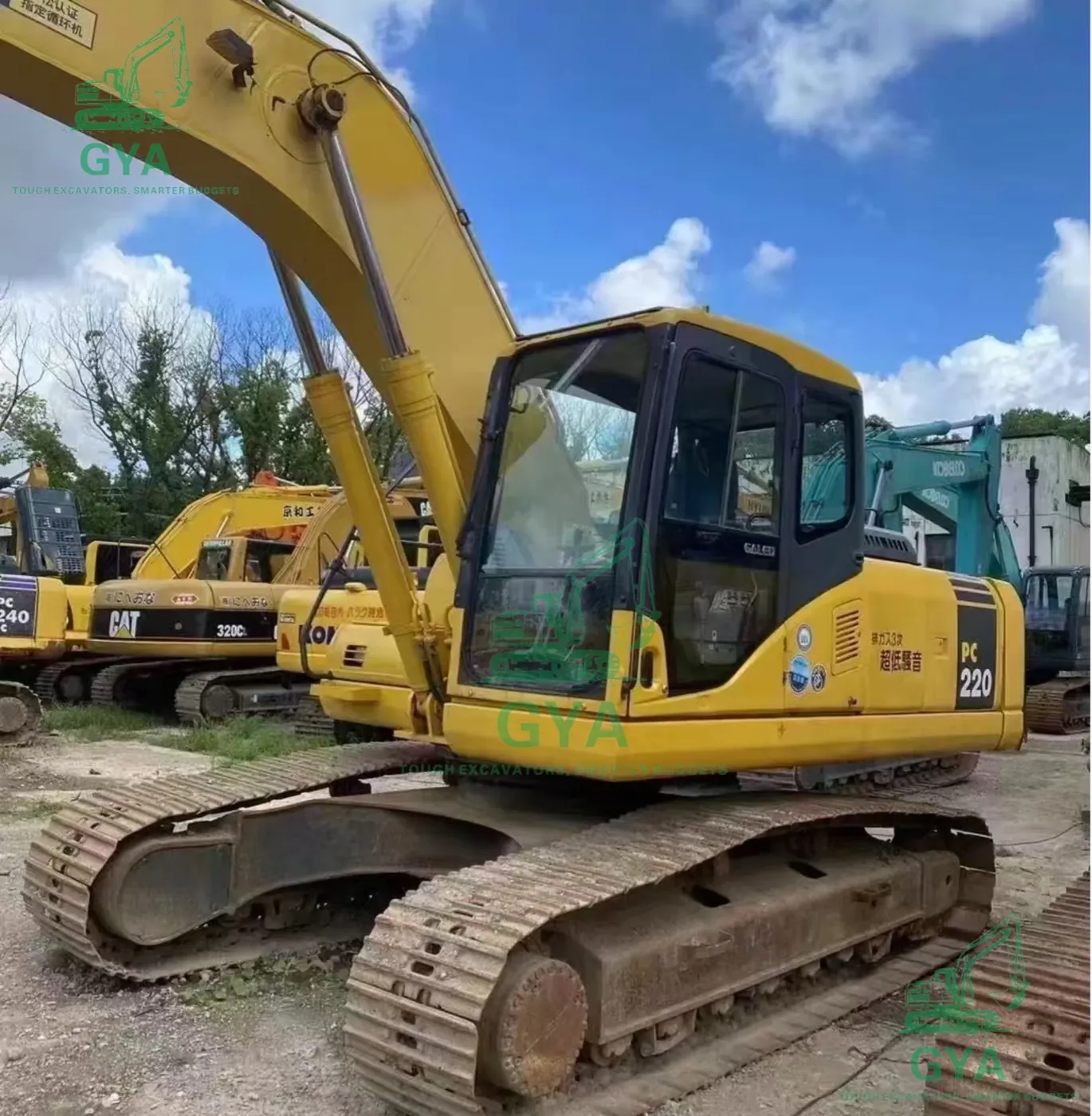
Buyers who read the band as a league table will misread this model. The band is a reference someone published at model level. The machine is a set of wear parts, paperwork and transport dimensions. Only one of those can be inspected, and it is not the band.
The band that breaks the ladder
Most buyers assume price climbs with the model number. Here it does not: the PC220-7 sits at 20,000–22,500 USD, below the PC200-7 at 24,000–27,000 USD and the PC200-8 at 25,000–28,000 USD. All three are model-level references rather than unit prices, but the ordering is still worth noticing.
What the data does not do is explain the gap. It publishes no year, no hours and no condition score beside those bands, and this article will not invent a cause. What it can do is list the questions that would explain a gap on a real machine, and show how to test them before you send money.
Real anchors on the used Komatsu PC220-7 excavator
The catalogue gives a reference specification for this model: about 22,840 kg operating weight, a Komatsu SAA6D102E-2 direct-injection engine, roughly 125 kW at around 2,100 rpm, a bucket in the region of 1.0 m³ and an older Stage II / non-Tier 3 emission reference. Each of those is a reference to confirm against the machine plate, not a promise about the unit you are offered.
Use them for planning, not for pricing. Weight drives transport. Bucket size drives how much material moves per pass. Engine generation drives which markets will accept the machine and which mechanics will enjoy working on it. Emission reference drives your import risk. None of that tells you whether this particular track group has another season in it, and none of it is a PC220-7 price.
If a seller quotes a weight or bucket that does not match the reference, that is not automatically a problem. It is a reason to look at the plate, the track shoes and the actual bucket, and to ask whether the machine was configured for a different job.
What class economics actually measures
Class economics is not purchase price divided by tonnage. It is the cost of moving material with a machine you can keep running, on a site you can reach, under rules you can satisfy. Four inputs do most of the work: purchase, repair reserve, freight and compliance. A fifth, downtime, is the one buyers forget until it happens.
On a 22-ton machine all four are larger than they look on a small excavator. The tracks are heavier, the transport needs a lowbed and possibly permits, the parts are dearer, and the import file is the same size as for a 40-ton machine. The class only pays when the work is continuous enough to absorb those fixed costs.
Quantify the repair reserve instead of guessing it. Send the undercarriage photos and any hydraulic symptoms to a local parts supplier and a mechanic, and ask for a written estimate covering the work you would do in the first season. Add that figure to the purchase and freight numbers. A machine needing no immediate work is worth more than a cheaper unit with a known bill already waiting.
Why a bigger model can carry a smaller number
Age is the obvious candidate, but it is not the only one. Market familiarity, emission acceptance, original versus renewed undercarriage, attachment history, paint, and even how long a seller has been holding the unit can all push a quote up or down. Because none of that is published per band, the honest reading is that the number starts a conversation rather than ranking the machines.
There is also a supply-side explanation that buyers rarely consider. A seller holding a 22-ton machine with no repeat work may accept a lower number to free capital and yard space. That does not make the machine cheaper to own; it moves the risk onto you. Ask how long the unit has been available, and whether the asking number changed while it sat.
The practical consequence is simple: do not buy the PC220-7 because it looks like a bargain beside a PC200-8. Buy it because the specific unit, configured for your work, costs less to own over the period you plan to keep it. That comparison needs evidence, which is what the next sections are about.
PC220-7 inspection: wear that scales with the class
Undercarriage first. On a 22-ton class machine the track group is a major line item. Check shoes, links, rollers, idlers, sprockets and adjusters, and ask whether the group is renewed or original. Renewed parts are not automatically good parts; ask for the invoice and look at the wear since fitting.
Structure at the load points. Boom foot, arm welds, bucket linkage, turret and counterweight. On machines that have run a breaker, look harder at the boom and the front attachment.
Engine from cold. Smoke, idle stability, blow-by, leaks and the engine plate. The catalogue references a direct-injection engine, which is simpler to diagnose than a common-rail unit, but simplicity is not the same as health.
Hydraulics under load. Boom, arm, bucket, swing, travel, then combined. Watch for drift and for a function that is slow only when hot.
Identity and loading proof. Plate, hour meter, working video and the loading method in one continuous record, so the machine you inspected is the machine that ships.
Transport, truck match and the hidden cost of size
A 22-ton excavator does not move like a compact machine. Ask for transport height and width with the boom folded, the track shoe width and the counterweight arrangement, then ask your forwarder and your haulier to quote against those figures. On many routes the machine travels as breakbulk or on a flat rack, and the inland leg needs a lowbed plus permits.
Truck match is the other half of class economics. If your haul fleet is small, a bucket that fills a truck in three passes is worth more than a larger bucket that fills it in one and a half and spills the rest. Ask the seller for the actual bucket, then measure it against your trucks. That single conversation often decides whether this class suits the site.
One 22-ton machine or two smaller ones
Two smaller machines can beat one larger machine on scattered work, because they are easier to move and can work in two places at once. One 22-ton machine beats two smaller ones on continuous loading, because the fixed costs of operator, fuel and maintenance spread across more material. Which pattern matches your site is a question about your schedule, not about the catalogue.
A used Komatsu 20–30 t excavator earns its keep on continuous work, not on scattered jobs. Write the arithmetic down before you shop: working weeks, trucks per day, transport cost per move, and what a day of downtime costs you. Numbers you supply yourself are more reliable than any band, and they make seller claims easier to test.
The used Komatsu PC220-7 excavator as a first 20–30 t purchase
For a buyer stepping up from a smaller class, this model has two practical attractions: the catalogue band is the lowest in the 20–30 t group, and the reference specification describes a straightforward direct-injection machine. In markets where older engines are accepted and mechanics prefer simple systems, that combination is coherent.
It is not a universal recommendation. If your market restricts older emission levels, if the work is breaker-heavy, or if clients judge a fleet by how new it looks, this is the wrong starting point and no discount fixes it. Ask about the emission reference and the import rules before you fall for the band.
Export terms, inspection and documents
We are an independent used machinery exporter, not a dealer, and we do not claim yards we do not own. Machines are sourced against your checklist, and we quote FOB or CIF for the actual unit and port. The Incoterm decides who pays freight and insurance; the checklist stays the same.
Before the balance, arrange the inspection or accept a third-party report. At shipment the paperwork covers invoice, packing list, bill of lading and certificate of origin, with model and serial matching the plate. Ask for copies before loading is complete, and keep the loading video with the file. It is the cheapest insurance in the transaction.
FAQ: PC220-7 class and price
Why is the used Komatsu PC220-7 excavator band lower than the PC200-7 band?
The catalogue does not explain it. The bands are model references; a unit quote depends on age, condition, configuration and destination.
Is 20,000–22,500 USD a quote?
No. It is the model band. Ask for a written offer naming the unit, its year, hours, attachments, Incoterm and port.
What weight should I plan for?
The catalogue reference is about 22,840 kg. Confirm actual weight and transport dimensions from the plate and the machine.
Can you arrange a PC220-7 inspection?
Yes. Video review first, then a physical or third-party inspection before the balance payment.
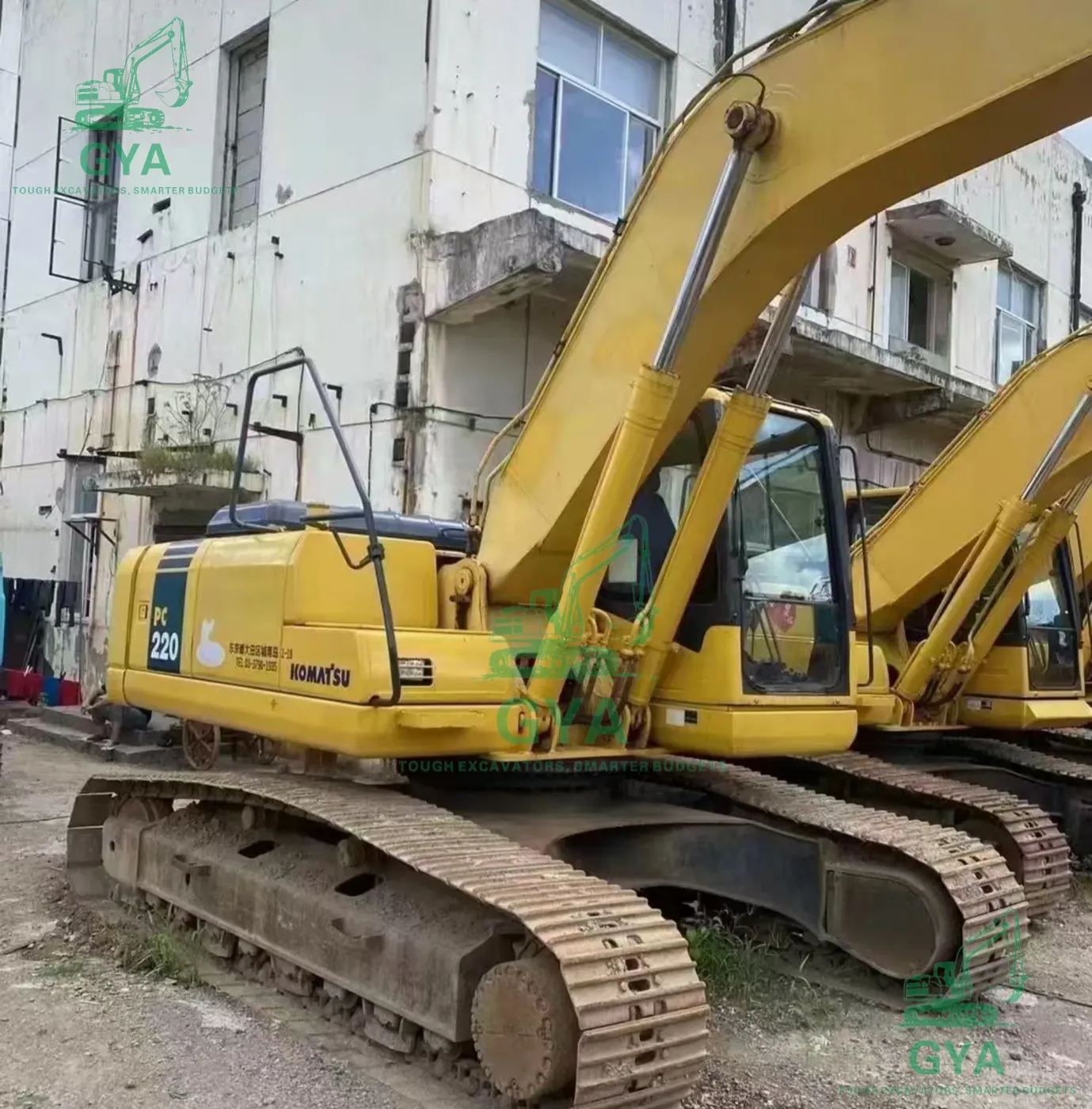
See the used Komatsu PC220-7 excavator model page for the catalogue entry, the PC200-7 model page for the neighbouring band, or the PC200-8 price and inspection guide.
Komatsu buyer guides
Price bands, inspection and transport for the models buyers ask about.