Used Komatsu PC200-7 Import Kenya: Mombasa Landed Cost
A used Komatsu PC200-7 import Kenya file looks cheap at the tariff line and expensive at the bank. The duty rate is 0%, yet the same shipment still carries 16% VAT, a 3.5% Import Declaration Form levy and a 2% Railway Development Levy. On a machine listed at 24,000-27,000 USD in the 20-30 t class, those lines add roughly a quarter of the CIF value before clearing and inland haulage are counted. This guide follows the import file in the order it is actually assembled, so the total at the end can be traced back to a document rather than to a habit.
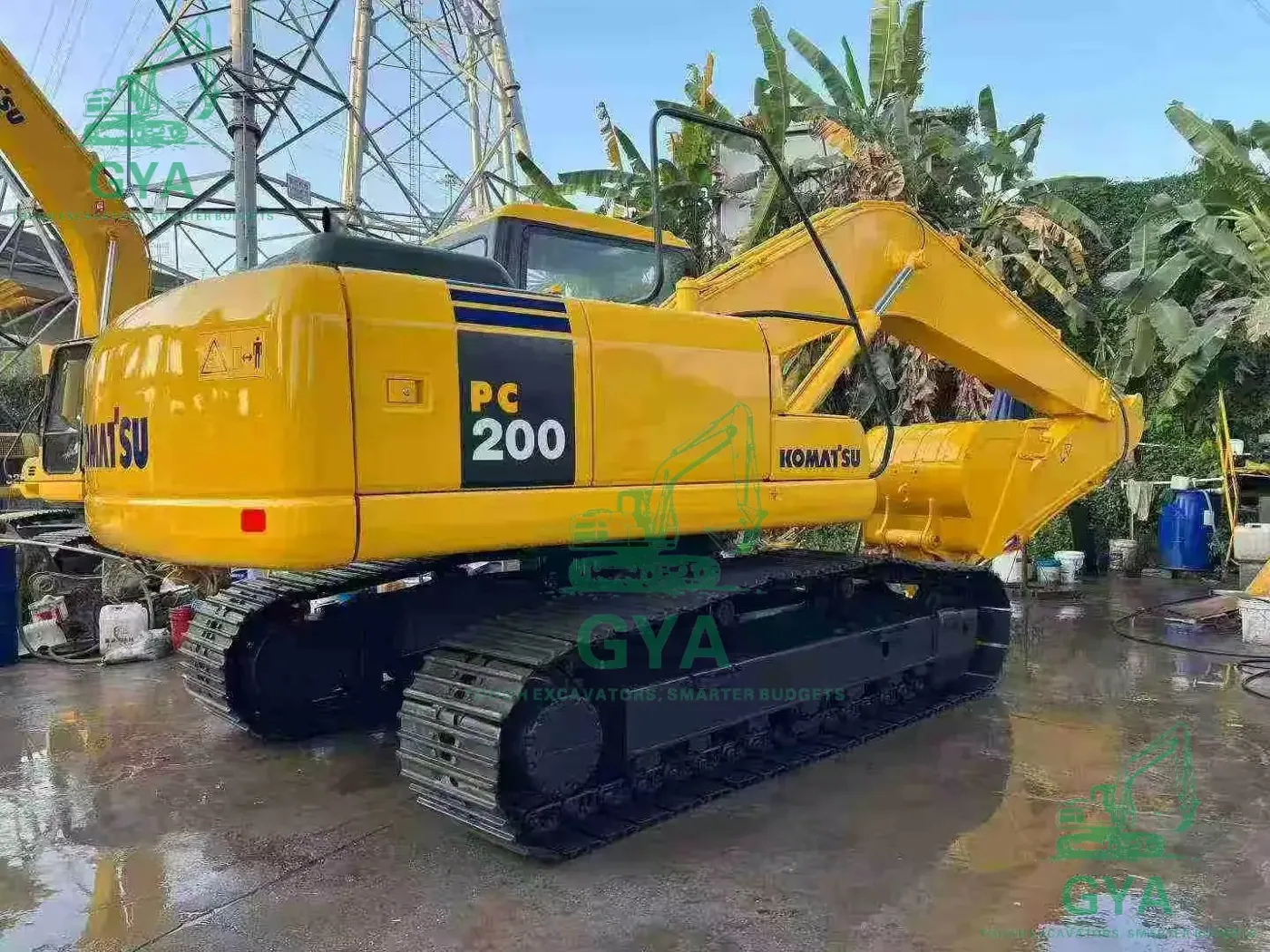
Stage 1: Used Komatsu PC200-7 Import Kenya Begins With the Plate
Before a rate or a freight line matters, the machine has to be identified. The catalogue places the PC200-7 in the 20-30 t class and publishes a band of 24,000-27,000 USD. It does not publish a year, an hour reading, a weight or a bucket size for a specific unit, and those gaps are not filled by guessing from the model number. They are filled by the plate, the documents and a current video.
Ask for one continuous video that starts at the serial plate and stays readable, then moves to the hour meter and around the machine. Confirm whether the plate reads PC200-7 or a variant designation. The catalogue does not resolve variant detail for this model, so the plate is the authority, not the listing title and not a badge photograph. The same rule applies to the invoice: the model string on the invoice should be the string on the plate, because that is the string the broker will declare.
Identity has a commercial purpose as well as a customs one. A machine described loosely is easy to substitute, and a substitution discovered at the destination port is expensive to reverse. A machine described precisely, with plate photographs attached to the file, is much harder to swap without leaving a trail.
Stage 2: Fix the Customs Value Before Any Rate
Kenyan duty and levies are assessed on the customs value, which for a normal sale is built from the transaction value plus the international transport and insurance to the port of import. In practice that means the CIF figure, not the FOB figure. A quote that shows only the machine price is not yet a customs document; it is half of one.
This is where the first assumption enters the file. Ocean freight varies with the sailing, the equipment and the season, and insurance varies with the policy. The worked example later in this page uses a 40ft container reference and a 0.35% insurance assumption, both labelled. Replace them with your forwarder's current figures before you use the total for a decision.
Do not treat a low invoice as a saving. Customs valuation is not a negotiation between the buyer and the seller, and a declared value that does not match the payment trail creates a problem that costs more than the tax it avoided. The useful discipline is the opposite: keep the invoice, the payment and the freight document consistent, and let the rate do its work.
Stage 3: Kenya Import Duty Excavator: Four Lines, Not One
The phrase Kenya import duty excavator suggests a single tax. The Mombasa file has four lines, and only one of them is called duty. Each has its own base, which is why a buyer who multiplies the CIF value by one percentage always gets a different answer from the broker.
| Line | Rate | Base |
|---|---|---|
| Import duty | 0% | CIF value |
| Import Declaration Form (IDF) levy | 3.5% | CIF value |
| Railway Development Levy (RDL) | 2% | CIF value |
| VAT | 16% | CIF + duty + IDF + RDL |
The 0% duty line is the one buyers remember and the one that matters least at this level. The IDF and RDL together come to 5.5% of CIF, and they apply whether or not duty applies. If the machine is classified differently from the rate supplied for this route, the duty line can change; confirm the classification with a licensed clearing agent before the shipment sails, not after it arrives.
Stage 4: VAT Is Charged on More Than the Machine
VAT is 16% of the CIF value plus duty, IDF and RDL. With duty at zero, the base is 105.5% of CIF, so the effective VAT is 16.88% of CIF rather than 16%. Add the 5.5% of IDF and RDL and the four lines together come to about 22.38% of CIF.
That is the arithmetic behind the opening sentence. A 0% duty rate does not make the import cheap; it removes one line and leaves the compounding ones in place. On a CIF value of 29,389 USD, the levies come to 6,578 USD. On the same shipment, clearing and inland delivery are separate again, and they are quoted by people who are not the tax authority.
Check the broker's pre-arrival calculation against these bases rather than against the total. A total can be wrong for several reasons at once; a base is either the CIF figure or it is not. If the broker's VAT base is lower than CIF plus the three other lines, ask which line was left out.
Stage 5: The Mombasa Cost Sheet, With Assumptions Named
The following is a worked example at the middle of the published band. It is not a quotation, and the four given rates are the only figures that come from the route specification rather than from an assumption.
| Line | Basis | Example (USD) | Status |
|---|---|---|---|
| Machine, FOB China | Mid-band reference | 25,500 | Assumption |
| Ocean freight | 40ft container reference | 3,800 | Assumption |
| Marine insurance | 0.35% of FOB | 89 | Assumption |
| CIF value | FOB + freight + insurance | 29,389 | Calculated |
| Import duty | 0% of CIF | 0 | Given rate |
| IDF levy | 3.5% of CIF | 1,029 | Given rate |
| RDL | 2% of CIF | 588 | Given rate |
| VAT | 16% of (CIF + duty + IDF + RDL) | 4,961 | Given rate |
| Clearing and port | Agent estimate | 1,400 | Assumption |
| Inland delivery, Mombasa area | Local haulage estimate | 600 | Assumption |
| Landed total | Sum of the above | 37,967 | Calculated |
The total is about 149% of the FOB price. Note where the money goes: the four tax lines take 6,578 USD, which is more than the freight and insurance combined, even though duty itself is zero. That is the shape of a Kenyan import, and it is the reason the 0% headline is misleading.
Stage 6: Used Komatsu PC200-7 Import Kenya: Where the Sheet Breaks
A spreadsheet breaks at its assumptions, and this one has five that matter. The first is freight: a different sailing, a different equipment type or a peak season can move the ocean line by more than the difference between two machines. The second is the clearing estimate: agent fees, terminal handling and storage are not tax, and they are not fixed by the rate schedule.
The third is the unit itself. Undercarriage, hydraulic condition, pins, structure and attachment package decide what the machine needs before it earns. A PC200-7 at the top of the band with a strong undercarriage can be cheaper than a unit at the bottom that needs a track group, and the tax treatment is the same for both; what differs is the value it is applied to. The fourth is the exchange rate between the currency you hold and the currency you pay. The fifth is time: a document delay that turns into storage is a cost with no line in the table.
Only one of those five is visible in the band. The other four are the reason two buyers can pay the same price for the same model and end up with very different totals.
Stage 7: The 40ft Reference and the Measurement That Overrides It
The cost sheet in this article uses a 40ft container reference for the freight assumption. That reference is deliberately not a flat rack rate and not a RoRo rate. The three methods are priced differently, and mixing a container assumption with a flat rack quotation produces a total that belongs to no real shipment.
The reference is a planning tool, not a fitment promise. A 20-30 t excavator is frequently too tall or too wide for a standard 40ft container once the boom, cab and counterweight are considered. The only way to know is to measure the actual unit with the boom folded and compare those measurements with the container specification. If it does not fit, the freight line changes, the CIF value changes, and every tax line built on CIF changes with it. Rebuilding only the freight line and leaving the taxes untouched is the most common arithmetic error in a landed-cost sheet.
Stage 8: Inspection File, Export File, Clearance File
There are three files, and they should tell one story. The inspection file holds the plate-to-meter video, the cold start, the hydraulic cycle, the undercarriage measurements, the structure photographs and the report. The export file holds the commercial invoice, packing list, bill of lading and certificate of origin. The clearance file holds what your Mombasa agent needs to declare the shipment.
We are an independent exporter, not a dealer, and we do not own a yard. That is relevant here because the inspection is performed on a specific unit before it is shipped, and the report is written from what was seen rather than from a yard's description. We quote FOB or CIF, and we can arrange the inspection file for a used Komatsu PC200-7 import Kenya before the balance is paid.
Check the invoice against the bill of lading before the vessel sails. Model, serial, quantity and terms should agree. A correction made at origin is an email; a correction made at Mombasa is a delay, and a delay is a storage bill. Ask the agent which pre-arrival documents are needed and in what form, and keep the answers with the file.
Stage 9: FAQ: Komatsu PC200-7 Landed Cost Mombasa
What is the Komatsu PC200-7 landed cost Mombasa in this example?
About 37,967 USD on a 25,500 USD FOB machine, using the freight, clearing and inland assumptions in the table. The given rates are 0% duty, 3.5% IDF, 2% RDL and 16% VAT. It is an illustration, not a quotation.
Why is the total so high when duty is 0%?
Because VAT, IDF and RDL are charged on CIF, and VAT is also charged on the other levies. The four lines together come to about 22.38% of CIF in this example. Duty is only one of the four.
How do I calculate used Komatsu PC200-7 Kenya tax myself?
Build the CIF value first, then apply 0% duty, 3.5% IDF and 2% RDL to CIF, and apply 16% VAT to CIF plus those three lines. Confirm the classification and the current rates with a licensed agent.
Is the 40ft reference a flat rack or RoRo quote?
No. It is a container reference used for planning. If the measured machine does not fit, the freight line and every CIF-based tax line must be rebuilt.
Can you inspect the machine before shipment?
Yes. Inspection is arranged at origin against the unit you are considering, and the report is shared before the balance payment. We do not own the yard where the machine is stored.
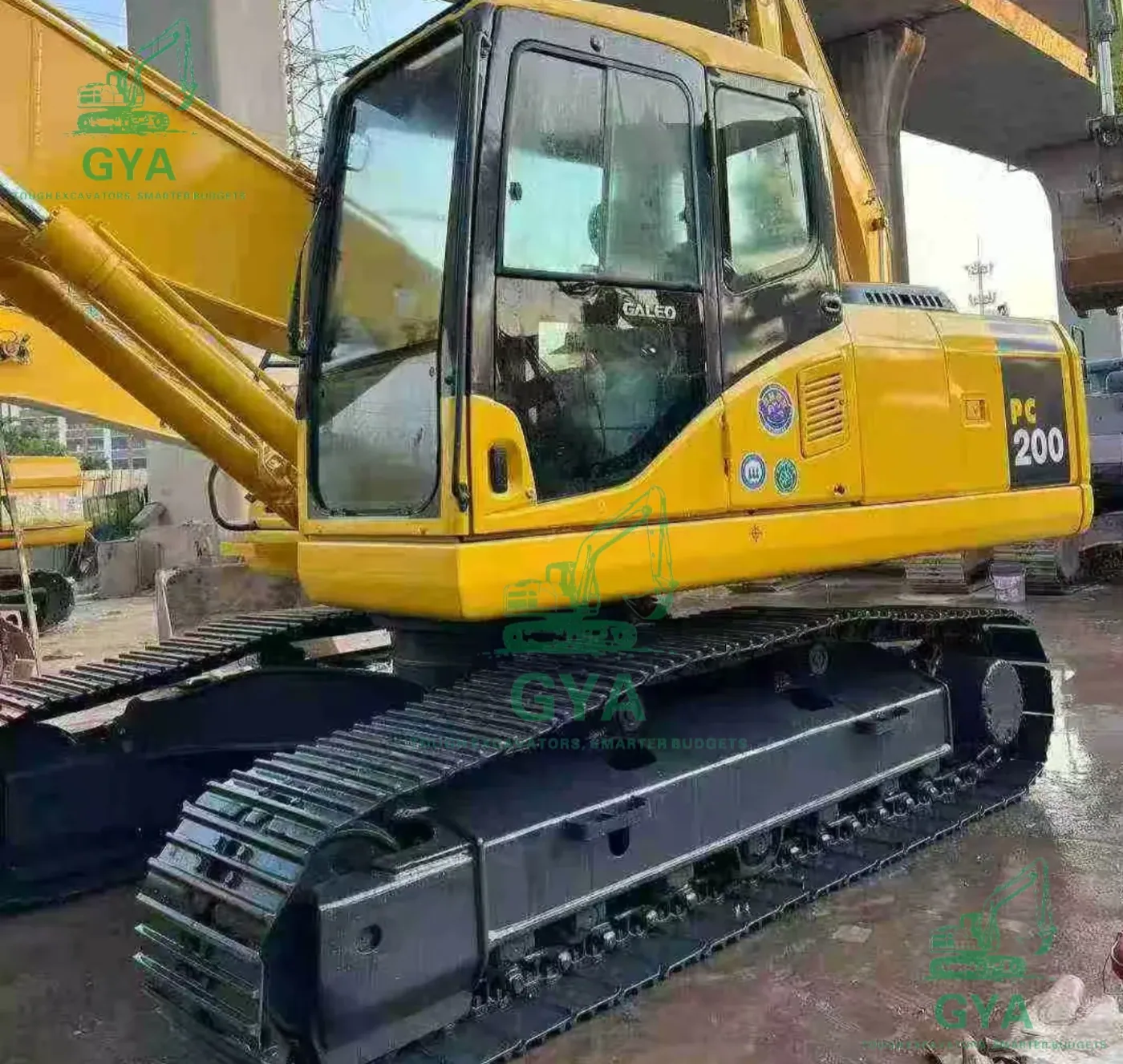
The Komatsu PC200-7 model page carries the band and class used throughout this guide. Send your sailing date and the unit details through the contact page and we will return a cost sheet with the given rates and the assumptions kept apart.
Komatsu buyer guides
Price bands, inspection and transport for the models buyers ask about.