Used Komatsu PC200-7 Excavator: What the Price Band Really Says
The used Komatsu PC200-7 excavator carries a catalogue band of 24,000–27,000 USD and sits in the 20–30 t class. Those two facts are the only model-level numbers this site publishes for it. They are useful for sanity-checking a quote and useless for choosing between two machines, because the band knows nothing about the year, the hours, the undercarriage or the port. This guide separates the four numbers that buyers routinely blend into one, and shows which evidence moves each of them.
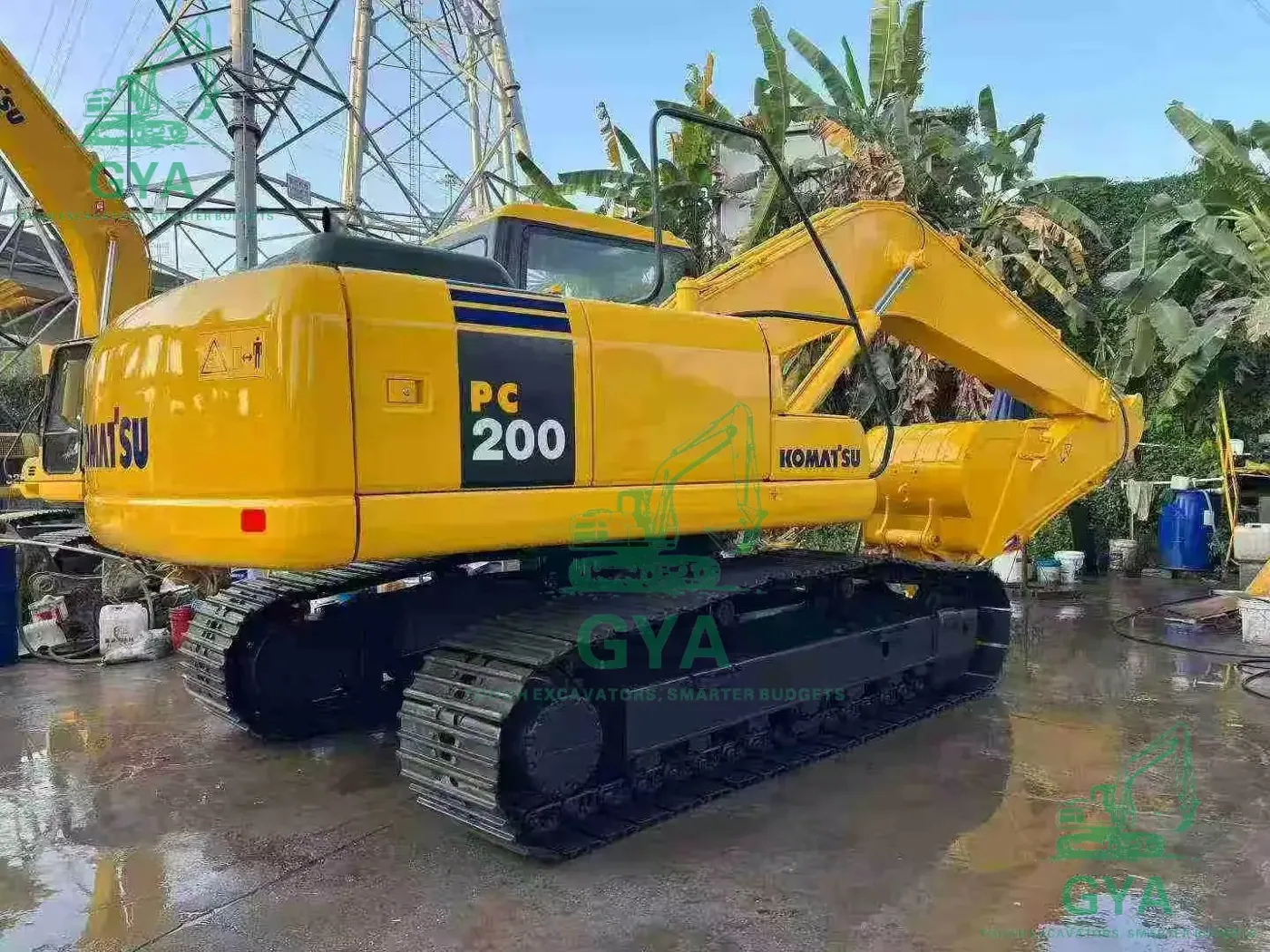
The machine in front of you was built to work, not to hold a price. Once that is clear, the band becomes a starting line instead of a verdict.
Four numbers, one machine
The catalogue band is a reference for the model. The seller's quote is a number for a unit. The invoice is a contract. The landed cost is what your accountant eventually sees. They are different objects, and negotiating them as if they were the same thing is the most expensive habit in this trade.
Use the band to reject obvious nonsense. Move to the unit quote once you have video. Fix the invoice only after the inspection. Work out the landed cost before comparing with a local machine. Each step consumes different evidence, which is why a single number can never settle the argument.
What separates a used Komatsu PC200-7 excavator price from the band
Three things, in order of money: undercarriage, hydraulic health and structural history. Everything else is secondary, paint and the hour meter included.
Undercarriage is the largest predictable bill on a 20-ton crawler. Chains, rollers, sprockets and idlers wear as a set, and replacing one or two items on a worn set buys time rather than life. Ask for close-ups and measurements, and ask when the parts were last renewed. If the answer is a shrug, price the machine as though the track group is due.
Hydraulic health is harder to photograph. Watch a full cycle under load, listen to the pump, check cylinder drift and look for weeping at the seals. A slow function can be a filter, a relief setting or a pump on its way out; only a pressure test separates those, and that is a job for an inspector rather than a phone camera.
Structural history is the disqualifier. Boom and arm welds, boom foot, turret and counterweight should be checked for cracks or fresh paint over repairs. A documented repair is a negotiating point; an undocumented one is a reason to walk away.
Why the PC200-7 band sits so close to the PC200-8 band
In this catalogue the PC200-7 is listed at 24,000–27,000 USD and the PC200-8 at 25,000–28,000 USD. The ranges overlap almost completely. That overlap is the most useful thing the band tells you: the model number does not rank the machines, and a 1,000 USD difference at the top of a range is not a quality verdict.
What the band cannot tell you is why any particular unit is priced where it is. Age, hours, original paint, renewed undercarriage, attachments and the seller's urgency all move a quote inside or outside the range. Those drivers are not published per unit, so the only way to explain a quote is to ask for the evidence behind it.
Hours on an older 20-ton machine: a reference, not a receipt
The model page notes that most available PC200-7 units run somewhere around 6,000 to 10,000 working hours, and that the meter on a machine this old should be treated as a reference. That is the right way to read it. A meter can be repaired, replaced or simply stopped; the wear pattern on pedals, seat, joysticks, pins and track group is much harder to fake consistently.
Use the reading as a cross-check, never as a price. If the meter says low and the machine looks tired, ask for service records and meter history. If the meter says high and the machine looks tight with documented maintenance, the hours may be the least interesting number on the listing. Repainting is normal on this model and proves nothing either way.
PC200-7 inspection: the four checks that move the number
Cold start and smoke. Ask for a start from cold with the engine bay visible. Smoke that clears, a knock, or an idle that hunts are all reasons to slow down.
Hydraulics under load. Boom lift, arm in, bucket curl, swing both ways, travel both sides, then a combined movement. Ask the operator to work against resistance rather than in the air.
Undercarriage and travel. Straight travel, turning, final drive noise, plus close-ups of the wear parts and the adjusters.
Structure and identity. Boom foot, arm welds, bucket linkage, then the stamped plate and the hour meter inside one continuous video.
Anything that fails one of these is not automatically a reject; it is a line item. The point is to know the line item before agreeing a price, not after the machine lands.
Direct injection, fuel quality and the repair ecosystem
The model page describes the PC200-7 as an older direct-injection machine suited to markets where electronic diagnosis is thin, and it warns that the model may burn more fuel than a PC200-8. Both statements point at the same decision: the cheapest machine to buy is not always the cheapest to own.
If your site has clean fuel and a mechanic who knows modern controllers, a newer machine may earn its higher price. If your site has variable fuel and a workshop that prefers simple systems, the older layout may keep more machines working. This is a local question, and only you can answer it. What a seller can do is stop pretending that paint, a fresh seat cover or a new decal answers it.
Landed cost: where the band stops being useful
Every used Komatsu 20–30 t excavator carries the same fixed costs of permits and paperwork. Add ocean freight, insurance, duty, VAT, clearing, port charges and inland delivery, and the 24,000–27,000 USD band becomes a smaller and smaller share of what you actually pay. On a 20-ton machine the freight and handling are not a rounding error, and the loading method changes them: flat rack, RoRo and breakbulk are not interchangeable quotes.
Ask your forwarder for a figure against the actual dimensions and weight, not against the model name. Ask a local broker for the duty and tax treatment before committing. Then compare the total with a machine you can inspect in your own country, including the cost of downtime while an import clears.
Negotiating with evidence instead of adjectives
A useful negotiation starts with a short list: undercarriage condition, hydraulic performance, structural repairs, attachment set, documentation and loading date. Send it to the seller and ask for a reply item by item. Sellers who answer it are usually the ones worth continuing with.
Then price the gaps. If the track group is due, get a local quote for the parts and add it to your offer. If a cylinder weeps, ask for the repair estimate. Bargaining in the currency of repairs is more productive than arguing about the sticker, and it leaves you a written record of what you accepted.
When a used Komatsu PC200-7 excavator is the wrong purchase
Walk away when the structure has an unrepaired crack, when a hydraulic fault cannot be explained, when the plate and the paperwork disagree, or when the seller refuses an inspection. Those are not bargaining positions; they are unknowns you would be buying at full price.
The model is also wrong when the job has moved on. If you need lower fuel burn, a cleaner cab, a newer image for tenders, or electronics your clients expect, the older machine will cost you in ways the band never shows. Buy the PC200-7 because the economics of your site fit it, not because the band sits 1,000 USD under the next badge.
Buying and shipping: a sequence that avoids surprises
Send the model, destination port and work type. Ask for current photos, a cold-start video, a loaded hydraulic cycle and undercarriage close-ups. If the unit passes, request a proforma invoice naming the machine, the price, the Incoterm and the port, then arrange the inspection before the balance.
We are an independent exporter working with sourced machines, not a dealer with a yard of our own, so the unit is confirmed against your checklist before money moves. FOB and CIF are both available. The shipping file pairs the invoice with a packing list, a bill of lading and the certificate of origin, all matching the plate.
FAQ: PC200-7 price questions
Is 24,000–27,000 USD the price of the machine I am buying?
No. It is the catalogue band for the model. A unit quote depends on year, hours, undercarriage, attachments and destination.
Can I find a used Komatsu PC200-7 excavator below the band?
Sometimes, and the reason matters. A tired track group or an undocumented repair can push a unit below the range; check what you are accepting.
How long does a PC200-7 inspection take?
A video review can be done in a day. A physical or third-party inspection depends on the inspector and the machine location.
Do you quote CIF?
Yes, against the actual unit and destination port.
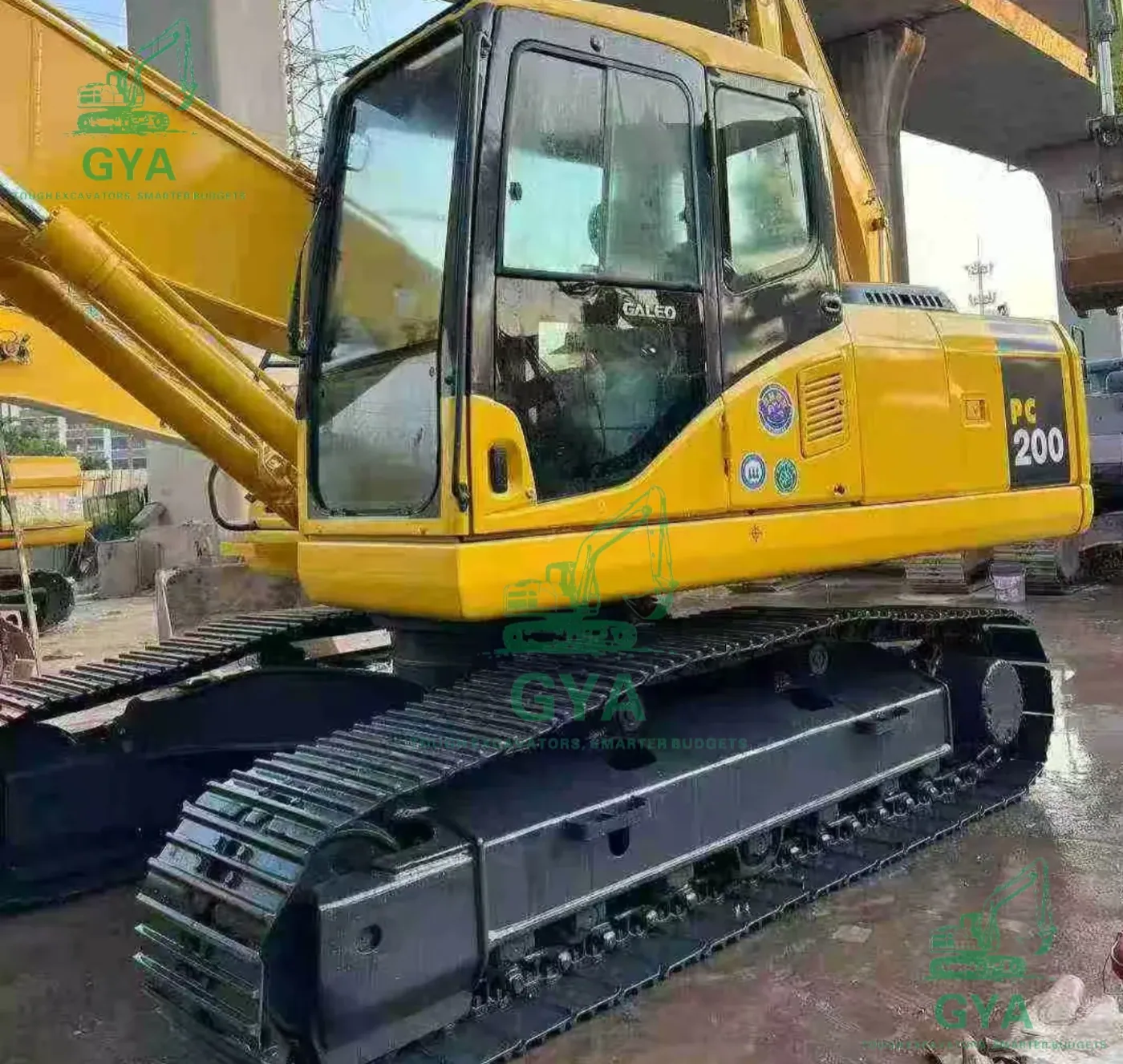
Check the used Komatsu PC200-7 excavator model page for the catalogue entry, or read the PC200-8 guide if you are comparing the neighbouring band. For the larger 220, see the PC220-7 model page.
Komatsu buyer guides
Price bands, inspection and transport for the models buyers ask about.