PC200-8 vs PC300-7: Price Bands and Class Economics
PC200-8 vs PC300-7 is the comparison that appears when a contractor's 20-tonne work is outgrowing the machine but the quarry tier still feels like a different business. On this site the PC200-8 is listed at 25,000–28,000 USD in the 20–30 t class, and the PC300-7 at 44,000–46,000 USD in the 30–40 t class. Both figures are model-level references. Neither is a quote, a stock promise or a condition grade. What follows is the arithmetic the bands can actually support, and the costs that decide whether the step is worth taking.
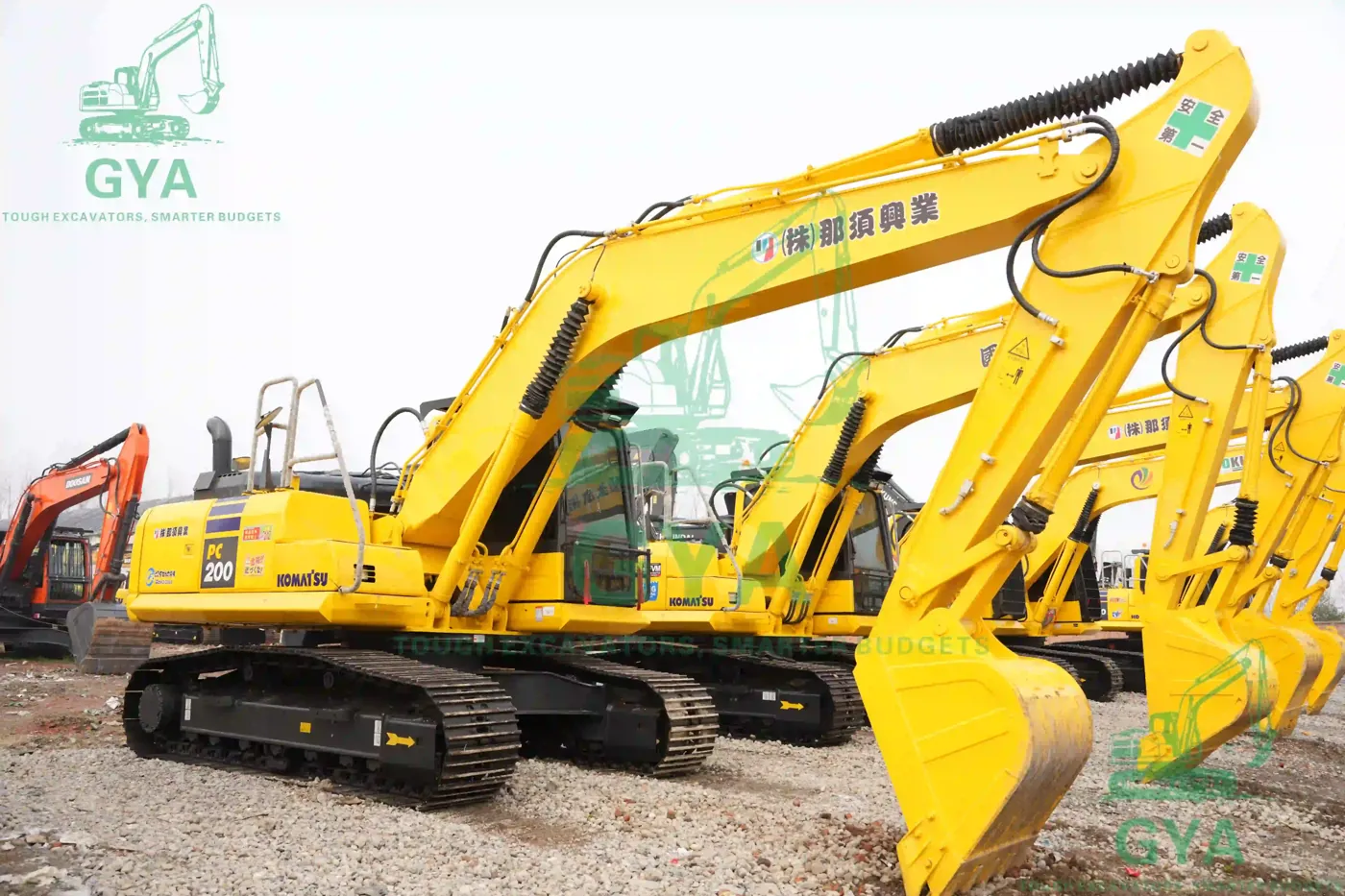
PC200-8 vs PC300-7: the two bands side by side
| Model | Class | Band (USD) | Band width | Width as share of floor |
|---|---|---|---|---|
| PC200-8 | 20–30 t | 25,000–28,000 | 3,000 | 12.0% |
| PC300-7 | 30–40 t | 44,000–46,000 | 2,000 | 4.5% |
Two observations matter before any discussion of capability. The floor-to-floor gap is 19,000 USD, which is 76% of the PC200-8 floor. The ceiling-to-ceiling gap is 18,000 USD, or 64% of the PC200-8 ceiling. The second observation is less obvious: the PC200-8 band is almost three times wider in relative terms. A wide band is not generosity from the seller. It is room for very different machines to sit under one label, and that room is where inspection earns its cost.
What the 19,000 USD gap buys, and what it does not
The gap buys a class step. The PC300-7 sits in the 30–40 t group and the PC200-8 in the 20–30 t group. That grouping and the band are the only facts the model data carries for these two. No operating weight, bucket size, digging depth or engine rating is attached to them, so this comparison ranks them on class and cost rather than guessing specifications. What the class does tell you is the kind of site, the kind of haulage and the kind of crew each machine is built around.
What the gap does not buy is output. Output belongs to the unit in front of you: its hydraulic condition, its undercarriage, its attachment and the number of paid hours it works each month. A tired PC300-7 at the bottom of its band can produce less per week than a sound PC200-8, and it will still have cost 16,000 USD more before the first repair. The comparison therefore has to be built in two layers. The band places the class. The evidence places the machine.
PC200-8 vs PC300-7: class economics per unit of capacity
A crude but useful check is price divided by the class boundary. At the floor of its band, 25,000 USD over a machine at the top of the 20-tonne end gives 1,250 USD per tonne of class capacity. At the top of the band and the top of the class, 28,000 USD over 30 tonnes gives 933 USD. The PC300-7 produces 1,467 USD at 44,000 over 30 tonnes, falling to 1,150 USD at 46,000 over 40 tonnes.
The instability of that metric is the point. Class is a range, not a specification, so the same division can be made to prove almost anything. What survives is a simpler fact: the PC300-7 costs between 1.64 and 1.76 times the PC200-8, depending on which end of each band you compare. A premium of that size has to be recovered from work the smaller machine cannot do efficiently. It cannot be recovered from the prestige of a larger number on the boom.
The 20-tonne case: one machine doing mixed work
Most independent contractors do not have a single job. They have a queue of small ones: earthworks, road work, trenching, site preparation, truck loading, a little demolition cleanup. The 20–30 t class is the natural fit for that queue. It is large enough to load trucks at a useful rate and small enough to move between sites without a specialist haulage plan, so one machine can cover a month of varied work.
Three things favour it financially. Capital at risk is lower by 16,000–19,000 USD. The repair reserve is smaller in absolute terms, which matters on the day an undercarriage bill arrives. And the machine is easier to redeploy, so a cancelled job leaves less idle capital behind. The trade is throughput. On a heavy excavation site the smaller machine takes longer, and if the client pays by the day rather than by the cubic metre, that shortfall is yours.
The 30-tonne case: when volume pays for the class
The PC300-7 makes sense when the work is repetitive and volume-driven on a site that stays put for months. Mass excavation, large-scale site preparation, quarry-adjacent loading, big infrastructure packages. In that setting the machine is not travelling; it is producing. The premium is fixed per day, and the cost per tonne moved falls as the working day fills.
The conditions are strict. You need a workload that keeps a 30–40 t machine busy enough to absorb the premium, a lowbed and a route that can move it, a site wide enough for its working radius, and a workshop that can support it. Buy the class before those four exist and you have bought idle capital with a larger fuel bill, not extra capacity.
Transport: the cost that scales with the class
Transport is where a band comparison becomes a landed-cost comparison. A 20–30 t machine often exceeds a standard container envelope once the boom, cab and counterweight are counted, so the realistic options are flat rack, RoRo or breakbulk. On some configurations a container works, but only after measurement. A 30–40 t machine pushes further into flat rack, RoRo or breakbulk territory and usually needs a multi-axle lowbed and permits on the inland leg.
Three rules follow. Ask for dimensions with the boom folded, measured on the actual unit rather than read off a class label. Ask whether the destination port can lift and move the machine, and whether the road to your yard accepts the loaded dimensions. And never compare a container rate with a flat-rack quote as if they described the same service. On the larger machine, the inland leg and the crane at the other end can cost more than the difference between two units of the same model.
Where the gap narrows and where it widens
Condition can close the price gap and it can widen it. A PC200-8 at the top of its band with a fresh undercarriage, a dry hydraulic system and a documented history can be the cheaper machine over three years than a PC300-7 at the floor that needs a track group. The reverse also holds: a PC300-7 with documented major work and a straight structure can justify its premium in a way that a cheap unit never will.
The asymmetry that matters is proportional. A 5,000 USD repair against a 25,000 USD machine is 20% of the purchase price. The same repair against a 44,000 USD machine is 11%. Defects hurt the cheaper machine proportionally more, which is exactly why the lower band needs the stricter inspection rather than the more relaxed one. Buyers tend to invert that logic, and the mistake is expensive.
Inspection priorities for each class
For the PC200-8 the order is identity, cold start, loaded hydraulic cycle, undercarriage measurements, structure and documents. The undercarriage is the largest predictable wear cost in the class, and the pump area is where a cheap machine hides an expensive problem. Ask for one uncut video that starts at the serial plate and ends at the hour meter, then compare the reading with the pedals, seat and pin wear.
For the PC300-7, add swing bearing, final drives, counterweight fixings and transport height to the same list, and insist on written repair quotes before any negotiation. Bigger machines carry bigger individual bills, and a verbal assurance is not a number you can put in a comparison sheet. Keep the scope identical for every unit you shortlist, or the reports cannot be compared at all.
Buyer fit: three profiles
One-machine contractor. Mixed work, several sites a month, no specialist haulage. The PC200-8 is the lower-risk choice, and the band leaves budget for inspection and a repair reserve.
Volume contractor with own logistics. Steady excavation, a lowbed, permits and a workshop. The PC300-7 premium can be recovered, and the wider site is already part of the plan.
First-time export buyer. The smaller class is easier to inspect, cheaper to move and easier to resell if the project changes. Buying the bigger band before the workload exists is the most common expensive mistake in this pair.
Comparing two quotes across classes
Put both offers on one sheet with identical rows: FOB price, freight to your port, insurance, duty and VAT from a local broker, clearing, inland delivery, repair reserve from written quotes, and expected paid hours per month. Fill the rows with your own numbers, not the seller's. The band is a single row on that sheet, and rarely the largest one once transport and repairs are counted.
Then ask the question the sheet cannot answer. Is the extra capacity going to be used, or is it insurance against a job that has not been signed? Capacity you use is an asset. Capacity you park is a cost with a warranty.
FAQ: PC200-8 vs PC300-7
Is the PC200-8 vs PC300-7 price gap justified?
Only by workload. The gap is 18,000–19,000 USD at the band edges, and it is recovered by work the smaller machine cannot do efficiently, not by the model number.
Are these bands actual prices?
No. They are model-level references at FOB level. The price of a unit depends on its condition, configuration and destination.
Can both machines ship in a container?
Confirm with measurements. The 20–30 t unit sometimes fits after preparation; the 30–40 t unit more often needs flat rack, RoRo or breakbulk.
Which one needs the stricter inspection?
The cheaper one, proportionally. A repair costs a larger share of a 25,000 USD machine than of a 44,000 USD machine.
Do you quote FOB or CIF?
Both, against the actual unit and destination port. Inspection can be arranged before the balance payment.
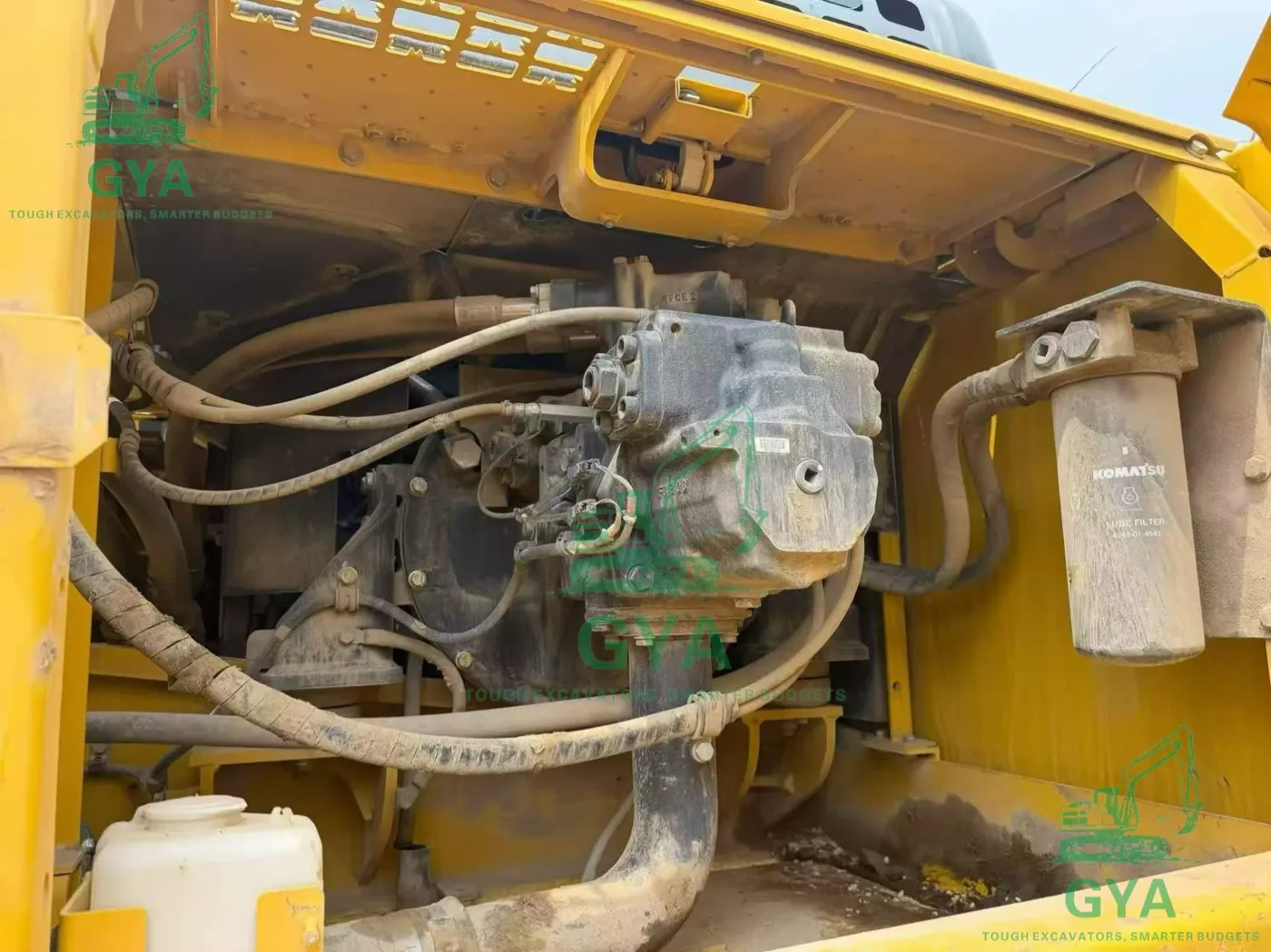
Review the PC200-8 model page and the PC200-8 vs PC300-7 model listings for the class labels and bands used here, then arrange a pre-shipment inspection or send your workload and destination port for a landed comparison.
Komatsu buyer guides
Price bands, inspection and transport for the models buyers ask about.