PC200-8 vs PC240-8: What the Price Inversion Means
PC200-8 vs PC240-8 looks like a straightforward size question until you read the two bands together. Here the PC200-8 is listed at 25,000–28,000 USD and the PC240-8 at 24,000–27,000 USD, both inside the 20–30 t class. The nominally larger model is 1,000 USD cheaper at the floor and at the ceiling. That is not a typo, and it is not a bargain in itself. It is a warning against using the model badge as a price ladder.
PC200-8 vs PC240-8: the inversion in one table
| Model | Class | Band (USD) | Band width | Floor difference |
|---|---|---|---|---|
| PC200-8 | 20–30 t | 25,000–28,000 | 3,000 | — |
| PC240-8 | 20–30 t | 24,000–27,000 | 3,000 | −1,000 |
The shape of the two ranges is the interesting part. Both are 3,000 USD wide. The PC240-8 band is not narrower, not wider and not differently distributed on paper; it is the PC200-8 band shifted down by 1,000 USD. A parallel shift suggests a difference in the level at which the two models trade, not a difference in how much condition varies inside each model. The catalogue does not say why, and this page will not invent a reason.
Why the nominally larger model is cheaper
A model band is a market reference for a name, not a specification score. It reflects what units of that designation have been listed at, at FOB level, before condition, attachments and destination are priced in. Nothing in the data file states an operating weight, a year, an hour reading or a bucket size for either machine, so the inversion cannot be explained by any of those. It can only be described.
Three honest explanations exist, and all of them are questions rather than answers. Demand in your destination market may favour one designation over the other. The population of units available at the time the band was written may differ in age or configuration. And the export market may simply price the two names differently, the way it prices other near neighbours in the same class. None of that is in the file, so treat the inversion as a prompt to ask the supplier, not as a fact about the machines.
PC200-8 vs PC240-8: what 1,000 USD actually decides
One thousand dollars is 4.0% of the PC200-8 floor and 3.6% of its ceiling. It is small enough to disappear inside the undercarriage or hydraulic work that dominates an inspection report, and small enough that one change in loading method can erase it. That is the scale of the decision. The inversion is real, but it is inside the noise of inspection.
So the correct response is not to buy the cheaper badge. It is to stop using price as the tiebreaker between these two names. Once 1,000 USD is on the table, condition, configuration, transport method and documentation dominate the outcome. A buyer who saves 1,000 USD and inherits 4,000 USD of undercarriage work has lost 3,000 USD and a month of production.
Five questions before you choose a side
One: what will the machine do for the next 24 months? If the answer is mixed site work, road jobs, trenching and truck loading, both models are in the right class and the badge decides nothing. If the answer includes a specific attachment package, the package decides.
Two: what does the unit need before it earns? Written quotes, not adjectives. Undercarriage, pins, hydraulic leaks, structure, tyres of the track group, bucket teeth. This number is usually several times the 1,000 USD inversion.
Three: what does it cost to land at my yard? FOB plus freight plus insurance plus duty plus VAT plus clearing plus inland delivery. Two machines 1,000 USD apart at origin can reverse order at destination once the loading method differs.
Four: can my transport and my site handle it? Both are in the 20–30 t class, so neither is a mini. Measured dimensions with the boom folded, the lowbed or flat rack, the crane at the destination port and the access road all have to be checked on the actual unit.
Five: what does this model resell for here? Local familiarity with a designation is worth money on exit. Ask a local dealer or contractor which of the two they would rather buy used, and treat the answer as market information rather than a specification verdict.
The repair reserve decides more than the sticker
Run the proportions. A 4,000 USD repair against the PC240-8 floor is 16.7% of the purchase price. The same repair against the PC200-8 floor is 16.0%. Against the two ceilings it is 14.8% and 14.3%. The inversion moves those percentages by less than one point. Condition, by contrast, can move the repair reserve by several thousand dollars in either direction.
That is the arithmetic behind a simple rule. When two bands overlap this heavily, the machine with the clearer file wins, even if it is the dearer of the two by 1,000 USD. The discount on the other unit is not a gift until you know what it is compensating for.
Transport: where a 1,000 USD saving can disappear
Both models sit in the same class, so the loading method is likely to be similar: flat rack, RoRo or breakbulk after measurement, possibly a container on a favourable configuration. The risk is not the class. It is the configuration. Bucket width, quick coupler, counterweight, blade and boom type all change the measured envelope, and a re-quote against the real dimensions can consume the entire price difference in one line.
Ask both suppliers for the same three measurements: length with the boom folded, height, and width over the shoes. Give those numbers to the forwarder and ask for one quote per unit, not one quote for the class. Then compare the landed totals. A 1,000 USD advantage that survives the freight quote is real; one that has not been tested against a quote is a hope.
Inspection: one file, two weightings
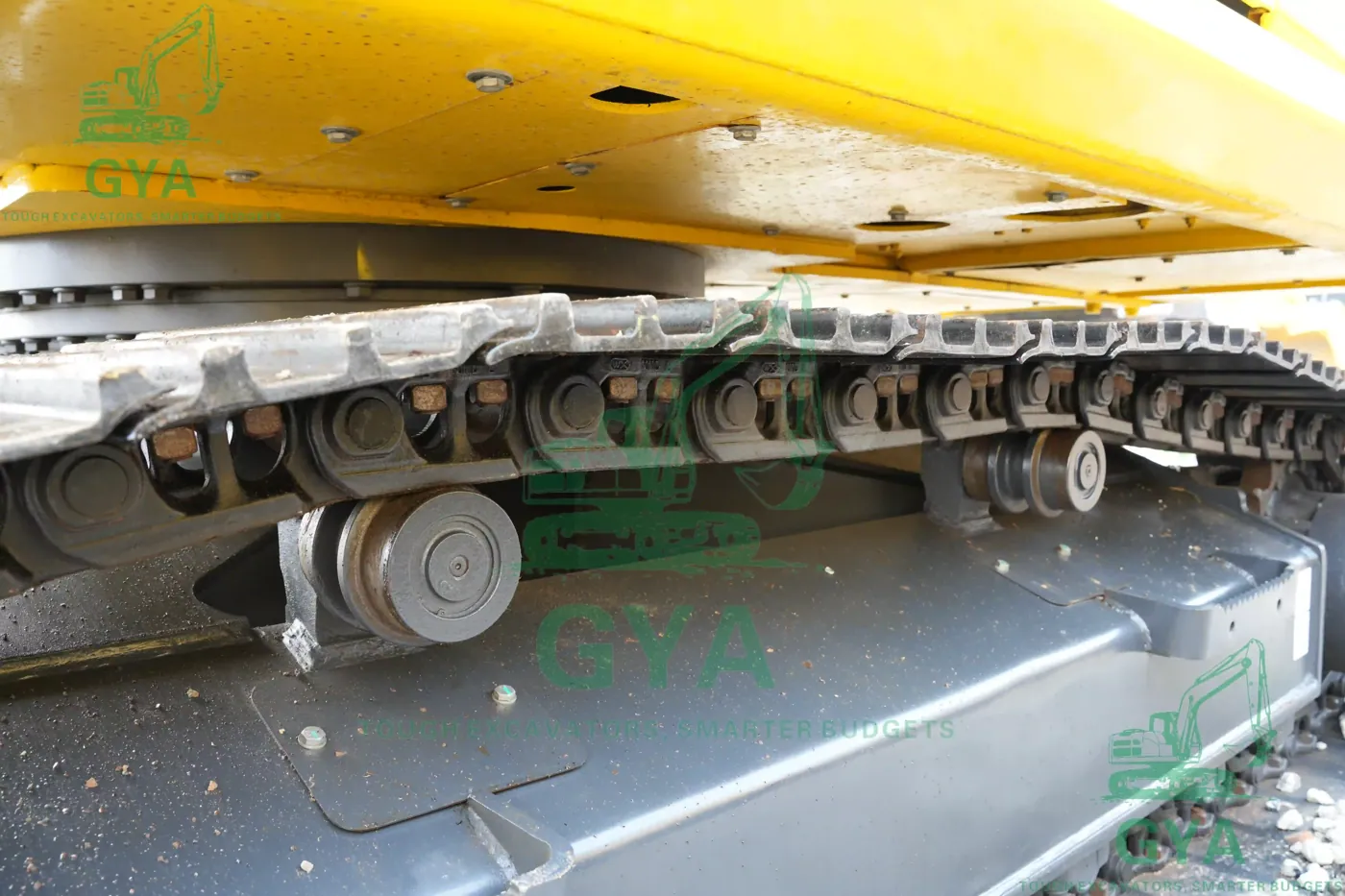
Use the same evidence set on both machines, because the point is comparison. An uncut video from the serial plate to the hour meter. A cold start with the engine cold at the beginning of the clip. A loaded hydraulic cycle through boom, arm, bucket, swing and travel. Close-ups and measurements of shoes, links, rollers, idlers and sprockets. Photographs of the boom foot, boom, arm, turret and counterweight. Service records, if they exist.
Then weight the findings differently. On the PC200-8, the higher band creates an expectation: a unit near the top should show a sound undercarriage, a dry pump area and a straight structure. On the PC240-8, the lower band is not automatically a discount; ask the supplier to explain the position relative to the band and to the other unit. An explanation that cannot be documented is a price risk, whichever model carries it.
Buyer fit: who gains from the inversion
The buyer with two sound units in front of them. This is the only clean win. If both machines pass inspection and the PC240-8 is genuinely 1,000 USD lower on the same terms, take the saving and put it into the repair reserve.
The buyer who needs a specific attachment. A breaker circuit, a coupler or a bucket package is worth more than the inversion. Price the package into both offers and let the totals decide.
The fleet buyer. Standardisation has value that does not appear in a band. If the rest of the fleet is one designation, parts and operator familiarity can outweigh 1,000 USD on a single unit.
The buyer shopping by badge. The one who assumes the bigger number is the better machine is the one the inversion punishes. There is no evidence in these two files that either model is more capable than the other. Both are classed 20–30 t.
Negotiation when the bands overlap
Do not open with "the other model is cheaper". A supplier can answer that with a shrug, because the bands are model references and both positions are legitimate. Open with the defect list and the local quotes behind it. That is a number the seller can either fix, price or refuse, and every one of those answers tells you something useful.
Keep the purchase conditional on inspection until the report is in writing. Ask for a proforma invoice that names the model, serial, price, Incoterm and destination port. Check that the serial on the invoice, the plate and the loading photographs match. The inversion is a small story about price; the documents are the large story about whether you received the machine you approved.
FAQ: PC200-8 vs PC240-8
Is the PC240-8 really cheaper than the PC200-8?
The catalogue bands say yes: 24,000–27,000 USD against 25,000–28,000 USD. That is a model-level reference, not a quote for either unit.
Why would a larger model carry a lower band?
The file does not explain it. Bands follow model listings and market demand, not a ranked specification table. Ask the supplier rather than assuming a defect.
Does the PC200-8 vs PC240-8 inversion change which one I should buy?
Only if both units are otherwise equal. At 4% of the band, the difference is smaller than most repair items, so inspection should decide.
Are they in different classes?
No. Both are listed in the 20–30 t class on this site. Do not infer a class difference from the model number alone.
Can I inspect both before choosing?
Yes. Inspection can be arranged before the balance payment, and the same scope should be used on both units so the reports can be compared.
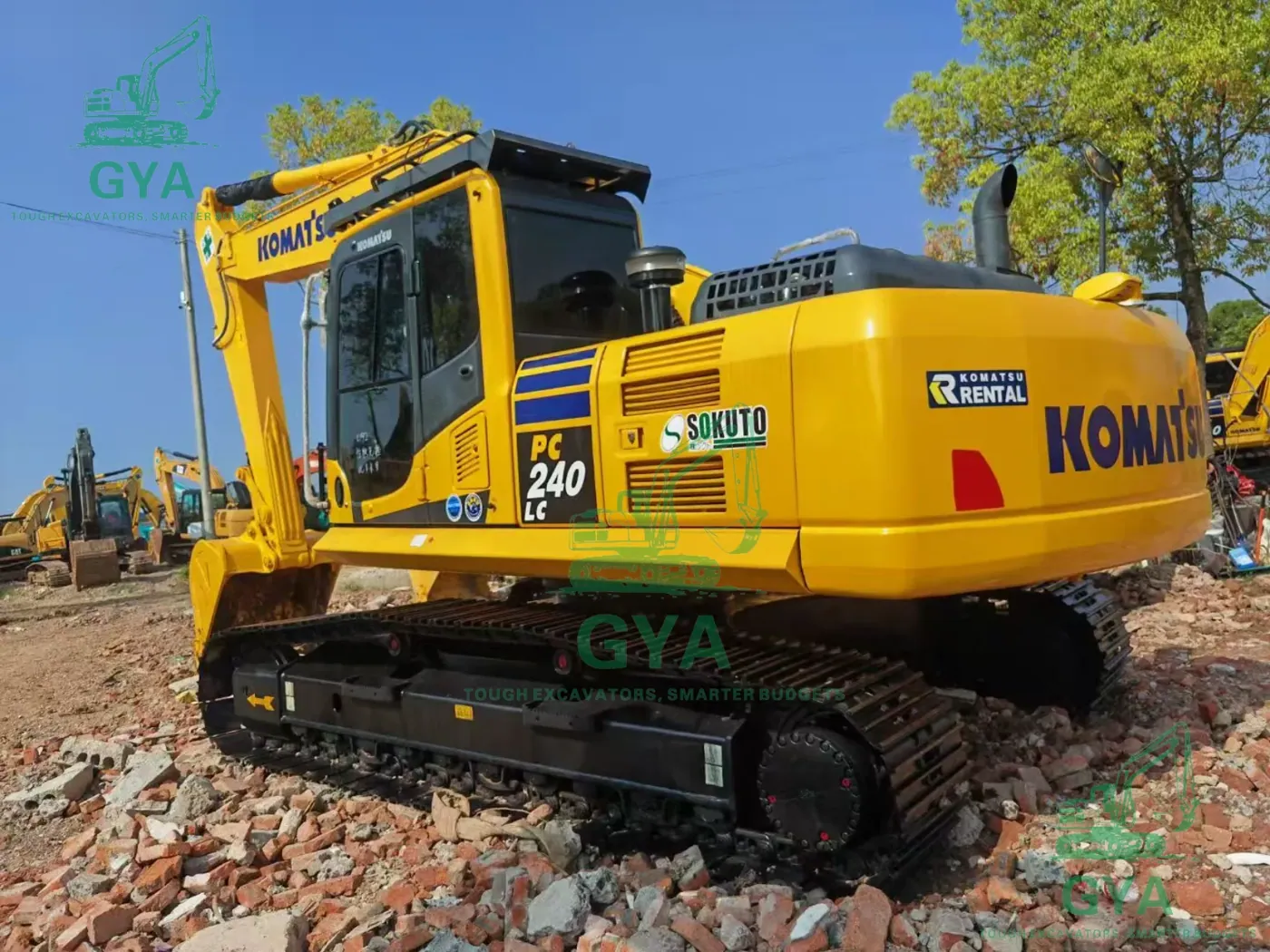
Start with the PC200-8 model page and the PC200-8 vs PC240-8 model listings, then book an inspection with a written scope or send both unit files and your destination port for a like-for-like landed comparison.
Komatsu buyer guides
Price bands, inspection and transport for the models buyers ask about.